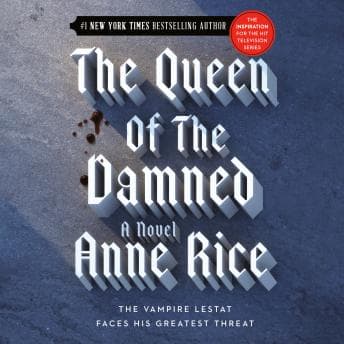

What happens when a six-thousand-year-old vampire queen wakes up and decides she knows what's best for humanity? Nothing good, obviously. But psychologically? Absolutely fascinating.
I spent three weeks with this audiobook—morning jogs through Cambridge, late nights grading papers, one memorable afternoon stuck in traffic on the Mass Pike. Twenty hours is a commitment. And honestly? Anne Rice demands that commitment. She's not interested in giving you a quick vampire fix. She wants you to understand why these immortal beings do what they do. The research shows that origin stories fundamentally shape how we process moral complexity in characters, and Rice understood this decades before the field caught up. Time for Mercy does something similar—building moral complexity through backstory that forces you to question your own judgments.
The Mind of a Monster (And Why It Works)
Akasha is a case study in what happens when absolute power meets absolute conviction. She's been asleep for millennia, wakes up, and immediately decides to save the world through genocide. The cognitive dissonance here is chef's kiss material for anyone who studies how people justify terrible things. She genuinely believes she's the hero. Rice doesn't give us a mustache-twirling villain—she gives us someone who has rationalized mass murder as mercy.
And Lestat? Classic narcissistic traits, but Rice complicates him. He's vain, reckless, occasionally insufferable. But he's also capable of genuine connection. The push-pull between his ego and his capacity for love creates this tension that kept me engaged even during the slower sections. (And there are slower sections. I won't lie to you.)
What makes this ensemble compelling is how Rice uses multiple viewpoints to build a mythology. We're not just following one vampire's journey—we're getting fragments from a dozen perspectives, piecing together a history that spans continents and centuries. It's ambitious. Maybe too ambitious for audio, if I'm being honest.
Simon Vance: The Voice in My Head
So here's the thing about Simon Vance. The man is an AudioFile Golden Voice for a reason. He's won more Audies than I've published papers (which, okay, isn't saying much, but still). His pacing is impeccable. The way he switches between characters and narration—smooth. Professional. You can tell he's done this thousands of times.
But.
Akasha. The ancient queen. The most powerful vampire in existence. She sounds... off. Someone in the reviews described it as "Russian spy" and I laughed out loud on my jog because yes. That's exactly it. There's something about his interpretation that doesn't quite land the otherworldly menace Rice clearly intended. It's not bad, exactly. It's just—when you're imagining a being who predates the pyramids, you expect something more alien. More unsettling.
The French accents also don't quite work. (Don't tell my mother I'm critiquing accents. She'd have thoughts about my Hindi pronunciation.) But for a single narrator handling this many characters across this many centuries? He does remarkably well. The clarity is there. The emotional delivery hits when it needs to hit. I just found myself occasionally pulled out of the story when a voice didn't match the character in my head.
Why Audio Makes This Harder
Rice's structure is complex. We jump between perspectives, time periods, locations. Nepal to Florida to ancient Egypt. In print, you can flip back. You can reread a confusing passage. In audio? You're committed. You're trusting the narrator to signal these shifts clearly.
Vance does his best. But I found myself rewinding more than usual, especially in the first third. The worldbuilding is dense. The mythology is layered. If you're listening while doing something else—cooking, driving, grading truly terrible undergraduate essays—you might miss something important.
This isn't a casual listen. It's not background noise. It requires attention. And at twenty hours, that's asking a lot.
Who Gets Bitten, Who Should Run
If you've already done Interview and The Vampire Lestat, you need this—the mythology payoff is worth it, and the psychological complexity is genuinely impressive for genre fiction. But if you're new to the series? Start elsewhere. The complexity here assumes you already care about these characters. And if you struggle with audiobooks that have large casts and multiple POVs, consider the physical book instead.
Class Dismissed
Vance is good. The production is clean. But some books are just harder to translate to audio, and this is one of them.
Still—those morning jogs flew by. And I'm still thinking about Akasha's twisted logic three days later. My therapist would have thoughts about that character. Probably about me too, for finding her so interesting.