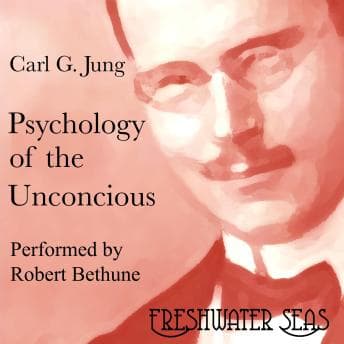

Look, I need to lodge a formal complaint with Carl Jung's ghost. Fifteen hours. Fifteen hours of German, French, Greek, Latin, and occasional English thrown in like an afterthought. I was making lamb biryani - a three-hour commitment that usually pairs beautifully with dense academic texts - and by hour two, Jung had quoted Milton, Goethe, Augustine, AND Longfellow, and I'd burned my onions because I was too busy trying to follow his logic about libido and sun worship.
This is a fascinating case study in how brilliant minds can be absolutely maddening to follow.
The Intellectual Obstacle Course You Didn't Sign Up For
Here's what nobody warns you about: this isn't a psychology book in the modern sense. It's Jung's 1912 breakup letter to Freud, dressed up as academic analysis. He takes Miss Frank Miller's dreams and fantasies - this American woman he never met - and uses them as a springboard to argue that Freud's libido theory is too narrow. Sexual energy? Sure, Jung says, but also everything else. Life force. Creative energy. The thing that makes humans build religions and write poetry and dream about heroes.
Jung doesn't want you to understand him easily. He's showing off. He's proving he can dance across disciplines - etymology, anthropology, comparative religion - while you struggle to keep up. The connections he makes between Miller's fantasies and ancient mythology are genuinely brilliant. But they're buried under so many tangential references that I found myself asking: why does Jung really need to quote this in the original German before translating it?
(My therapist would have thoughts about this character. Specifically about his need to demonstrate intellectual superiority at every turn.)
Robert Bethune: Competent Guide Through Chaos
Bethune does something clever with the audiobook format - when Jung quotes sources, each author gets their own vocal treatment. It's the audio equivalent of different fonts for quotations. Milton sounds different from Goethe. It works. Mostly.
But here's where it gets tricky: some listeners found his pacing tedious, and I understand why. This is a 1916 translation of dense German academic prose. Bethune reads it clearly, methodically, almost too evenly. There's no vocal excitement when Jung drops a genuinely wild insight about the collective unconscious. It's all delivered with the same steady rhythm, which over fifteen hours becomes... a lot.
The foreign language issue is real too. Some passages are read in the original with minimal translation context. If you're not already familiar with basic Latin or French phrases, you'll be lost. You're already asking listeners to follow complex theoretical arguments - adding linguistic barriers feels unnecessary.
Why This Book Still Matters (Despite Everything)
What makes this character - and yes, I'm treating Jung as a character in his own intellectual drama - compelling is that he's building something genuinely new here. This is the foundation of analytical psychology. Archetypes. The collective unconscious. The idea that myths aren't just old stories but blueprints of the human psyche.
Jung exhibits classic patterns of someone breaking from a mentor. There's Freud's shadow over every page, and he's simultaneously honoring and dismantling his ideas. When he argues that the hero's journey in mythology represents the ego's struggle against the unconscious, you can feel him constructing a framework that would influence everyone from Joseph Campbell to modern screenwriting guides. That same archetypal framework shows up in unexpected places - even Under the Black Hat follows the hero's journey pattern, though Jim Ross probably wasn't thinking about Jung when he lived it.
But - and this is crucial - you need to be prepared for the journey. This isn't background listening. This isn't commute material. I tried it during a morning jog through Cambridge and nearly ran into a cyclist because I was too focused on Jung's analysis of the Mithraic bull sacrifice.
Who Should Attempt This Expedition (And Who Should Run)
If you've read Jung's later, more accessible works and want to understand where his ideas originated - this is essential. If you're a psychology student, a mythology enthusiast, or someone who genuinely enjoys intellectual difficulty - come on in.
If you want a clear introduction to Jungian psychology? Skip this. Start with Man and His Symbols. This is the primary source material, not the textbook. And if you're easily frustrated by academic tangents, untranslated passages, or the feeling that an author is testing you - you will not enjoy this experience. I'm telling you now.
Session Notes
I finished this at 2 AM, alone in my apartment, having abandoned any pretense of multitasking. Jung demands your full attention and offers no apologies for it. Bethune delivers the text faithfully, if not dynamically. The audiobook format works for this material - hearing the quotations voiced differently helps track the many sources - but it doesn't solve the fundamental challenge.
This is a difficult, rewarding, occasionally infuriating foundational text. It's not a pleasant listen. It's an important one. Whether that distinction matters to you will determine everything.