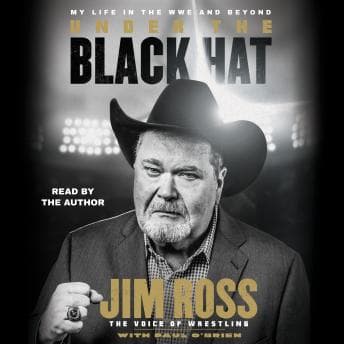

Look, I'm going to admit something that might get my English teacher card revoked: I grew up watching professional wrestling. Monday Night Raw was appointment television in the Williams household, much to my father's confusion and my mother's horror. So when I tell you that hearing Jim Ross narrate his own memoir felt like having an old friend sit down at my kitchen table and just... talk? That's not hyperbole. That's 20 years of "Bah Gawd!" echoing in my memory.
But here's my complaint, and I say this with genuine affection: J.R. meanders. He meanders like my students when I ask them about the themes in The Great Gatsby and they somehow end up talking about their weekend plans. There are stretches in this audiobook where I found myself thinking, "Okay, but where are we going with this?" And then he'd hit you with something so raw, so unexpectedly vulnerable, that I'd forgive the detour entirely.
The Voice You Already Know (And Why That Matters)
Here's the thing about author-narrated memoirs - they're a gamble. Some authors should absolutely not read their own work. (Don't tell my students I said that about certain Nobel laureates.) But Jim Ross? His voice IS the story. That throaty Oklahoma twang isn't an affectation; it's the sound of a man who clawed his way from small-town radio to calling some of the most iconic moments in sports entertainment history.
Listening while grading papers at 11 PM - my usual memoir time slot - I kept finding myself stopping mid-red-pen to just... listen. Not multitask-listen. Actually listen. When he talks about discovering Stone Cold Steve Austin, there's this quality in his voice that I can only describe as paternal pride mixed with professional vindication. When he discusses The Rock's early struggles, you hear a talent scout who knew what he was seeing before anyone else did.
The pacing is conversational, which means it's uneven. Sometimes he's rushing through a story like he's got somewhere to be, and other times he lingers on a moment like he's savoring it himself. Honestly? I preferred the lingering. The author chose those words, and J.R. chose how to deliver them. There's interpretation happening here, even in autobiography.
When the Memoir Gets Real
I wasn't prepared for the gut-punch sections. And I should have been - the book description mentions Bell's palsy and his wife's death - but somehow hearing J.R. discuss his facial paralysis in his own voice hit differently than I expected. Here's a man whose entire career depended on being on camera, suddenly facing a condition that affects how he looks when he speaks. The fear in his voice when he discusses being pushed aside, being seen as damaged goods by a corporate culture that values appearance above almost everything else...
My students would hate this part. Too slow, too introspective, not enough action. I loved it.
The sections about Jan, his late wife, are where the book transcends wrestling memoir and becomes something more universal. This is grief, plain and simple. This is a man trying to make sense of loss while simultaneously trying to reinvent his career in his sixties. If you loved Tuesdays with Morrie or any memoir about aging and mortality, there's something here for you - even if you've never watched a single wrestling match. That same raw honesty about confronting mortality shows up in Watership Down, though you wouldn't expect a rabbit story to hit those notes.
The Corporate Wrestling That Isn't in the Ring
What surprised me most was how much this book is about workplace politics. Vince McMahon looms large here, and J.R.'s complicated relationship with him reads like something out of a business school case study. The loyalty, the frustration, the moments of feeling undervalued despite decades of service - any teacher who's dealt with administrative changes will recognize this dynamic. (Principal Martinez, I'm still not listening to your budget presentations, but I understand the frustration now.)
The audio production is clean, though I noticed a few spots where the sound quality dipped slightly - nothing major, but noticeable if you're listening with good headphones. There's apparently some bonus content with interviews, which I appreciated, though I found myself wanting more.
Worth Pausing the Faculty Meeting For
Is this a must-listen for non-wrestling fans? Honestly, probably not. The inside baseball (inside wrestling?) can get dense, and if you don't know who Undertaker is or why Triple H matters, some sections will feel like listening to someone else's family reunion stories.
But if you've ever cared about wrestling - even casually, even embarrassedly, even just during the Attitude Era when everyone was watching - this is essential. And if you're interested in memoirs about aging, disability, grief, and reinvention, there's genuine literary value here. J.R. is, as Chris Jericho says in the blurb, a master storyteller. The prose deserves to be savored, even when it wanders.
I listened at 1.0x because I wanted to hear every pause, every breath, every moment where his voice catches on a memory. My students would say I'm ancient for that. They're not wrong. But neither am I.









