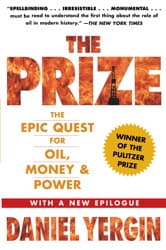

Everyone talks about this book like it's the Bible of oil history, and after three hours with it during a client drive to Houston, I can confirm the hype is mostly justified. But here's what nobody tells you—this is the abridged version, and that matters.
Three Hours to Understand a Century of Chaos
Yergin won the Pulitzer for a reason. The man traces the thread from some Pennsylvania wildcatter punching holes in the ground to Saddam Hussein rolling tanks into Kuwait, and somehow it all makes sense. As someone who spent time in theater watching oil infrastructure get targeted, defended, and rebuilt, I've seen firsthand how this stuff shapes military strategy. Yergin connects those dots in ways that should be required reading at the War College.
The problem? You're getting the CliffsNotes version here. Three hours to cover what the full book does in thirty-plus. That's aggressive compression. It works for getting the major beats—the Rockefeller monopoly, the British naval conversion from coal, the OPEC power plays—but you're losing the granular detail that makes history stick. I found myself wanting more on the World War II fuel logistics that basically determined the outcome of entire campaigns. Yergin apparently covers it extensively in the full version. Here, it's a flyover.
Jamieson Gets the Job Done
Bob Jamieson narrates like a seasoned network anchor delivering the evening news. Clear, professional, no stumbles over the endless parade of Russian oligarchs and Middle Eastern royalty names. That's harder than it sounds—I've heard narrators butcher Arabic pronunciations so badly it pulled me right out of the story. Winston Churchill had a narrator with similar technical competence but lacked the gravitas the subject demanded. Jamieson doesn't embarrass himself.
But here's my honest assessment: there's no fire in the delivery. This is a story about empires rising and falling, about men who literally reshaped the global order, and Jamieson reads it like a quarterly earnings report. Competent? Absolutely. Memorable? Not particularly. When Yergin writes about the chaos of the Iranian Revolution or the desperate fuel shortages that crippled the Wehrmacht, I wanted some heat in the narration. Didn't get it.
(Ranger slept through most of this one, which tells you something about the energy level.)
The Strategic Value Proposition
Worth your time? Here's the debrief. If you want to understand why the United States has maintained a carrier group in the Persian Gulf for decades, why Russia leverages Gazprom like a weapon, why the invasion of Iraq wasn't really about WMDs—this book provides the framework. Yergin clearly did his homework, and his analysis holds up even decades after initial publication. That kind of meticulous research reminds me of what I found in Journey of Crazy Horse: A Lakota History—different subject entirely, but the same commitment to getting the historical record straight.
The epilogue addressing current energy crisis is useful, though it feels tacked on rather than integrated. Climate change gets mentioned but doesn't fundamentally reshape the narrative. Fair enough—that's a different book.
For my money, this abridged version works as a primer. If you're commuting, exercising, or doing windshield time like I was, it's solid background material. But if you're serious about understanding energy geopolitics—and anyone in security consulting or military strategy should be—you probably need the full unabridged version. This is reconnaissance, not the full intelligence briefing.
Who's This For (And Who Should Pass)
Casual listeners wanting context on why oil dominates headlines? Stream it. Professionals in security, policy, or military strategy who need the complete operational picture? Hunt down the unabridged version. Skip entirely if you need dynamic narration to stay engaged—Jamieson's steady delivery won't do you any favors on a long drive.
Mission Status: Qualified Success
I've recommended this book to three clients this month alone. Understanding oil means understanding power, and Yergin maps that relationship better than anyone. The audiobook version is a convenient entry point, professionally produced and easy to absorb while multitasking.
But I can't shake the feeling I got the condensed briefing when I wanted the full operational picture. At three hours, you're getting the executive summary. Sometimes that's exactly what you need. Sometimes it's not enough.
Either way, Yergin's core thesis—that oil has been the defining resource of modern geopolitics—remains as relevant now as when he wrote it. Probably more so.





![Steve Jobs [unabridged audiobook] audiobook cover](/_next/image?url=https%3A%2F%2Fcovers.audiobooks.com%2Fimages%2Fcovers%2Ffull%2F9788499923406.jpg&w=1920&q=75)