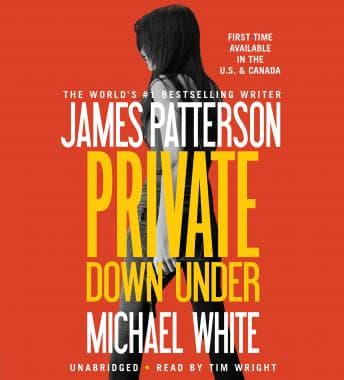
Look, I need to get something off my chest: James Patterson putting his name on a book should not be a genre. But here we are, and I'm genuinely irritated because Tim Wright's narration deserved a better vehicle than this.
I was reshelfing the mystery section at the library last Tuesday - we'd just gotten a fresh batch of Patterson co-writes donated, which, if you work in a library, you know is basically currency - and I thought, fine, let me give the Private Sydney installment a fair shake on audio. Popped it on during my drive home through the rain. Oregon rain, Australian crime. The vibes were... almost there.
Tim Wright Is Carrying This Book on His Back Like a Rucksack Full of Bricks
The narrator commits. That's rare. Wright doesn't just do an Australian accent - he lives in it, and the distinction matters. His Craig Gisto has this measured, slightly weathered quality that makes you believe this guy runs a detective agency and has seen enough to be tired about it. When he shifts between characters, he's using inflection and emphasis rather than doing cartoon voices, which is the right call for a thriller like this. There's an aristocratic edge he gives certain characters versus the rougher, street-level tone for others, and it creates class texture that the writing itself doesn't really earn.
Here's the thing that kills me: multiple listeners have said the narrator is the only reason they finished this book. And I get it. Wright is performing - he's not reading words off a page, he's acting. The Australian accent gives the whole thing an authenticity that almost tricks you into thinking the story is better than it is. Almost.
Three Plot Lines Walk Into a Bar. None of Them Have Character Development.
The setup is fine. Blood-soaked guy crashes a launch party at a detective agency overlooking the Sydney Opera House. That's a hook. I'll give Patterson and co-author Michael White that much. But then the book splits into three separate investigations, and not one of them has the structural integrity to stand on its own, let alone support two others.
The Eastern Suburbs murder - Stacy Friel, friend of the Deputy Commissioner of NSW Police - should be the emotional anchor. A serial killer targeting wealthy women. Bodies mounting. But you can see every twist telegraphed from about chapter three. The same telegraphing problem plagued Guest List, though that one at least had the good sense to surround its predictable killer reveal with characters worth spending time with. I'm not a mystery person by training (give me a haunted house over a crime scene any day), but even I was calling the beats before they landed. The plot is so predictable that the "mystery" part of "mystery thriller" becomes decorative.
And the characters? They're sketches. Not even good sketches - more like someone described a person's job title and hair color and called it a day. Craig Gisto has potential as a protagonist, but the book never slows down enough to let him breathe. Which brings me to the violence - there's gore here that feels gratuitous rather than purposeful. This understands that horror isn't about gore - it's about dread. The same principle applies to thrillers. Violence without emotional stakes is just noise. Botanist's Guide to Flowers and Fatality gets this right — the violence there lands because you've already been made to care, which is exactly what's missing here.
The Patterson Assembly Line Problem
At seven hours, this is a quick listen. Classic Patterson pacing - short chapters, constant motion, the literary equivalent of someone snapping their fingers in your face to keep your attention. And it works, in the way that fast food works. You consume it, you're briefly satisfied, you forget about it by the next morning.
But I keep coming back to this: the book will sell because it says Patterson on the cover. Not because of the plot. Not because of the characters. Not because Michael White brought something new to the franchise. That frustrates me as someone who spends her days putting books into people's hands. I want to recommend things that deserve the attention.
The Private series has a formula, and this entry follows it with the enthusiasm of a student completing a homework assignment they don't care about. Sydney as a setting should feel alive - it's one of the most visually striking cities on the planet - but it barely registers beyond occasional references to landmarks.
Who Gets Something Out of This
If you're already deep in the Private series and want completionism, Wright's narration makes this painless. If you want a light, disposable thriller for a commute or a long drive, it'll fill the time. If you're looking for authentic Australian narration, Wright is genuinely excellent and I'd follow him to a better book.
But if you want mystery that respects your intelligence? If you want characters who feel like people rather than plot delivery systems? Skip this. Life is short and your TBR is long.
Speeding it up to 1.25x wouldn't hurt anything - the pacing already moves fast, and the extra bump just tightens what's already lean.
Shirley (My Cat) Was Unimpressed. For Once, I Agree With Her.
Tim Wright deserved a novel that matched his effort. He's doing A-grade work on a C-grade script. I'd listen to him narrate almost anything else. But this particular book? It's the audio equivalent of a beach read you leave behind at the hotel. Fine for what it is. Just don't expect it to haunt you.