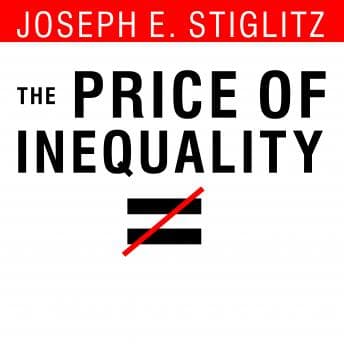

Thirteen hours. Thirteen hours of a Nobel laureate telling me the system is rigged. At 2.0x speed that's still six and a half hours, and honestly? I didn't need the convincing. I grew up watching my parents press other people's shirts for fourteen hours a day in Koreatown while the landlord raised rent every year like clockwork. Stiglitz is preaching to the choir here. But the question isn't whether he's right - it's whether this audiobook is worth your time.
Bottom line: It's a rigorous, data-heavy indictment of American inequality that's aged disturbingly well since 2012. But it's also a 13-hour economics lecture, and Paul Boehmer's narration - while competent - isn't doing you any favors on pacing.
My Parents' Business Model Had Better Data Than Congress
Here's what Stiglitz does well: he connects the dots between rent-seeking behavior at the top and stagnation everywhere else. The core argument - that the wealthy don't just benefit from inequality, they actively engineer it through lobbying, regulatory capture, and tax policy - isn't new if you've been paying attention. But Stiglitz brings the receipts. His breakdown of how financial deregulation created a system where banks could privatize gains and socialize losses is the clearest I've heard. This is what my parents did instinctively - they understood that the game was tilted. Now it has a TED talk. Several, actually.
What surprised me was how much time he spends on the macroeconomic case against inequality. This isn't just a moral argument. Stiglitz hammers home that extreme concentration of wealth actually kills economic growth, reduces demand, and makes recovery from recessions slower. As someone who's consulted for startups trying to sell products to consumers with shrinking purchasing power, I've seen this play out in real time. The math checks out.
But - and this is where I started getting restless during a late-night session at my desk, spreadsheets open on one screen, Audible running on my phone - the book has a serious padding problem. Stiglitz makes his central arguments in maybe the first five hours. The remaining eight circle back, restate, add another data point, circle back again. I've seen McKinsey decks do this too - repeat the key finding on every third slide so the partner who walked in late still gets it. Effective in a boardroom. Exhausting in your earbuds at 11 PM.
Boehmer's Gentle Hand on a Sledgehammer Book
Paul Boehmer has this deep, steady, almost paternal voice. It's the kind of narration that makes you feel like a reasonable adult is walking you through something serious. And for the first few hours, that works. He knows how to land Stiglitz's key sentences - the ones that should make you angry - by giving them just a beat of extra weight. "Their fate is bound up with how the other 99 percent live" hits different when Boehmer drops his register slightly and lets it sit.
The problem is that same deliberate pacing across thirteen hours becomes a slog. This is an economics text, not a thriller. There's no narrative tension pulling you forward, no character arc, no plot twist in chapter 9. It's argument, evidence, argument, evidence. And Boehmer narrates it all at the same careful, measured pace. I found myself rewinding sections not because they were complex but because my attention had drifted. At 1.0x, I think I would've abandoned this by hour seven. At 2.0x, it's manageable but still demands real focus.
No sound effects, no music, no production tricks. Just a man reading an economics book. Which is fine - I don't need a soundtrack for income distribution charts. But it means the narration has to carry everything, and Boehmer's consistency becomes a liability over a long listen.
Who Gets the ROI Here
If you're already well-read on inequality - if you've done Piketty, if you've read Saez and Zucman, if you followed the Occupy discourse - Stiglitz will feel like a thorough but familiar summary. Solid reference material. Not a revelation.
If you're newer to this space, or if you want one comprehensive audiobook that lays out the structural case against American inequality with real economic rigor? This is your pick. Skip to chapter 5 when the policy analysis kicks in. Thank me later. The early chapters establishing the scope of inequality are important but move slowly.
Startup founders: there's actually useful framing here about how monopolistic behavior and regulatory capture affect market entry. I've used Stiglitz's arguments in actual client presentations about competitive dynamics. That's not nothing.
Jenny would say I'm being harsh about the length. Jenny is right - the content matters, and Stiglitz earned his Nobel for a reason. But my job is to tell you whether this specific audiobook respects your time, and at thirteen hours with this pacing, it's asking a lot.
The Consulting Fee
Worth the listen if you commit to 1.5x minimum and treat it like continuing education, not entertainment. The ideas are sharp and the data is real. The delivery just needed a tighter edit - both on the page and behind the mic. A ten-hour version of this book would be a must-listen. At thirteen, it's a solid investment with diminishing returns past the halfway mark. The vulnerability Stiglitz shows in admitting systemic failure requires its own kind of courage - the kind Brené Brown dissects with more personal warmth in Daring Greatly, which I'd actually argue is a better audiobook experience even if the stakes feel smaller on the surface.