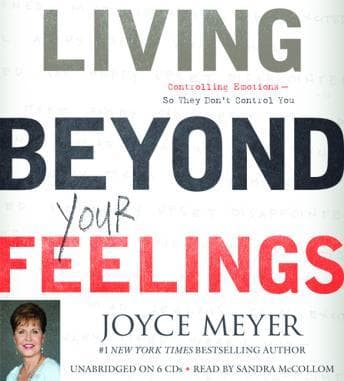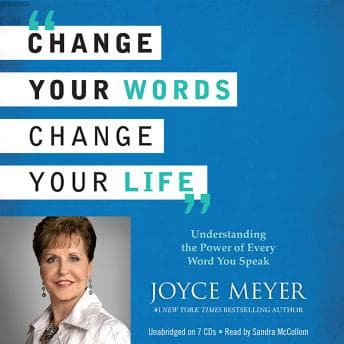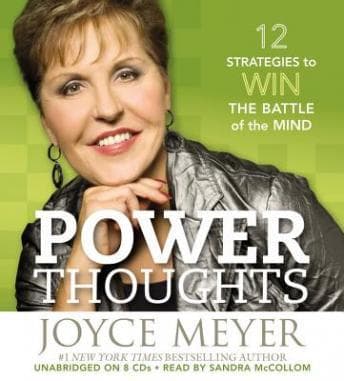

I'll be honest—I approached this one with my researcher skepticism fully activated. Self-help books that promise to transform your thinking in twelve neat steps? The psychologist in me gets twitchy. We know behavioral change is messy, nonlinear, and rarely fits into bulleted lists.
But here's the thing. I was chopping onions for a chicken tikka masala at 9 PM on a Tuesday, half-listening, when Meyer's framework actually made me pause mid-dice. "Where the mind goes, the man follows." It's not revolutionary psychology—cognitive behavioral therapy has been saying this for decades—but there's something about how Meyer packages it that lands differently.
The Cognitive Restructuring You Didn't Know You Ordered
What Meyer is essentially teaching is cognitive restructuring with a faith-based wrapper. The research actually shows this approach works—reframing negative thought patterns, challenging automatic thoughts, building new mental habits. She's not citing Judith Beck or Aaron Beck (the actual pioneers of CBT), but she's walking the same path.
The "12 power thoughts" function like affirmations with theological backing. And here's where my academic brain had to sit down and admit something uncomfortable: for her target audience, the spiritual component isn't a bug, it's the feature. It provides the "why" that pure psychology sometimes struggles to deliver. Why should I change my thinking? Because God designed your mind to work this way. That's a powerful motivator for believers.
The structure is repetitive by design—Meyer hammers each thought pattern from multiple angles. At 9 hours 30 minutes, this could feel bloated. But if you're using it as daily reinforcement (which is clearly the intent), the repetition becomes reinforcement. Psychologically, this actually tracks.
Sandra McCollom: The Narrator You Didn't Ask For
Let's address the elephant in the room. Longtime Meyer fans wanted Joyce's voice. I get it. There's an intimacy when authors narrate their own work—you hear their emphasis, their pauses, their personality.
Sandra McCollom is... fine. Her voice is clear, warm, and she handles the inspirational tone without veering into saccharine territory. She's got this steady, almost maternal quality that works for the content. But she's essentially performing someone else's personality, and occasionally you feel that distance.
That said, I wonder if Meyer's actual voice would've held up for nearly ten hours of listening. Sometimes professional narrators exist for good reason. McCollom paces the material well, and her pronunciation is consistent throughout. No audio glitches, no weird production choices. Just clean, straightforward delivery.
What Makes This Character Compelling Is—Wait, Wrong Genre
(My therapist would have thoughts about how I keep analyzing self-help books like they're case studies. She'd be right.)
Here's my honest assessment: Meyer understands something about human nature that many psychology textbooks miss. People don't just need techniques—they need permission. Permission to believe they can change. Permission to try again after failing. Permission to think differently about themselves.
The "can-do" attitude isn't naive optimism. It's actually closer to what psychologists call self-efficacy—Bandura's concept that believing you can do something significantly increases your chances of actually doing it. Meyer just calls it faith.
Who should listen? Christians looking for practical mental health tools within their faith framework. People who've tried secular self-help and found it lacking meaning. Anyone who responds better to encouragement than clinical detachment.
Who should skip? If you're allergic to religious framing, this will irritate you constantly. If you want peer-reviewed citations and research methodology, look elsewhere. And if you're dealing with clinical anxiety or depression, this is supplementary at best—not a replacement for actual treatment. For a more evidence-based approach to building confidence, 100 Ways to Overcome Shyness offers practical techniques without the theological framework.
The Prescription I'd Actually Write
I found myself asking: why does this work for so many people when it's essentially repackaged CBT principles? The answer is accessibility. Meyer strips away the clinical language, adds spiritual significance, and delivers it in digestible chunks. That fusion of faith and self-improvement reminded me of Case for Christ, which similarly packages intellectual inquiry within a Christian framework for believers seeking both meaning and methodology. That's not nothing.
Is it groundbreaking psychological insight? No. Is it a useful framework for people who want to think more positively within a Christian worldview? Yes.
I finished it while meal-prepping for the week, and I'll admit—some of those "power thoughts" stuck with me longer than I expected. Not because they were new, but because repetition works. The research actually shows that.
My mother would approve of this book. She'd probably send it to me with a note about thinking more positively. And honestly? She wouldn't be entirely wrong.