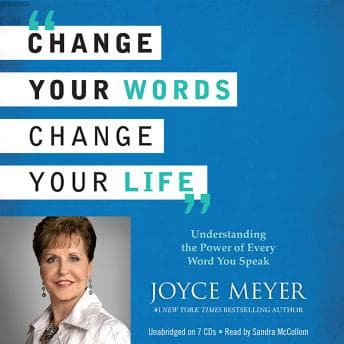

I was running through Cambridge at 6 AM, that particular kind of cold where your lungs burn and your brain finally shuts up, when Sandra McCollom told me I was probably destroying my health by holding onto old grudges. Thanks, Sandra. I was just trying to hit my step count.
But here's the thing about Joyce Meyer—she gets under your skin in ways that are genuinely psychologically interesting.
Why This Framework Actually Tracks
Meyer's central argument is deceptively simple: forgiveness isn't about being a good Christian. It's about refusing to let someone else's actions continue damaging your nervous system. She frames anger not as sin but as information—something that tells you a boundary was crossed, a hurt occurred, an injustice happened. The problem isn't the anger itself. The problem is what you do with it afterward.
This is a fascinating case study in how religious self-help can align with secular psychology without either side realizing it. Meyer's insistence that forgiveness is self-interested rather than saintly? That's straight out of emotion regulation literature. Her emphasis on forgiveness as daily practice rather than one-time decision? That's behavioral psychology dressed in biblical language.
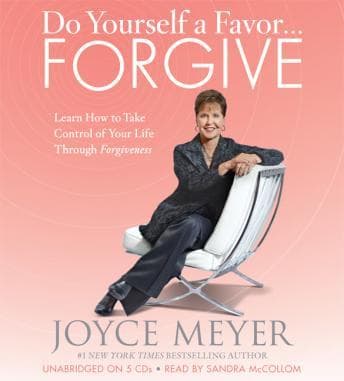
Meyer's other major work Battlefield of the Mind runs the same play—repackaging cognitive restructuring into devotional language so smoothly you almost don't notice the seams.What makes this compelling is that Meyer isn't asking you to pretend the hurt didn't happen. She's asking you to stop letting it control your present. "Do yourself a favor" isn't just marketing—it's the entire therapeutic argument condensed into four words.
The Narrator Question (Let's Be Honest)
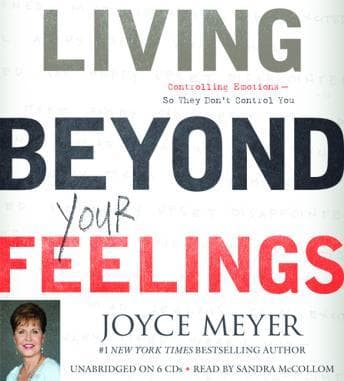
Sandra McCollom. Look, I'll tell you what the research actually shows: listeners are divided. Some appreciated her passion. Others wished Joyce Meyer had narrated it herself.
I land somewhere in the middle. McCollom clearly believes in this material—you can hear it in her delivery. But there's an earnestness that occasionally tips into over-enunciation, moments where she's reading at you rather than talking to you. Forgiveness is tender work. Sometimes the intensity doesn't match the gentleness the content requires.
If you've never heard Meyer speak, you probably won't notice. If you've listened to her conferences or other audiobooks, the comparison will sit in the back of your mind the whole time. It's not bad narration. It's just... a different energy than the author brings.
At 5 hours and 43 minutes, though, it's not asking for a massive commitment. I finished it across three morning runs and one evening of cooking elaborate biryani that I absolutely ate alone. (Don't feel sorry for me. The biryani was excellent.)
How Meyer Differs from the Secular Literature
Here's where Meyer parts ways with most secular forgiveness books I've encountered in my research: she doesn't waste time convincing you that you should forgive. She assumes you already know that. The book is almost entirely about mechanics—the how, the daily practice, the moment-by-moment choice to release what you're gripping.
Most forgiveness books treat it as a destination. You read the book, you have your breakthrough, you're healed. Meyer treats it as ongoing work. Something you might have to do hourly until it sticks. That's psychologically sound, even if it's less satisfying as a narrative arc.
The book draws from what one listener called "biblical, psychological, and first-person experience," and you can feel all three threads. Meyer's personal history with processing her own anger gives the material weight. This isn't theoretical hand-wringing from someone who's never been hurt.
Who This Is (and Isn't) For
This hits hardest for a specific type of person: someone intellectually convinced they should forgive but emotionally stuck in resentment. If that's you, Meyer will meet you there.
Skip this if you need secular psychology without the faith framework. Meyer is unapologetically Christian, and the biblical references are constant. Also skip if you want narrative flair or emotional storytelling—this is direct instruction, almost workbook-style at times.
Listen if you're a person of faith wrestling with legitimate hurt, if you respond well to practical rather than theoretical guidance, or if you've read the health research on chronic anger and want someone to help you actually implement change.
My Therapist Would Approve (Mostly)
I found myself asking: why does forgiveness literature so often fail people? And I think Meyer answers it, even accidentally. We treat forgiveness like a feeling we're supposed to have. Meyer treats it like a skill we have to practice. That shift matters.
The audiobook won't transform you in under six hours. But it might give you a framework for doing the work yourself. Which is honestly all any self-help book can do.
Now I have three unread papers on narrative psychology waiting for me. They won't grade themselves. Much like forgiveness, apparently.