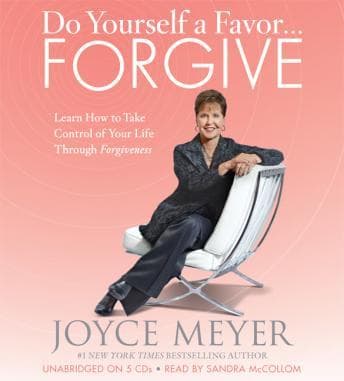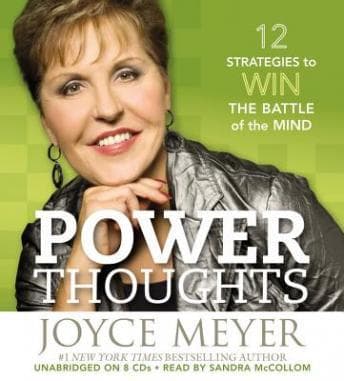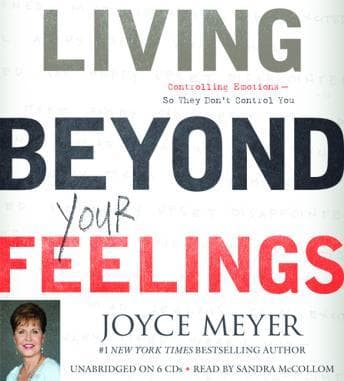

Does a self-help book about emotional control actually deliver ROI on your time? That's the question I kept asking myself through all seven hours of this one.
Look, I'll be upfront: Joyce Meyer isn't writing for consultants. This is faith-based self-help, heavy on biblical wisdom, lighter on the psychological research the description promises. If you're expecting a data-driven approach to emotional regulation, you're going to be disappointed. But here's the thing—my mom has been reading Meyer for decades, and watching her navigate running a small business while raising three kids, I've seen this stuff work in practice. Just not the way a Harvard Business Review article would explain it.
The Framework That Actually Holds Up
Meyer breaks down emotions one by one—anger, fear, guilt, grief—and gives you a framework for each. It's not revolutionary if you've read any modern psychology. But she presents it in a way that's accessible, practical, and honestly? Pretty efficient for a self-help book. The four personality types section felt a bit dated (we've moved past that model in most business contexts), but her point about understanding your default reactions before you can change them—that's solid. I've used similar frameworks with startup founders who can't figure out why they keep blowing up at their teams.
The "replacing reactions with pro-actions" concept is basically cognitive behavioral therapy repackaged with scripture. Is that a criticism? Not really. My parents did this instinctively. Now it has a TED talk. Talk Like TED breaks down that same gap between intuition and framework—how the best communicators do naturally what the rest of us need a system for. And a seven-hour audiobook.
Sandra McCollom Does the Heavy Lifting
Here's where I have to give credit. Sandra McCollom's narration is what kept me engaged through sections that would've lost me in print. She's got this warm, conversational tone that makes it feel less like a lecture and more like advice from someone who's actually been through it. The pacing is solid—not rushed, not dragging. I listened at 1.5x (yes, slower than my usual 2.0x) because her delivery actually benefited from a little breathing room.
Some reviewers mentioned she can get a bit enthusiastic at times. I noticed that too—there are moments where the energy spikes in a way that felt slightly performative. But honestly, for this genre, it works. You're not listening to Meyer for understated delivery. You're listening because you want someone to tell you with conviction that you can change.
Who This Is (and Isn't) For
Bottom line: this book is for people who want practical emotional management tools wrapped in a faith-based framework. If that's not you, skip it. There are secular alternatives that cover similar ground—"Emotional Intelligence 2.0" comes to mind, though that one's drier than a PowerPoint presentation. 7 Habits of Highly Effective People sits somewhere in the middle—practical frameworks without the faith angle, though it's got its own dated moments.
But if you appreciate biblical references alongside your self-improvement, or if you've got a parent or spouse who keeps recommending Joyce Meyer (hi, Mom), this is a decent entry point. It's not going to revolutionize your life. It might, however, give you a useful framework for the next time someone in a meeting says something that makes you want to flip a table.
The 70,000 thoughts per day statistic she opens with? I couldn't verify that number, and it felt like one of those "sounds impressive but probably inflated" stats that self-help books love. But the underlying point—that we're constantly reacting to our own mental chatter—that's real. I've watched enough founders burn out to know that emotional regulation isn't soft skills. It's survival skills.
Jenny would say I'm being harsh by pointing out the dated psychology. Jenny is right. But she'd also say that a book doesn't have to be cutting-edge to be helpful. And on that, she's also right.
The ROI Calculation
Would I recommend this to a client? Depends on the client. Would I recommend it to my mom's church book club? Absolutely. Know your audience, know your needs. This one delivers exactly what it promises—no more, no less.