
"Tyger Tyger, burning bright, In the forests of the night; What immortal hand or eye, Could frame thy fearful symmetry?"
I was walking the lakefront with Denise on a Saturday morning - one of those rare October days in Chicago where the light off the water looks almost holy - and Sam Stinson started reading "The Tyger" and I stopped walking. Just stopped. Denise kept going for about ten steps before she turned around and gave me that look. The one that says, "You're doing the thing again." I was doing the thing.
Here's the thing about Blake: I've taught these poems for two decades. I've read "The Lamb" out loud to rooms full of sophomores who would rather be anywhere else. I've written the words "contrary states of the human soul" on whiteboards so many times the phrase has lost all meaning. And then you hear someone read them aloud - really read them, with the weight they deserve - and the meaning comes flooding back like you're encountering them for the first time.
When Fifty-Six Minutes Contain Multitudes
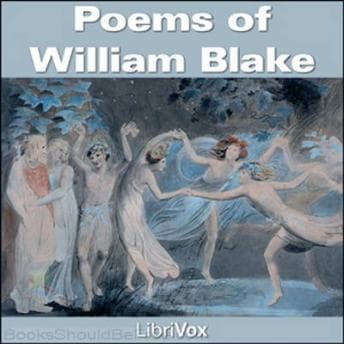
This is a short collection. Under an hour. You could listen to it during a lunch break, which is almost offensive given what Blake packed into these pages. Songs of Innocence, Songs of Experience, and The Book of Thel - that's the whole program. And the brevity actually works in its favor, because Blake's poetry was never meant to be marathoned. These are poems that want space between them. Room to breathe.
The pairing structure is what makes Blake Blake - "The Lamb" and "The Tyger," "Infant Joy" and "Infant Sorrow," "The Chimney Sweeper" in Innocence versus its bitter mirror in Experience. When you read them on the page, you flip back and forth, hunting for the connections. In audio, with Stinson reading them in sequence, the contrasts land differently. More immediately. The shift from Innocence to Experience hit me somewhere around minute twenty, and the tonal drop felt almost physical. You go from pastoral lightness - children on the green, piping songs of pleasant glee - to this dark recognition that the world eats innocence for breakfast.
My students would hate this. I love it.
Stinson Reads Blake Like Blake Painted
Sam Stinson's approach here is restrained in a way that serves the material. He doesn't try to perform Blake as dramatic monologue. He doesn't ham up "The Tyger" with growling theatrics. Instead, he treats the meter - those hammering trochees in "The Tyger," the gentle iambs in "The Lamb" - as the emotional architecture. The narrator understands that pause is punctuation. There's a breath between stanzas that lets the images settle, and for poetry, that's everything.
Where he's particularly good is with The Book of Thel, which is honestly the section I was least looking forward to. Thel is one of Blake's early prophetic works, and on the page it can feel impenetrable if you're not ready for it - all those conversations with the Lily and the Cloud and the Worm. But Stinson reads Thel's voice with this quality of genuine searching, genuine bewilderment at mortality, that made me reconsider a poem I'd basically written off as Blake's warm-up act. The fourteen-syllable lines, which should feel unwieldy, flow naturally when spoken.
Now - is this a definitive Blake reading? Hard to say with certainty. The research is thin on comparative performances, and I don't have five other recordings to stack against it. What I can tell you is that Stinson doesn't get in Blake's way, and with poetry, that's more than half the battle. A bad narrator kills a poem faster than a bad teacher. (And I say that as someone who has definitely killed a few poems in Room 214.)
The Problem With Hearing What You've Only Ever Read
Here's my confession. I've spent twenty years treating Blake as a teaching tool. Innocence and Experience as a unit on duality. "The Chimney Sweeper" as a lesson in social criticism. "London" as historical context for the Industrial Revolution. I'd turned some of the most radical, furious, spiritually alive poetry in the English language into worksheet material.
Listening to these poems - really listening, at 1.0x, because the author chose those words - reminded me why I became an English teacher in the first place. Blake wasn't writing curriculum. He was writing prophecy. He was staring at child labor and church hypocrisy and the bloody aftermath of the French Revolution and asking: what happens to the human soul when innocence meets experience? Not what can we learn from this, but what does this DO to us?
The prose - the poetry - deserves to be savored. Even at fifty-six minutes.
Who This Is For (And Who Should Keep Walking)
If you've never read Blake, this is a beautiful entry point. Short enough to be manageable, performed with enough care to let the poetry breathe. If you're a Blake scholar, you probably already have opinions about how "The Tyger" should sound, and Stinson may or may not match them.
If you only consume audiobooks as narrative fiction - plot, character, suspense - this will feel like a different species. Because it is. Poetry asks you to listen differently. Slower. With more attention to rhythm and sound than story.
But here's what I'd say to my 47 podcast listeners and anyone else still reading: at under an hour, this costs you almost nothing. And it might give you back a poet you thought you already knew.
Worth Pausing the Faculty Meeting For
I listened to this three times in one week. The first time on the lakefront. The second time grading papers at 11 PM with a glass of bourbon. The third time in my car in the school parking lot, sitting there for an extra ten minutes after the bell rang, letting "A Poison Tree" finish. Three listens, three different experiences. That's Blake. That's what contrary states means. This is why we still read the classics - and sometimes, why we need to hear them. Though if you're in the mood for a memoir that wrestles with its own kind of contrary states - the distance between who you were and who you became - I had an unexpectedly similar feeling of reckoning while writing up Home Work: A Memoir of My Hollywood Years.