
This is the most exciting book of the Bible that most Protestants have never read.
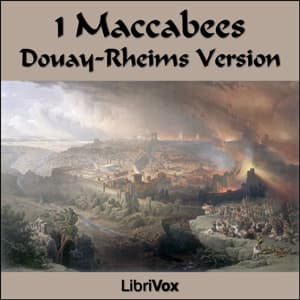
I say that without a shred of irony. 1 Maccabees reads less like scripture and more like a historical war chronicle — think Thucydides with theological conviction. There are battlefield stratagems, political betrayals, guerrilla campaigns against a superpower, and a family dynasty forged in blood. I picked this up on a Saturday afternoon walk along the lakefront with Denise, expecting background-level religious text, and instead found myself stopped on a bench near Montrose Harbor, genuinely gripped by a two-thousand-year-old account of Jewish resistance fighters taking on the Seleucid Empire.
Let's talk about what the author is really saying. Because unlike 2 Maccabees, which leans into theology, miracles, and the afterlife, 1 Maccabees is almost stubbornly earthbound. God doesn't intervene with fire from heaven here. Salvation comes through Mattathias picking up a sword and his sons — Judas, Jonathan, Simon — fighting politically and militarily for decades. The divine hand is implied, never shown. It's a fascinatingly restrained religious text, and hearing it read aloud makes that restraint even more striking. You keep waiting for the miraculous turn, and instead you get another alliance negotiated, another battle won through tactical brilliance.
War Poetry in the Douay-Rheims Register
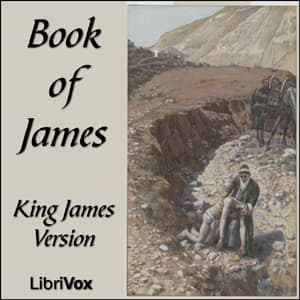
The Douay-Rheims translation gives this text a weight that more modern translations flatten. Phrases like "and there was great tribulation in Israel, such as was not since the day that there was no prophet seen in Israel" — that cadence, that archaic gravity, it does something to you when spoken aloud that it doesn't quite do on the page. Sam Stinson reads it straight, no drama, no vocal pyrotechnics. And honestly? For this material, that's the right call. The Douay-Rheims prose has its own music built in. A narrator who tried to "perform" it would've gotten in the way.
That said — and I want to be fair here — this is a LibriVox recording, which means volunteer production, and the audio quality reflects that. It's clean enough, no distracting background noise or anything, but it lacks the polished studio feel of a professional production. Stinson's delivery is steady and reverent, but there are moments where the long genealogical passages and lists of place names could use a bit more vocal variation to keep you oriented. When you're hearing "and he went to Ptolemais, and from Ptolemais to..." for the fourth time, a slight shift in energy would help. At 2 hours and 16 minutes, it never overstays its welcome, but those geographic catalog sections do test your attention.
Sam Stinson brings the same reverent restraint to Romeo and Juliet, and honestly, it works just as well there—though Shakespeare's verse gives him more to chew on than lists of ancient strongholds.The Maccabees as Characters You Didn't Know You Needed
What struck me — genuinely struck me — is how well the Maccabee brothers function as distinct figures even in a text this compressed. Judas is the warrior, the Braveheart of the family, dying in battle against impossible odds at Elasa. Jonathan is the diplomat, playing Seleucid factions against each other with a cunning that would make Machiavelli nod. And Simon, the survivor, the one who finally secures independence and gets to enjoy it just long enough before the whole thing collapses again. There's a tragic dynasty arc here that rivals anything in Shakespeare's histories. (My students would hate this comparison. I love it.)
The account of Antiochus IV Epiphanes desecrating the Temple — the "abomination of desolation" — and the subsequent Maccabean revolt is the origin story of Hanukkah, by the way, minus the miracle of the oil, which appears nowhere in this text. That absence alone is worth the listen for anyone interested in how religious traditions develop over time versus their source material.
Who This Is Actually For
If you're a biblical completist who's never ventured into the deuterocanonical books, start here. Not Tobit, not Judith — here. It's the most accessible, the most narratively propulsive, and the most historically grounded of the apocryphal texts. If you loved reading about ancient military campaigns — Plutarch's Lives, Xenophon's Anabasis — this is their spiritual successor in a scriptural frame. History teachers, theology nerds, anyone who's ever wondered what happened between the Old and New Testaments. This is your bridge.
If you need dynamic narration or high production values, this isn't that. It's a faithful, respectful reading of a free LibriVox recording. Worth exactly what it costs — and honestly, worth more.
Worth Pausing the Faculty Meeting For
Two hours on a bench by Lake Michigan, and I walked away understanding Hanukkah, Hellenistic politics, and guerrilla warfare better than I did that morning. The prose deserves to be savored, even — especially — when it's cataloging the names of towns you can't pronounce. This is why we still read the classics. Even the ones your denomination told you to skip.