
"Having someone else support your bad decision feels kind of good."
That line hit me about forty minutes in, snowshoeing a ridgeline above the Blackfoot Valley with the late afternoon light going copper on the snow. I actually stopped walking. Not because the terrain demanded it — the trail was packed solid — but because Murderbot just articulated something I've been chewing on for years out here. The quiet admission that needing people isn't weakness. That choosing to be around humans, even when every instinct says retreat, is its own kind of courage.
And then Murderbot had to deal with children. And I laughed so hard I startled a pine marten.
A Construct Bot Does What the Glaciers Can't: Adapt
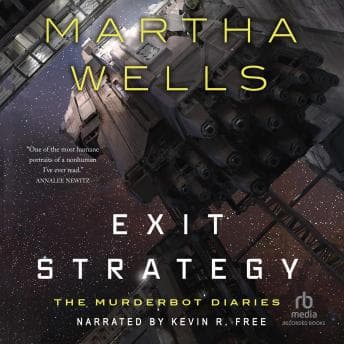
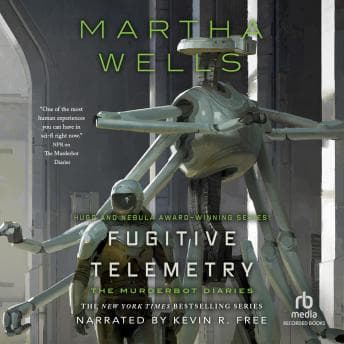
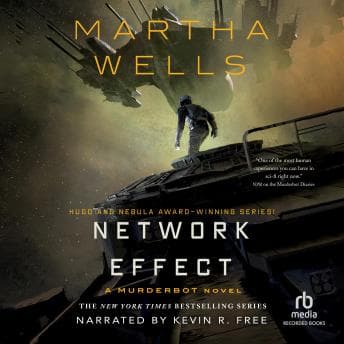
Six books deep into the Murderbot Diaries and Martha Wells is still finding new emotional territory to mine from a character who would rather be watching its soap operas than saving anyone. That same stubborn refusal to be pinned down by genre expectations is what drew me to Renegade's Magic — a book that keeps finding new emotional gears even when the formula feels familiar. Platform Decay drops our favorite anxious killing machine into a rescue mission on a planetary ring habitat — which is exactly the kind of constructed ecosystem that gets my attention. Wells doesn't spend a lot of time on the ecology of the habitat itself (this isn't Becky Chambers building a generation ship biome), but she understands that enclosed systems are fragile, that when one thing breaks, cascading failures follow. The stealth and espionage sequences through the ring habitat have that specific claustrophobia of a system where the walls are literally the only thing between you and vacuum.
What gets me about this entry is the emotional awareness module — this new wrinkle in Murderbot's internal architecture that forces it to actually process what it's feeling instead of shoving everything into a background subroutine. It's not subtle metaphor. It's Wells saying: you can build armor, you can run threat assessments on every human interaction, but eventually your own brain is going to make you sit with the discomfort. Climate grief hit different in this one, not because the book is about climate, but because that feeling of watching something you love degrade while you're powerless — and then choosing to act anyway — that's the emotional spine here.
Kevin R. Free Doesn't Voice Murderbot. He Is Murderbot.
I've listened to every Murderbot audiobook in these mountains. Kevin R. Free has owned this character so completely that I genuinely cannot imagine the internal monologue in any other voice. His sardonic delivery — that flat, slightly exasperated cadence when Murderbot is pretending not to care — is calibrated to a razor's edge. The parenthetical asides (and there are a LOT of them, especially in chapter one) land because Free shifts his register just enough to signal "this is the anxiety talking" versus "this is the tactical assessment." It's a subtle thing. Most narrators would overplay it.
Fair warning on that first chapter, though. The parenthetical thoughts stack up dense enough that if you're postholing through deep snow and your attention drifts for thirty seconds, you'll lose the thread. I had to rewind twice. Once you clear that opening stretch, the pacing opens up — the firefights have real urgency, and the quiet scenes where Murderbot sits with its own emotional processing are genuinely affecting. Free's comedic timing on the kid interactions is perfect. Bone-dry. The kind of humor that sneaks up on you because he doesn't telegraph the punchline.
Who Should Listen (And Who Should Skip)
If you've been with Murderbot since All Systems Red, this is the payoff you've been waiting for — not in plot terms, but in character terms. This is a book about a weapon learning to be a person, and that process is messy and uncomfortable and sometimes hilarious. You get action-packed sequences, real emotional stakes, and the continued pleasure of Wells' incredibly precise voice for this character.
Skip it if you're coming to this cold. Start at the beginning. And if you found the middle books repetitive — if "more of the same" already wore you down — Platform Decay won't fundamentally change your mind. It's the same voice, the same structure. Wells has refined the formula rather than reinvented it. I think it works. Some listeners want reinvention. Nature doesn't forgive mistakes. Neither do I. But Wells isn't making mistakes here — she's making choices, and they're deliberate ones.
Six hours and forty-five minutes. I finished the last hour back at the cabin with the woodstove ticking and the dark pressing against the windows. Murderbot would hate my life out here. No feeds, no network, no media to stream. But it would understand the impulse — building something safe between yourself and a universe that doesn't care whether you survive. And then opening the door anyway.