
"One of the dead bodies knocks on the door and wants to come in."
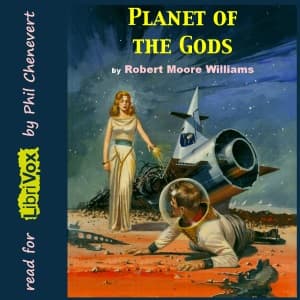
Okay, I need to talk about that line from the description. Because I was coding at 2 AM, procrastinating on my thesis (as one does), and I threw this on expecting some forgettable Golden Age fluff. Then that premise hit me and I was like - wait, hold up. Dead crew member knocking? In a 1950s sci-fi story? Robert Moore Williams, you sneaky bastard.
When Classic Sci-Fi Gets Weird
Here's the thing about Golden Age science fiction that modern readers miss: these guys weren't trying to be hard sci-fi. They were throwing ideas at the wall like D&D dungeon masters on a caffeine bender. And Williams - who apparently wrote over 150 novels, which is just absurd - clearly had some wild ideas bouncing around.
The setup is pretty standard fare for the era. Earth has achieved peace (lol, okay), and they're sending out exploration ships to Vega. Third expedition. Two habitable worlds. Something tries to blast them out of space before they even get close. Three crew members die. They crash-land and bury their dead.
Then the dead start knocking.
I won't spoil where this goes, but the ending gets philosophical in a way I wasn't expecting. One listener described it as "optimistic" and "unexpected," which - yeah, that tracks. Williams was clearly reaching for something bigger than just a monster story. Whether he fully lands it is debatable, but I respect the swing. That same ambition to reach for bigger themes shows up in Dark Tower II: The Drawing of the Three, though King has way more pages to stick the landing.
Phil Chenevert Does the Work
Phil Chenevert narrates this, and look - this is LibriVox. You're not getting a Steven Pacey performance here. (Steven Pacey walked so other narrators could run, but he didn't walk here, is what I'm saying.) What you ARE getting is clear, consistent, no-nonsense delivery that doesn't get in the way of the story.
Some people might find it lacks emotional punch. And yeah, fair. When your dead crew member is supposedly knocking on the door, maybe you want a narrator who sells that horror a bit more. Chenevert keeps it pretty neutral throughout. But honestly? For a story this short - we're talking under two hours - it works fine. The straightforward approach actually fits the era's prose style. These old pulp authors weren't writing for dramatic readings. They were writing for people reading on trains.
The audio quality is clean, which is always a relief with volunteer recordings. No weird background noise, no volume jumps. Just the story, delivered competently.
The World-Building Question (And Why It Doesn't Matter Here)
My usual complaint with short sci-fi is that there's no room for proper world-building. The magic system is - wait, wrong genre. The SCIENCE system is usually hand-wavy at best. And yeah, Williams doesn't give you much to work with on the technical side. The hostile civilization that attacks them? Not deeply explored. The mechanism behind the... let's call it the "resurrection situation"... is more philosophical than scientific.
But here's the thing: at 1 hour 46 minutes, this isn't trying to be Sanderson-level world-building. (Nothing is Sanderson-level world-building except Sanderson.) It's a thought experiment wrapped in a pulp adventure. The kind of thing you'd find in a 1950s magazine between ads for X-ray specs and sea monkeys.
One listener said it "could easily be adapted into a reasonably good low-budget film better than many bland sci-fi movies." And that's... actually a solid take? There's a core idea here that's genuinely interesting, even if the execution is very much of its time.
Roll for Initiative? Nah, Roll for Dishes
Would my D&D group care about this one? Probably not, honestly. This isn't the kind of thing you steal plot hooks from. But for a quick listen while doing dishes or walking to campus? It scratches an itch. There's something comforting about Golden Age optimism - the idea that humanity could actually get its act together and explore the stars peacefully. (We won't, but it's nice to pretend.)
The philosophical ending caught some listeners off guard. I dig that. Williams was trying to say something about life, death, and what happens when you encounter truly alien intelligences. Whether it lands for you will depend on your tolerance for 1950s prose and your expectations going in.
Who should queue this up: Anyone who wants a quick, free sci-fi snack with a genuinely creepy premise and an unexpectedly thoughtful ending. Who should skip: If you need deep world-building or can't handle dated prose, this'll frustrate you.
For free on LibriVox? Worth the time. Just don't expect it to replace your Stormlight Archive re-listen.