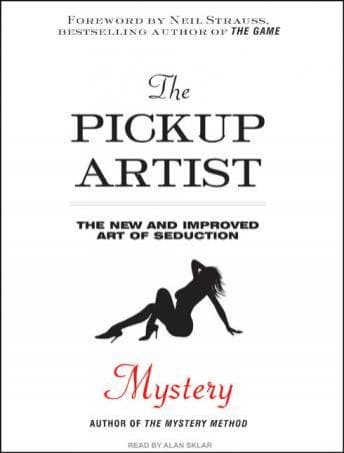

Look, I know what you're thinking. Sarah, why are you reviewing a pickup artist book? Fair. But here's the thing - I read The Game back in college because a CS buddy swore it was "applied social engineering" and honestly? That book was a fascinating anthropological train wreck. So when this sequel-ish thing popped up in my recommendations, morbid curiosity won. I queued it up during a particularly soul-crushing week of on-call rotations, figuring if nothing else it'd keep me awake on the 6:17 AM Caltrain.
I should've just slept.
The Game Got a Patch, But It's Still Buggy
TL;DR: This is basically The Game but with less self-awareness and more Miami mansion flexing. Mystery (Erik von Markovik, for the uninitiated) picks up where Neil Strauss left off, except Strauss had the decency to frame the whole pickup artist world with some journalistic distance and eventual skepticism. Mystery... does not have that filter. Half the book is "never-before-published" seduction techniques - which read like someone tried to turn human connection into a decision tree algorithm - and the other half is stories from Mystery's life that are supposed to be "enlightening" but mostly feel like listening to a dude at a party who won't stop talking about himself.
The first chapter is rough. Like, aggressively rough. The teenage-energy antics and bravado hit different when you're a woman engineer surrounded by tech bros who already think confidence is a substitute for competence. I almost bailed. But I kept going because I genuinely wanted to understand the framework from an analytical perspective - is there actual behavioral psychology here, or is it all smoke and peacocking (literally, he talks about peacocking)?
The answer is: about 30% interesting behavioral observations buried under 70% cringe. There are moments where Mystery discusses approach anxiety, social proof, and group dynamics that genuinely map to real social psychology research. If you stripped all the gross objectification out and just published the bits about reading body language and building genuine confidence, you'd have a decent - if short - self-help pamphlet. But you can't strip it out, because the whole framework treats women as targets in a system to be optimized, and as someone who literally optimizes systems for a living, I can tell you: people are not microservices.
Alan Sklar Deserved Better Source Material
Here's where it gets weird. Alan Sklar is a legitimately good narrator. The man has AudioFile Earphones Awards. He's been named Best Voice by AudioFile magazine. He brings this professional, almost dignified gravitas to the narration, and the disconnect between his polished delivery and Mystery describing his "field tested" pickup routines is... honestly kind of hilarious? It's like having Morgan Freeman narrate a frat house diary.
Some listeners complained the narration "doesn't make sense," and I think I understand why - Sklar's measured, authoritative tone doesn't match the chaotic energy of the content. When he's reading Mystery's club stories with the same cadence he'd use for a history book, it creates this cognitive dissonance that's genuinely disorienting at 6 AM. I bumped it to 1.75x (my "this could've been a blog post" speed) and honestly, that helped. The pacing issues smooth out when you're moving faster through the filler.
Who This Is Actually For (And Who Should Run)
If you read The Game and want the behind-the-scenes from Mystery's perspective, this delivers that - just with way less literary polish. If you're genuinely struggling with social anxiety and want to understand one framework for approaching strangers, there are useful nuggets here, but I'd point you toward actual psychology books first (Vanessa Van Edwards' stuff is infinitely better and doesn't make you feel like you need a shower). The 7 Eternal Laws of Success falls into a similar trap — promising transformation while delivering the kind of advice that sounds profound at 1.75x speed and hollow the moment you slow down.
If you're a woman, listening to this is an... educational experience. Like reading your opponent's playbook. Kevin caught me laughing on the couch at 11 PM and asked what was so funny, and I just held up my phone and said "men are wild" and he didn't even ask follow-up questions.
The ROI on this audiobook is low. Nine and a half hours is a lot of commute time to invest in something that could genuinely have been a blog post - or maybe three blog posts and a YouTube video. The technique sections repeat concepts, the stories meander, and by hour 6 I was toggling between this and a podcast about database sharding, which tells you everything about relative entertainment value.
Perfect for: morbid curiosity, understanding a cultural phenomenon. Skip for: actual dating advice, anything productive.
Debug Verdict: Known Issues, Won't Fix
This book is a time capsule of mid-2000s pickup culture with a fresh coat of paint. If The Game was version 1.0, this is version 1.1 - a patch that fixes nothing fundamental and introduces new bugs. Sklar's narration is the one genuinely professional element, but even he can't compile bad source code into a working program. I don't regret listening because I'm a completionist with questionable judgment, but I wouldn't spend a credit on it. Borrow it, stream it, satisfy the curiosity, move on.