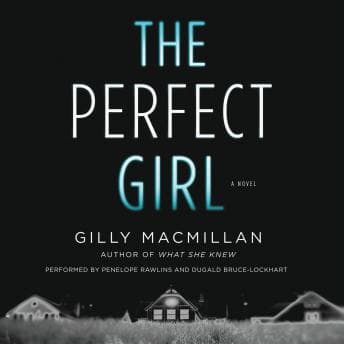

Gilly Macmillan understands something that most thriller writers don't: the most dangerous person in a family isn't the one with the criminal record. It's the one controlling the narrative.
I was elbow-deep in a lamb rogan josh—one of those Sunday cooking projects where you convince yourself that grinding your own spices is meditative and not just procrastination—when I started this audiobook. By the time Maria was dead at the end of the opening act, I'd burned the onions and didn't care.
The Psychology of the "Good Mother" Mask
Let me tell you what hooked me. Maria Maisey is a fascinating case study in maternal narcissism disguised as protective love. She's orchestrating Zoe's comeback recital, demanding her daughter hide a past that includes three dead classmates, and she's married a man she hasn't even told the truth to. The protagonist exhibits classic controlling behavior dressed up in the language of care—"I'm doing this for you, Zoe." My therapist would have thoughts about this character, and none of them would be gentle.
Zoe herself is where Macmillan really earns her keep. A seventeen-year-old musical prodigy with a genius IQ who was involved in an incident that killed three peers—and she served time for it. The research actually shows that adolescent offenders who are also gifted tend to develop these incredibly complex self-narratives, splitting themselves into the "before" person and the "after" person. Macmillan gets this right. Zoe doesn't just carry guilt; she carries the weight of everyone else's version of who she is. The perfect girl. The monster. The prodigy. The criminal. She's drowning in other people's stories about her.
What makes this character compelling is that Macmillan never lets you settle into comfort with Zoe. You want to trust her. You mostly trust her. But that "mostly" does a lot of heavy lifting across nine and a half hours.
Two Narrators, Two Lies
Dugald Bruce-Lockhart and Penelope Rawlins split narrator duties here, and it works—genuinely works, not in a gimmicky way but in a way that mirrors the psychological fracture at the center of the story. Rawlins carries the female perspectives with this tight, controlled energy that matches Maria's need to keep everything buttoned up. Bruce-Lockhart handles Sam and Lucas, and there's something almost soothing about his voice that creates this unsettling contrast with the darkness underneath. You're listening to someone who sounds trustworthy narrate things that should make you deeply suspicious. Double Dexter plays a similar trick with its narrator—that same unsettling gap between a voice that pulls you in and the moral chaos it's describing.
The alternating perspectives—Zoe, her stepbrother Lucas, her former solicitor Sam—create this effect where you're constantly recalibrating. I found myself asking: why does Maria really want this recital so badly? Is it rehabilitation for Zoe or reputation management for Maria? The dual narration forces you to hold multiple versions of the truth simultaneously, which is exactly what the story demands.
I will say: the pacing isn't breakneck. This is a slow burn. If you're coming from something like Gone Girl expecting constant whiplash reveals, you'll get restless. Macmillan is more interested in the accumulation of small lies than big dramatic twists. The tension is oppressive rather than explosive—it builds like pressure behind your eyes before a migraine. Some listeners reportedly found the climb to the climax too slow. Psychologically, though, it tracks. Real families don't implode in a single moment. They erode.
Who This Is Really For (And Who Should Walk Away)
If you want a thriller that treats its characters like actual humans with actual psychological patterns rather than plot devices who exist only to surprise you—this is your book. If you're interested in how trauma gets weaponized within families, how "moving on" is sometimes just another form of denial, and how the people closest to us are the ones we see least clearly? You'll eat this up.
But if slow-building psychological suspense makes you itch, or if you need your mysteries action-forward with bodies dropping every other chapter, this isn't it. This is a character study wearing a thriller's clothing. I happen to think that's the best kind.
And if unrealistic character motivations bother you the way they bother me: Macmillan passes the test. Every choice these characters make—even the terrible ones—follows an internal logic that holds up under scrutiny. The author understands human nature.
My Case Notes
I finished this around midnight, rogan josh long cold in the pot, and sat there for a minute just... processing. Not because the ending shocked me (it's good, but I'd narrowed it down by hour seven), but because of what it says about the stories we build around the people we love. How those stories can become prisons. How the "perfect girl" narrative was never about Zoe at all—it was about everyone else's need for a version of events they could live with.
Macmillan wrote a book about the lies families tell themselves. The audiobook format, with its two distinct voices literally embodying those competing narratives, might actually be the ideal way to experience it.