
I didn't expect to be reviewing this. Honestly, I picked it up because my therapist has been on my case about sleep hygiene, and my 2 AM habit of reading journal articles on attachment theory while eating leftover dal is apparently "not conducive to rest." So here I am, a woman with a PhD-adjacent brain, voluntarily listening to someone describe a hammock on a beach. For science.
And you know what? It worked. Annoyingly well.
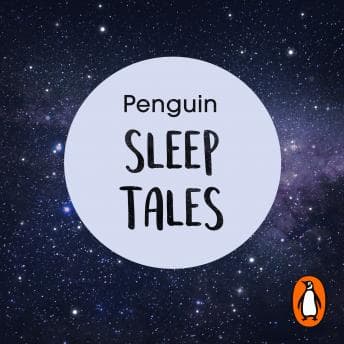
The Psychology of Boring You to Sleep (Complimentary)
Here's what's interesting from a research perspective: the structure of these ten stories is genuinely clever. They're not narratives in any traditional sense — there's no protagonist making choices, no conflict, no resolution. They're descriptive landscapes. You're lying in a hammock. You're watching a campfire. You're in a bothy during a storm. The research actually shows that visualization-based relaxation techniques lower cortisol more effectively than passive distraction, and that's exactly what these stories are engineered to do. Each one is about 15 minutes long, which maps neatly onto the average sleep onset latency for adults without clinical insomnia.
What surprised me was the variety. "The Purring Temple" — which, yes, is about imagining yourself in a temple with purring cats — sounds absurd on paper, but the layered sound design underneath Sally Scott's narration pulls it off. There's actual birdsong, rainfall, waves lapping. Not stock Spotify white noise, but textured soundscapes that shift as the story moves. "A Bothy in a Storm" pairs wind and distant thunder with descriptions of warm shelter, and my brain just... surrendered. I found myself asking: why does the contrast between external chaos and internal safety work so well as a sleep trigger? (Answer: it replicates the conditions of secure attachment. You're welcome.)
The ASMR track, "The Magic Bookshop," is the outlier. It leans into soft, close-mic'd descriptions of turning pages and running fingers along book spines. If you're ASMR-responsive, this will probably light up your brain like a Christmas tree. If you're not — and I'm genuinely not — it's still pleasant enough, just slightly more self-conscious than the others.
Sally Scott Is Doing Something Deceptively Hard
I went into this assuming narration for a sleep audiobook was easy work. Read slowly. Sound calm. Don't sneeze. But Sally Scott's performance is more deliberate than that. The pacing is measured — not monotone, but rhythmic in a way that mimics the cadence of a lullaby without being infantilizing. There are pauses built in, real ones, where you can feel the silence holding space. One listener nailed it: "The pauses really help to soothe." They do. Because silence is information. Your nervous system reads those gaps as safety signals.
She doesn't do character voices, and she shouldn't. This isn't about character differentiation. It's about sustained, predictable vocal texture. And she nails it. My one small observation: on a couple of tracks, particularly "Yara's Song" (inspired by a Brazilian folk tale), the narration takes on slightly more narrative shape, which — for me — was just engaging enough to keep me awake a beat longer than the purely descriptive ones. Not a flaw exactly, but worth noting if you're using this as a genuine sleep aid rather than a relaxation tool.
Who This Is Actually For (And Who Should Keep Scrolling)
Look, if you want a story with plot, character arcs, or literally anything happening — this is not your audiobook. Psychologically, this doesn't track as entertainment. It tracks as intervention. It's a tool, designed with The Sleep Council, and it does its job with quiet competence.
Perfect for: anxious sleepers, overthinkers (hi), anyone whose brain won't stop running case studies at midnight. Also genuinely good for travel — I used "Travel on the Overnight Train" during a late-night Amtrak back from New York and was out before we hit Connecticut.
Skip if: you need narrative engagement, you're looking for kids' content (Penguin has separate Ladybird and Puffin versions for that), or you find guided relaxation irritating on principle.
At 2 hours 30 minutes for ten tracks, it's lean. You're not getting a massive library here. But each 15-minute track is self-contained and sleep-timer friendly, which is the whole point.
My Therapist Would Approve
I started this review slightly skeptical and I'm ending it genuinely recommending it to anyone who, like me, treats bedtime as an adversarial negotiation with their own brain. It's not literature. It's not trying to be. It's a well-designed psychological tool wrapped in soft rainfall and Sally Scott's remarkably soothing voice. The last audiobook that worked on me this consistently as pure delivery vehicle — zero pretension about what it is — was Diary of a Wimpy Kid: Wrecking Ball, which is a sentence I did not expect to type in a sleep hygiene review, and yet here we are. I've now fallen asleep to "Dancing Flames" three times, and I can't tell you how any of them end.
That's the highest compliment I can give a sleep audiobook.