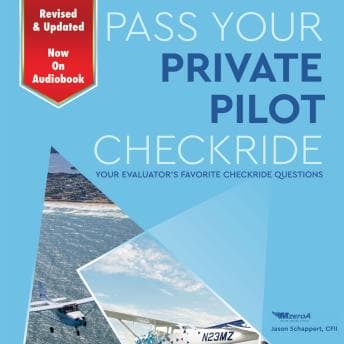

This is not my usual territory. I spend my days convincing teenagers that Hemingway's iceberg theory matters, not studying airspace classifications. But here's the thing—my brother-in-law Kevin is finally going for his private pilot license at 52, and he asked me to help him study. "You're a teacher," he said. "Quiz me." So I downloaded this to understand what I'd be quizzing him on.
And honestly? I came away genuinely impressed by how Jason Schappert structures information for retention.
The Pedagogy Actually Works
Look, I've been teaching for two decades. I know when someone understands how learning happens versus when they're just dumping information. Schappert clearly gets it. The way he organizes checkride questions—grouping them by topic, building complexity, anticipating where students get tripped up—this is solid instructional design. It's not flashy. It's not trying to be entertaining. But it's effective.
The audiobook runs just under three hours, which is perfect for what it's trying to do. You can listen through the whole thing on a long drive, then go back and drill specific sections. Kevin's been playing it during his commutes to the airport (irony noted), and he says the repetition is helping concepts stick. That's exactly how audio study material should function.
I couldn't find much about Tony Smyles online, but based on this performance, he's doing exactly what the material needs. Clear. Measured. No dramatic flourishes—which would be weird for a study guide anyway. Some listeners wished Schappert himself had narrated, and I get that. There's something about hearing the author's own voice on instructional content that adds authority. But Smyles doesn't get in the way, and for technical material, that's actually the goal.
Where It Falls Short (Because Nothing's Perfect)
Here's my honest assessment: this is a 3.0 edition that apparently doesn't include all the most current FAA changes. That's a problem. If you're marketing something as updated, it needs to BE updated. Kevin mentioned cross-referencing a few things with his CFI, and sure enough, there were some discrepancies. Not deal-breakers, but annoying.
Also—and this is the English teacher in me talking—the prose is purely functional. Which is fine! This isn't literature. But if you're someone who needs engagement to maintain focus, you might find your mind wandering. I caught myself drifting during some of the more technical sections about weather minimums. (In my defense, I was also grading sophomore essays on The Great Gatsby. Multitasking has limits.)
One listener I read about mentioned preferring the ASA Oral Exam Guide for being more comprehensive and cheaper. Worth considering if you're budget-conscious. But the audio format here is genuinely valuable for kinesthetic learners or anyone who can't sit with a physical book.
Who Should Queue This Up—And Who Should Skip
If you're preparing for your private pilot checkride and you learn well through listening, this is a solid tool. Not the only tool you'll need—Kevin's using it alongside his ground school materials and actual flight training—but a good one. The structure mirrors how oral exams actually work, which means you're practicing in the format you'll be tested.
If you're expecting a narrative about the joy of flight or some inspirational journey into aviation? Wrong book. This is a study guide. It does study guide things. It does them pretty well. Skip it if you need storytelling to stay engaged, or if you're looking for comprehensive coverage of every possible checkride topic.
My students would absolutely hate this—no plot, no characters, no drama. But they'd also hate Strunk and White, and that doesn't make it less useful. Sometimes educational content just needs to be clear and effective. Schappert delivers that. That same clarity shows up in Being Mortal, where Atul Gawande breaks down end-of-life medical decisions without the usual clinical jargon—just straight talk about hard topics.
The Final Grade
Kevin passed his oral exam last week, by the way. He credits this audiobook for about 40% of his prep. The other 60% was his CFI drilling him relentlessly and his own stubborn refusal to fail at something in front of his pilot nephew. But 40% is pretty good for a three-hour listen.
Worth the investment if you're in the target audience. Just maybe double-check any regulatory details with current FAA publications.