
What happens when an officer's instincts scream that something's wrong, but everyone around them insists they're imagining things?
I've been there. Not with a baby, thank God, but in situations where my gut told me one thing and the official story said another. Dead Men's Money had that same tension between what you know and what you can prove. So when Ruth drops an infant at a Christmas Eve party and immediately starts questioning whether she actually caused those injuries—or if something darker was already happening in that household—I was locked in. Finished this one during a late-night drive back from a client site in Houston, Ranger snoring in the passenger seat, and I'll admit the premise had me gripping the wheel a little tighter than usual.
When Your Intel Says One Thing and Everyone Says You're Crazy
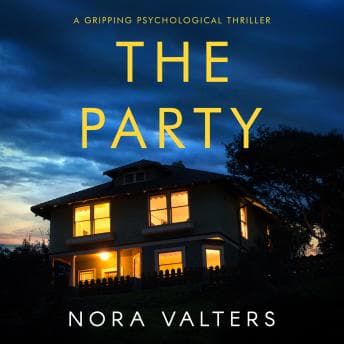
Here's the tactical situation: Ruth has everything going for her. Career, fiancé, the whole package. She brings her man home to meet the family, attends a party with old school friends, and then—catastrophe. A baby gets hurt in her arms. But Ruth's convinced the injuries were already there. That the Murphy family isn't what they seem.
I've seen people cling to delusions under pressure. Combat stress does strange things to the mind. So the question Valters poses is genuinely unsettling: Is Ruth a trained observer uncovering abuse, or is she a woman destroying her own life through obsession? The author keeps you guessing, and that's the book's strongest asset.
Here's where it lost me, though. The suspension of disbelief required gets pretty damn steep. Ruth loses her job, her fiancé, her friendships—basically torches everything she's built—and the escalation feels less like a psychological thriller and more like watching someone repeatedly touch a hot stove. At some point, you want to shake her and say "Gather evidence, build a case, stop making yourself look insane." Any competent operator knows you don't broadcast your suspicions to the enemy.
Lucy Price-Lewis Carries a Heavy Load
Let me cut to the chase on the narration: Lucy Price-Lewis is doing yeoman's work here. Her Wiltshire accent gives Ruth a grounded, relatable quality, and she absolutely nails the obsession. You can hear Ruth's certainty hardening into something dangerous as the story progresses. That gradual shift from concerned observer to someone who might be losing her grip? Price-Lewis sells it.
One listener I came across said she "can't believe she would be willing to narrate such a crap book," which is harsh but tells you something—the performance is strong enough that people noticed the gap between narrator quality and story quality. That's actually a compliment to Price-Lewis, backhanded as it sounds.
The Mission Brief: Who's This For?
If you like psychological thrillers where you genuinely can't tell if the protagonist is a hero or a trainwreck, this delivers. The central mystery—did Ruth cause those injuries or not—kept me engaged through eight hours. Valters grew up in the New Forest and clearly knows her English small-town dynamics. The way old friendships curdle, how gossip spreads, the suffocating closeness of a community that's known you since childhood—that all rings true. Golden Lion operates in a completely different world—military action where the stakes are clear and the enemy doesn't hide behind suburban facades—but I appreciated its straightforward approach to conflict.
If you need your thrillers to pass the plausibility test, though, you might struggle. Some plot points had me doing the mental equivalent of an eye-roll. Real investigations don't work the way Ruth approaches this, and her fiancé's patience stretches beyond what any reasonable person would tolerate. (Linda would've had me committed or divorced by hour three of this behavior, and she's put up with a lot.)
Ranger's Assessment
Ranger slept through most of it, which I'm taking as neutral. He usually perks up when narration gets intense, and Price-Lewis kept things measured rather than melodramatic—the right call for this material.
At 8 hours, it's a reasonable commitment. I listened at my usual 1.25x and it flowed fine. No audio issues, no production problems, just a clean single-narrator thriller.
The verdict: this is a wait-for-sale situation. The narration is genuinely good, and if you can roll with some implausibility, there's a decent mystery here about perception, obsession, and whether trusting your instincts can become its own kind of madness. But it's not quite mission-critical listening. If you've got a 2-for-1 credit deal, pair it with something else. Price-Lewis makes it worth the time; the story itself is a mixed bag.
Valters has potential. I'd try another one of hers to see if the plotting tightens up. Sometimes authors need a book or two to find their footing.