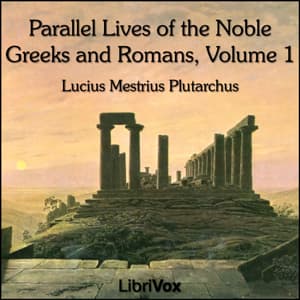

I'll be honest with you. I started this one during a six-hour drive to a client site in Houston, expecting to zone out somewhere around the second biography. Ancient Greeks and Romans? Figured it'd be background noise while I white-knuckled through I-10 construction. Instead, I found myself pulling into a rest stop just to process what Plutarch was laying down about Theseus.
Here's the thing about Plutarch that nobody tells you upfront—the man wasn't writing history. He was writing about leadership. About character. About what makes men succeed or fail spectacularly. And after 25 years watching officers rise and fall based on their character flaws? This hit different than I expected.
Why a 2,000-Year-Old Book Still Matters
Plutarch pairs Greeks with Romans deliberately. Theseus with Romulus. Lycurgus with Numa. Solon with Poplicola. He's not just comparing timelines—he's dissecting what made these leaders tick. The ambition, the strategic thinking, the fatal blind spots.
Take Lycurgus and his reforms of Sparta. The discipline, the sacrifice of personal comfort for collective strength. I've seen this playbook work in Special Forces units. I've also seen it destroy men who couldn't adapt when the mission changed. Plutarch gets that complexity. He doesn't sugarcoat the violence or pretend these were perfect men. They were effective men. Sometimes brutal ones. That same unflinching look at flawed leaders navigating impossible situations shows up in Lost World: A Novel, though Crichton's setting the chaos in jungles instead of ancient city-states.
The translation here is from the Loeb Classical Library—old, copyright-expired, but solid. Dense as hell in places. You're not breezing through this like some airport thriller. But the payoff is real insight into how ancient civilizations thought about power, duty, and legacy.
The LibriVox Situation
Let me cut to the chase on the narration. This is LibriVox. Volunteers. Free audiobook. You know what you're getting into.
The quality is surprisingly clean—no weird background noise, no audio dropout issues. The readers are clear and straightforward. Easy to follow. But here's the trade-off: you're not getting dramatic character voices. You're not getting a professional narrator who's going to make Romulus sound different from Numa. It's reading, not performance.
For some books, that'd be a dealbreaker. For Plutarch? It actually works. This isn't a thriller where you need tension in the voice. It's philosophy wrapped in biography. The straightforward delivery lets the content breathe. My wife would probably call it "boring narration" but she also thinks C-SPAN is boring, so take that with appropriate salt.
The multiple volunteer thing means some variation in voice quality between sections. Nothing jarring, but noticeable. I adapted after about twenty minutes.
Who This Is For (And Who Should Skip It)
If you're a history buff who wants to understand the foundational thinking of Western civilization—yes. If you're in leadership and want to see how character shapes outcomes across centuries—absolutely yes. If you're homeschooling kids and want substantial classical education material—parents in the reviews are using it exactly that way.
If you want entertainment? If you need action every ten minutes? If dense historical prose makes your eyes glaze over? Skip it. No shame in that. This is a specific kind of book for a specific kind of listener.
Ranger slept through most of it, which honestly might be the fairest review. It's not exciting. It's illuminating. Different missions, different requirements.
Mission Debrief
The price is right—it's free through LibriVox and Internet Archive. Eight hours and forty-four minutes of classical education for zero dollars. The narration is functional, not exceptional. The content is genuinely valuable if you care about understanding how ancient thinkers analyzed leadership and character.
I'm glad I listened. Will I continue to Volume 2? Probably during my next long drive. Would I pay a full Audible credit for this specific recording? No—the narration doesn't justify premium pricing when the same content exists in better-produced versions.
But for free? For accessible classical education? Mission accomplished. Just don't expect fireworks.








![Steve Jobs [unabridged audiobook] audiobook cover](/_next/image?url=https%3A%2F%2Fcovers.audiobooks.com%2Fimages%2Fcovers%2Ffull%2F9788499923406.jpg&w=1920&q=75)