"They shoot the white girl first." That's the opening line. Seven words that land like a gunshot - which is exactly what they are. I was walking the lakefront with Denise on a Saturday morning, coffee in hand, sun doing that thing off Lake Michigan where everything looks deceptively peaceful, and Toni Morrison's voice dropped that sentence into my ears like a grenade into a baptismal font.
And then she never tells you which one is the white girl.
That's Morrison. That's the whole book, really. She hands you a question in the first sentence and then spends fifteen hours making you wonder why you needed to ask it.
The Town That Loved Itself to Death
Ruby, Oklahoma. Population 360. An all-Black town founded by people whose ancestors were turned away - not by white folks, but by lighter-skinned Black communities. So they built their own paradise. They built it with pride and pain and an iron certainty that purity would save them. And then they destroyed women to protect it.
This reminds me of what Hemingway said about every true story ending in death - except Morrison isn't Hemingway. She's doing something far more complicated. She's writing about how the oppressed become oppressors, how a people's origin story calcifies into dogma, how men who survived unspeakable racism can turn around and unleash violence on women they've decided are impure. The men of Ruby and their obsession with the Oven - this communal structure that was once a symbol of survival and becomes a symbol of control - that's the kind of detail my AP students would spend a week unpacking. The younger generation wants the Oven's inscription to read "Be the Furrow of His Brow." The elders insist it says "Beware the Furrow of His Brow." Two words. A whole theology of difference.
The prose deserves to be savored. Morrison writes in circles, not lines. Characters appear, vanish, reappear through someone else's memory. You're in 1976, then 1890, then somewhere in between, and the transitions aren't signposted. You have to surrender to the rhythm or you'll drown. I won't pretend I caught everything on the first pass - there were moments grading papers at 11 PM where I had to rewind because I'd lost the thread between Consolata and Soane, or mixed up which of the Morgan twins said what. This is not a casual listen. This is a book that demands you show up.
When the Author Reads Her Own Words (And Also... Doesn't)
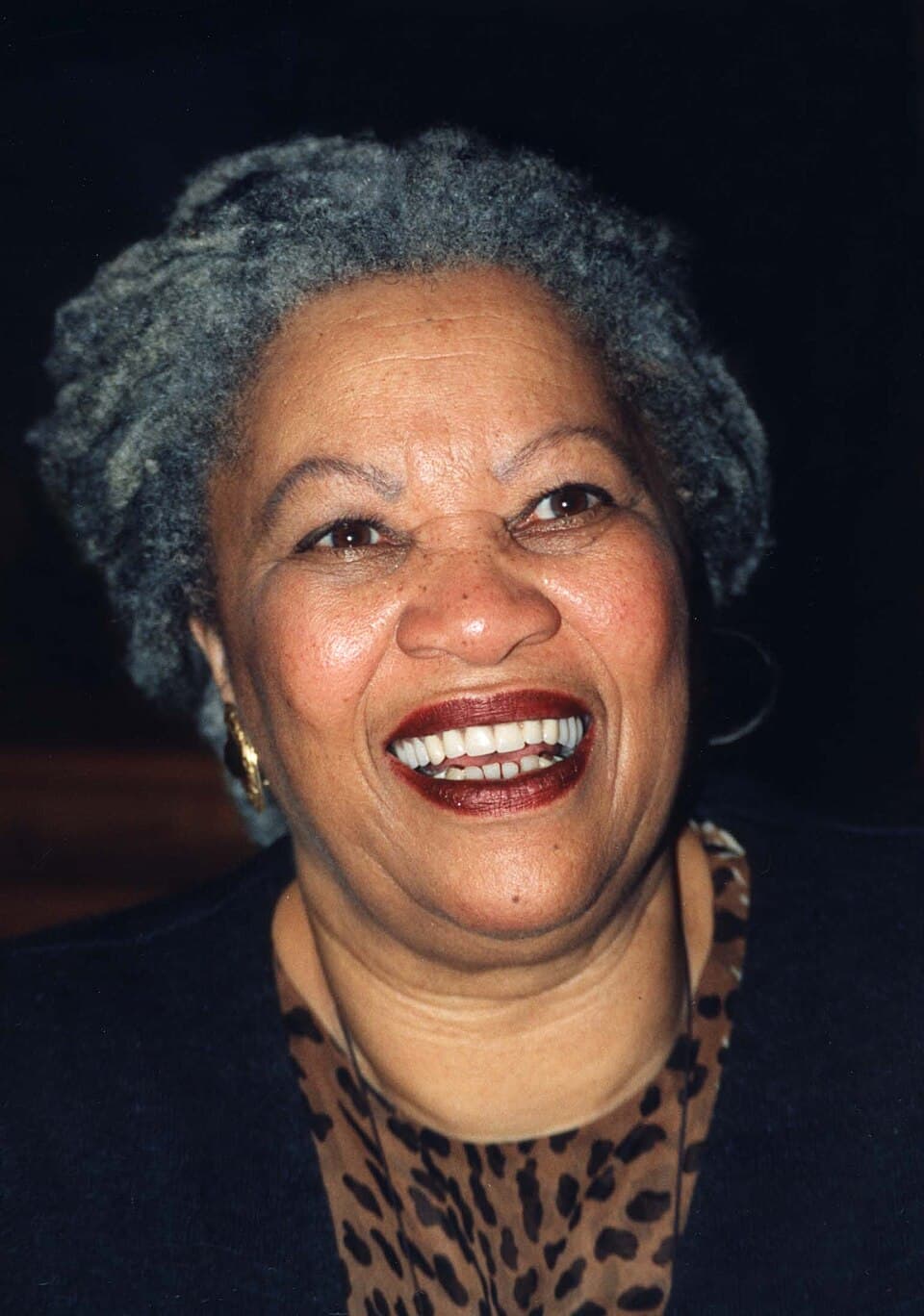
Here's where it gets complicated. Morrison narrating her own novel should be the ultimate experience. And in many ways it is. Her voice has this quality - aged, unhurried, sighing at the ends of sentences like she's carrying something heavy and beautiful. When she reads the Convent women's stories, there's a maternal weight to it. She sounds like she knows these women. She sounds like she's grieving for them even as she's introducing them.
But - and this is a real but - this recording appears to be abridged. Not labeled that way, but Morrison skips sections. Whole passages from the printed text just aren't here. I noticed it first when a transition felt too abrupt, like a scene had been cut mid-breath. And I checked. Parts are missing. For a book this dense, where every sentence is load-bearing, that's a problem. You're already doing complex interpretive work as a listener, and then the text itself has gaps you don't know about unless you've read the print edition.
She also doesn't do distinct character voices. Everyone sounds like Morrison, which - look, I get the argument that this is how the author hears them, that the uniformity is itself a statement. But when you've got Mavis, Gigi, Seneca, Pallas, and Consolata all living in the Convent, and the men of Ruby with their overlapping grievances, some vocal differentiation would've helped. A professional narrator might've given you that clarity. What you get instead is Morrison's interpretation, which is intimate and irreplaceable but occasionally opaque.
The narrator understands that pause is punctuation - Morrison's pauses are extraordinary, actually. The spaces between her sentences feel deliberate, almost liturgical. But the missing text undercuts what could've been a definitive audio experience.
Who Gets a Seat in This Pew
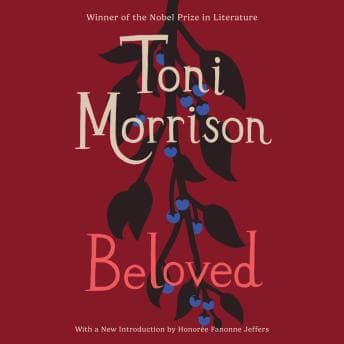
If you loved Beloved, this is its spiritual successor - but harder. Where Beloved gives you Sethe as an anchor, Paradise gives you a whole town and asks you to hold it all at once. My students would hate this. I love it. But I'd be lying if I said the audio format is the ideal way in. This is a book that wants you to flip back pages, to reread paragraphs, to sit with sentences. Audio makes that harder.
Listen to this if you want Morrison's voice in your head forever - because once it's there, it stays. The Christie Affair gave me a similar experience — a narrator whose voice feels so specific and intentional that I kept second-guessing whether I was getting the whole picture or just the version she wanted me to see; my review of The Christie Affair gets into how that kind of unreliability can be a feature or a flaw depending on how much you trust the teller. Skip this version if you need the complete text and clear character separation. Honestly? Read the print edition first, then come back to this as a companion piece. Let Morrison's voice be the commentary track on a novel you already understand.
The ending - those last few pages - I was standing in my kitchen, coffee cold, not moving. Denise asked if I was okay. I wasn't sure. That's Morrison at her most devastating: she doesn't tell you how to feel. She just opens a door and you walk through it weeping.
The Assignment I'd Give Myself
Worth pausing the faculty meeting for - but go in knowing this is an imperfect vessel for a staggering novel. The voice is sacred. The text is incomplete. Both things are true, and you have to decide which one matters more to you.