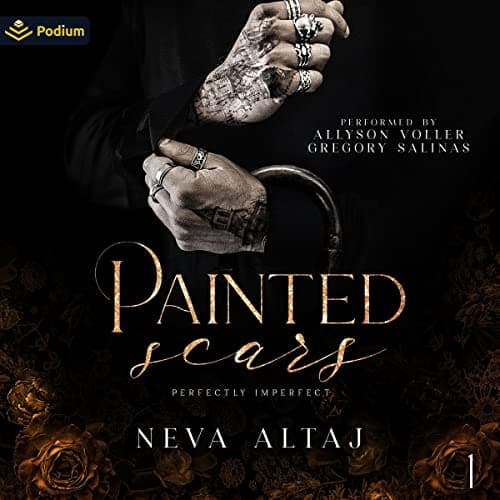

Painted Scars sells a dangerous husband, not a believable safety plan—and knowing the difference is the price of admission. I listened alone in the job trailer after the crew left, checking delivery slips while the air conditioner fought the Texas heat. Nina was pretending to adore a Russian crime boss to fulfill a marriage deal. Meanwhile, I was wondering what happens when the person you're fooling has the authority to decide you aren't leaving.
That's the hook Neva Altaj gets right. Nina's performance isn't just camouflage. It's exactly what makes Roman want her. The skill she uses to survive the arrangement becomes another reason he wants to keep it going. Pretty lousy exit strategy. Pretty effective romance setup.
Nina's act is what Roman wants
Nina has more to do here than stand around waiting for a dangerous man to become gentle. She manufactures the appearance of marital happiness, and Roman recognizes a little manipulator rather than an innocent he has completely fooled. That distinction matters. He's attracted to her ability to deceive, not merely her looks or her fear.
I liked that angle more than the criminal prestige surrounding him. Being the Pakhan of the Russian Bratva gives Roman power; Nina's performance gives their relationship something to push against. She's working within a bad arrangement, using the tool available to her. You don't have to mistake that for equal bargaining power to appreciate her initiative.
But the fast progression toward attraction and trust is where I wanted more resistance. Desire can arrive before common sense. Trust ought to take longer when one spouse controls whether the agreement ends. The romance asks you to accept that acceleration, and I could enjoy it without buying every step.
My dad instincts weren't quiet about Roman deciding the deal was off, either. There's a difference between someone protecting you and someone deciding your choices for you. Here, that friction is part of the fantasy, not a problem the book needs you to solve. Fair enough—but know what you're purchasing.
Despite the Mystery & Thriller label, I wouldn't choose Painted Scars for an investigation, criminal procedure, or a close examination of how organized crime operates. For a crime-story read built around a different sort of tension, I would put Divided in Death in a separate pile. The marriage is the main event. The Bratva position supplies the threat behind it.
Salinas gives Roman more than the threat
Gregory Salinas is the strongest reason I'd choose this edition over reading the premise on a page. His Roman has the intimidation and seductive confidence the role needs, but the sensitivity in his interactions with Nina keeps the performance from being nothing but a prolonged warning. Without that softer register, Roman's determination to keep her could become exhausting rather than attractive.
Allyson Voller shares the narration, and the two-performer presentation suits a story built around the difference between Nina's outward affection and the couple's shifting relationship. Salinas was the clearer standout for me; I don't have a specific accent or pronunciation complaint to pin on either performer. Nor would I claim elaborate sound design as a selling point. The useful feature here is the vocal casting.
At six hours and twenty-five minutes, this is a manageable commitment for trying the first Perfectly Imperfect book. My usual 1.4x makes it roughly a four-hour-thirty-five-minute listen. That works for fitting it between responsibilities, though it won't make the quick emotional progression feel any more gradual. Slowing playback can't supply extra time spent earning trust.
And headphones. Definitely headphones if your kid might wander into the trailer or truck. This is adult romance with sexual content and criminal violence, not something I'd leave playing through the speakers during pickup. I would keep Melt in that same after-hours listening pile.
Buy the marriage fantasy, not a crime thriller
If you want a resourceful heroine performing devotion until the performance complicates the deal, Painted Scars gives you a clear reason to press play. You get concentrated romantic tension and an appealing Roman performance; you give up a more patient development of trust and any expectation that the crime label promises investigative substance.
For my money, this is a sale purchase rather than an automatic full-credit choice. I enjoyed Nina being valued for the very deception she's using to manage Roman. I wanted more time before attraction could carry the weight of safety. Catch it discounted, keep the headphones handy, and let the marriage—not the thriller listing—set your expectations.