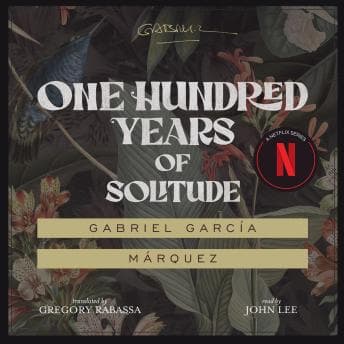

Look, I need to rant about something before we even start: the Buendía family has maybe six names between them across seven generations. You've got your José Arcadio, your Aureliano, your Remedios, and then they just… recycle. Like a D&D player who keeps naming every new character some variation of "Thornwick." I was three hours deep into this audiobook, debugging a procedural terrain generator at 2 AM (not working on my thesis, Dr. Patel, don't ask), and I genuinely lost track of which Aureliano was currently having an existential crisis. There's a reason people say you need the family tree chart open. They are not exaggerating.
But here's the thing — and I cannot stress this enough — once the naming convention clicks in your brain as the point, as this cyclical trap the family can't escape, the whole book rearranges itself like a puzzle box snapping into place. And suddenly those repeated names aren't a bug. They're the most devastating feature of the entire narrative design.
The World-Building That Puts Fantasy Authors to Shame
I spend most of my listening hours in secondary worlds with hard magic systems and detailed maps. So when I say García Márquez built something in Macondo that rivals anything in speculative fiction, I mean it. This isn't Sanderson-level world-building — it's a completely different beast. Macondo doesn't have rules you can chart on a whiteboard. It has vibes. A woman ascends to heaven while hanging laundry. A plague of insomnia hits the entire town and nobody finds this particularly unusual. A priest levitates after drinking hot chocolate. And John Lee narrates all of it with this deadpan solemn delivery that somehow makes the impossible feel mundane, which is exactly right. That's the whole trick of magical realism — the magic isn't the spectacle, it's furniture.
The town itself goes through this arc from isolated paradise to connected, exploited, and eventually forgotten — and if you've ever read about the United Fruit Company or banana republic history, the Macondo banana plantation massacre sequence hits like a truck. García Márquez based it on a real 1928 massacre in Colombia, and the way the book handles it — the government denying it happened, history literally being erased — is one of the most chilling things I've listened to this year. Not because of any dramatic narration trick, but because Lee delivers the denial of three thousand deaths in the same measured tone he uses for everything else. The horror is in the flatness.
John Lee: The Right Voice for the Wrong Reasons
Okay, so. Steven Pacey walked so other narrators could run, and John Lee is... doing something else entirely. He's not doing voices. He's not doing theater. He's reading this like a historian recounting events from a very old, very strange manuscript, and for this specific book, it mostly works. His pronunciation of the Spanish names is clean — he doesn't stumble over Aureliano Buendía or Amaranta Úrsula, which matters when you're hearing those names four hundred times across fourteen hours.
But I won't pretend the monotone doesn't test you. Around hours six through nine, when the middle Buendía generations are cycling through their wars and love affairs and alchemical obsessions, Lee's consistent register can blur everything together. If you're used to narrators who shift gears for different characters — distinct voices, energy changes — you will notice the absence. I caught myself rewinding more than once because my attention drifted during a generation transition and suddenly I was following a different Aureliano without realizing it.
His inflections do land the humor, though. There's a bit where Colonel Aureliano Buendía makes little gold fishes just to melt them down and make them again — this perfect metaphor for the family's cyclical futility — and Lee's delivery carries just enough dry amusement that you feel the absurdity without him winking at you. That restraint is genuinely effective.
My D&D Group Would Love This (Sort Of)
I kept thinking about how this would work as a campaign setting. Macondo has the deep lore, the generational stakes, the cursed bloodline, the prophetic manuscripts that only get decoded at the end. It's basically a multi-session sandbox campaign run by a DM who's way more interested in theme than combat encounters. My table would eat it up for about three sessions and then get frustrated that nobody can roll initiative against existential dread.
Seriously though — if you've ever wanted a fantasy novel that doesn't feel like fantasy, that uses impossible events to illuminate very real human patterns of ambition and forgetting and repeating your parents' mistakes, this is the one. It's literary fiction wearing magical realism like a cloak, and it earned that Nobel Prize. Breakfast with Buddha scratches a similar itch if you want that same meditative, unhurried quality but need a slightly warmer entry point — it's got the existential weight without the seven-generation memory test.
Should You Spend a Credit or Hit the Library?
If you're a fast-paced plot person, if you need clear arcs with payoffs every few chapters — this will frustrate you. It's dense, it's nonlinear in feeling even when it's technically chronological, and the character confusion is real. I'd genuinely recommend having a family tree pulled up on your phone. Content warnings too: there's incest threaded through the family line (it's thematically central, not gratuitous, but it's there), violence, and some deeply uncomfortable age gaps in relationships.
But if you're the kind of listener who can sink into a 14-hour book and let it wash over you like weather — if you love world-building that prioritizes atmosphere over mechanics — this is worth your time. I read this instead of writing my thesis, and I regret nothing. Yes, it's 14 hours. Yes, it's worth it. Just maybe bump it to 1.1x during the middle generations when Lee's pacing gets a touch sleepy.
The last fifty pages hit like the ending of a campaign you've been running for years. Everything connects. The prophecy resolves. The wind comes. And then it's done, and you sit there in your dark apartment at 4 AM wondering what just happened to you.