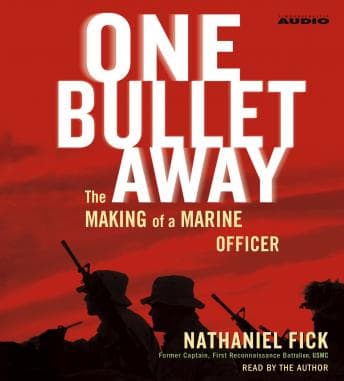

Couldn't sleep last Tuesday. Linda was out cold, Ranger was snoring at the foot of the bed, and my brain was doing that thing it does at 0200 where it refuses to shut down. So I pulled up something I'd been meaning to get to for years — Nathaniel Fick's One Bullet Away. Six hours later, I hadn't moved. The sun was coming up. And I was sitting there in the dark thinking about a dozen lieutenants I'd served with who should've written books but never did.
Let me cut to the chase: this is the real deal.
A Dartmouth Kid Who Actually Gets It Right
Fick's story tracks from his decision to join the Marines after college — Dartmouth, no less — through OCS at Quantico, into Afghanistan shortly after 9/11, and then into Iraq with First Recon Battalion. If that last part sounds familiar, you've probably seen Generation Kill. Fick is the "Iceman's" platoon commander in that story, but this is his version, from his side of the radio.
What sets this apart from ninety percent of military memoirs is that Fick doesn't write like he's trying to impress you. He writes like he's writing an honest after-action report. The Quantico sections are brutal in the right ways — the sleep deprivation, the mind games, the slow realization that OCS isn't about making you tough, it's about making you decide when you're too tired to think. I've seen this scenario play out in real life, and Fick nails the psychological grind without making it sound like a recruitment poster.
The SERE school passages hit particularly hard if you know what that program actually involves. He doesn't sensationalize it, which somehow makes it worse. And when he gets to Afghanistan — his first real combat — you feel the shift from training to the genuine article. There's a moment where he's calling in close air support and simultaneously trying to account for his Marines, and the way he describes the competing demands on his attention is exactly how it feels. Your brain splits into tracks and you just pray you don't drop one.
The Author Reads His Own War — And It Shows
Here's where this audiobook earns its keep. Fick narrates it himself, and it's the right call. His delivery is controlled — almost cold in places — which is precisely how a Recon officer processes these things. He doesn't do voices. He doesn't try to be dramatic. When he describes firefights, his sentences get shorter, clipped, like he's back on the radio. "He delivers his short sentences like fleeting bullets" — that's how one listener put it, and yeah, that's accurate.
Is it the most dynamic narration you'll ever hear? No. There's no character differentiation to speak of. But I'd argue that's not the point. This isn't a novel. This is a man telling you what happened to him and twenty-two Marines he was responsible for keeping alive. The flatness in certain passages isn't a flaw — it's a tell. You can hear where the emotion is being held back, and those moments land harder than any theatrical performance would.
The one thing I'll flag: at six hours, this is a lean listen. Fick is economical with words the way good officers are economical with ammo. But that means some episodes — particularly his time in Afghanistan before Iraq — feel compressed. I wanted more from the early combat deployment. It moves fast.
Where the Brass Gets Tarnished
The best parts of this book are the parts that'll make senior officers uncomfortable. Fick is honest — sometimes painfully so — about the gap between what leadership looks like in doctrine and what it looks like when your battalion commander is making calls that put your guys at unnecessary risk. He doesn't name-call. He doesn't grandstand. But the frustration bleeds through, and anyone who's been in a position where you're executing orders you know are wrong will feel that in their chest.
One retired Marine officer called this "the best job I've seen yet of getting inside the mind of a Marine leader." I'd push back slightly — I think it's the best job of showing how idealism gets pressure-tested by reality. Fick starts this book believing in the institution. By the end, he still believes in his Marines, but the institution? That's a more complicated answer. And he respects you enough to let you sit with that ambiguity.
(Side note: the man calls a magazine a magazine. Every weapon system is correctly identified. Every piece of tactical procedure checks out. The author clearly did their homework — because it was his homework, lived and breathed. You have no idea how rare that is in this genre.)
Who Needs This In Their Ears
If you've served, especially as a junior officer, this will feel like reading your own journal entries. If you haven't served but want to understand what it actually costs to lead people in combat — not the Hollywood version, not the political version — this is your book. Skip it if you want action-movie pacing or if you need a narrator who does different voices for different characters. Mat Best's Thank You for My Service runs hotter — more irreverent, more chaos energy — and if you can handle the tonal whiplash it's worth a listen too, though it's a very different animal.
Worth your time? Here's the debrief: One Bullet Away is honest, lean, and hits where it counts. Fick didn't write this to be famous. He wrote it because he owed it to twenty-two Marines. That comes through in every sentence.
Ranger approved this one. So do I.






![Steve Jobs [unabridged audiobook] audiobook cover](/_next/image?url=https%3A%2F%2Fcovers.audiobooks.com%2Fimages%2Fcovers%2Ffull%2F9788499923406.jpg&w=1920&q=75)