
What happens when the most dangerous person in the room is the guy who looks like he should be arguing about bird feeders at the hardware store?
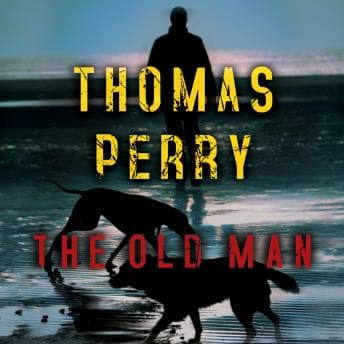
I was elbow-deep in making pancit for the kids' lunches - 2 AM, kitchen to myself, audiobook rolling through my earbuds - when Dan Chase casually retrieved his bugout bag with two Beretta Nanos from his spare bedroom closet. And something about the specificity of that detail, the way Thomas Perry describes the practiced calm of a man who has rehearsed disappearing for thirty-five years, made me set down the wooden spoon and just... listen.
A 60-Year-Old With A Go Bag And Zero Patience For Your Nonsense
Here's what Perry gets right that most thriller writers whiff on: aging doesn't make you less dangerous. It makes you more efficient. Dan Chase doesn't waste movement. He doesn't monologue. When mercenaries come for him in Vermont, his response is methodical and brutal in a way that feels earned by decades of survival instinct. The Beretta Nanos aren't props - they're tools he knows the weight and draw of.
The setup is deceptively simple. Old guy. Dogs. Quiet life. Then: people trying to kill him because of something he did in Libya when Reagan was in office. But Perry layers in the intelligence community's long memory, the bureaucratic machinery that never quite forgets a loose end, and a retired military intelligence officer named Julian Carson who's tasked with finding Chase. Carson is almost sympathetic - a guy doing his job, respecting his quarry, playing chess while Chase plays survival.
And then there's Zoe McDonald. The "precarious love interest" the jacket copy mentions. I was bracing for the worst - the obligatory romantic subplot shoehorned in to give the old guy something to protect. But the banter between Chase and Zoe is genuinely funny. Sharp. Two people of a certain age who've been through enough to skip the performative parts of getting to know someone. Perry writes their dialogue like he's actually overheard people flirt at a dinner party instead of learning romance from action movies.
Peter Berkrot's Voice Sounds Like Whiskey And Bad Decisions (Compliment)
This is where I got surprised. Peter Berkrot has this raspy, husky quality that I wasn't sure about in the first twenty minutes. It almost felt too hardboiled, like he was doing a bit. But by hour two? That voice IS Dan Chase. The gravel in it carries the weight of a man who's been lying about his name for three decades. When Chase is being calm and deliberate with Zoe, there's warmth under the rasp. When he's calculating how to get out of a situation alive, the warmth drops and you feel the temperature change.
His dialogue delivery has this dry humor that sneaks up on you. Chase isn't a quippy action hero - he's a tired man who occasionally says something so deadpan it's funny because of what it implies. Berkrot nails that distinction. The subtle differentiation between characters won't blow your mind, but it's clean - you always know who's talking, and Carson sounds appropriately different from Chase without Berkrot doing cartoon voices.
Where It Stumbles (Because Nothing's Perfect At 3 AM)
Okay. The ending. I need to talk about the ending.
I was pulling into my driveway, Carlos's truck in its usual spot, and the book just... stopped. Not in a cliffhanger way. More like Perry wrote himself to a logical conclusion and then decided he was done. Which, fine, I respect a writer who doesn't pad the landing. But after eleven hours of methodical tension building and a genuinely excellent chase scene through snow - one of those sequences where you forget you're driving and almost miss your turn - the resolution felt like it needed one more chapter to breathe.
Also, and this is the critique I kept circling back to: Chase is a little too competent. Every plan works. Every contingency pays off. The man has bank accounts in multiple states, multiple IDs, and an answer for every problem. I got a similar itch reading Protector's War, where competent survivors planning for every contingency eventually run into the one thing no one can fully prepare for. As someone who's actually worked a code, I can tell you - real crises are messy. People fumble. The best-laid plans go sideways. Chase's competence is fun to watch but it does drain some tension from the middle act. You stop worrying about whether he'll survive and start just watching how.
That said? Perry clearly knows his tradecraft. The operational details about surveillance, identity management, the mechanics of disappearing - they feel researched rather than invented. The medical details are accurate. Finally. (There's a scene involving wound care that didn't make me yell at my dashboard. Progress.)
Who Gets This Recommendation And Who Gets Told To Move Along
If you loved the FX series and want the source material - yes, absolutely. The book is tighter and the ending (for all my complaints) is more grounded than what the show apparently did. If you want a fast-paced thriller with a protagonist who's compelling because of his age rather than despite it, this is your book. Perfect for that post-shift decompression. Night shift approved.
But if you need your protagonist to genuinely struggle, to be outmatched and scrambling - you might find Chase's hyper-competence frustrating. And if abrupt endings ruin your whole experience, be warned.
Charting Complete, Heading Home
Thomas Perry wrote a thriller about a man who's too old and too smart to be caught, and mostly he makes that work. Berkrot's narration elevates it. The eleven hours moved fast. My pancit got a little overcooked because I was standing in my kitchen at 2:30 AM not stirring, which is honestly the best compliment I can give a book. Carlos asked why breakfast was late. I blamed the audiobook. He understands.