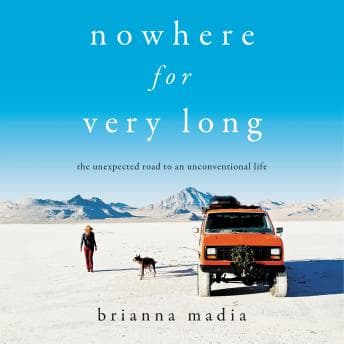

Look, I'll be honest—I didn't expect to finish this one. Van life memoirs aren't exactly my usual fare. My algorithm is tuned to McKinsey case studies and founder origin stories, not Instagram influencers living in converted vehicles named Bertha. But Jenny's been on a "you need to read something that isn't about quarterly earnings" kick, and Brianna Madia's name kept popping up in her feed.
So here we are.
The Business Case for Getting Lost
Here's what caught me off guard: this isn't really a van life book. I mean, yes, there's an orange van. Yes, there are dogs named Bucket and Dagwood. But strip away the desert aesthetics and what you've got is a surprisingly honest examination of what happens when you build your identity around a lifestyle—and then that lifestyle starts cracking.
Madia doesn't sugarcoat it. The freezing nights in parking lots. The marriage falling apart. The constant money anxiety. My parents would recognize this hustle, just with more cacti and fewer dry cleaning chemicals. She's basically running a one-woman startup with no revenue model and calling it freedom. (Jenny would say I'm being harsh. Jenny is right.)
But here's the thing—Madia knows this. She's not selling you a fantasy. The book jumps around in time, which some listeners found jarring, but I actually appreciated the structure. Life doesn't happen in neat chronological order. Neither does processing trauma. The section about Dagwood's accident nearly broke me, and I was on a conference call at the time. Had to fake a coughing fit.
When the Author IS the Narrator
Madia reads her own book, and this is where it gets interesting from an ROI perspective. Author-narrated memoirs are a gamble. Sometimes you get Michelle Obama. Sometimes you get... well, not that.
Madia lands somewhere in the middle. Her delivery is warm and emotionally present—almost too present at times. There were moments I felt like I was eavesdropping on someone's therapy session rather than listening to a polished audiobook. Some folks will find that raw authenticity compelling. Others might find it a bit much.
I'm in the first camp, surprisingly. At 6 hours and 31 minutes, this is mercifully short by memoir standards. No padding. No filler chapters about her childhood goldfish. She gets in, tells her story, and gets out. Finally, a book that respects your time.
The emotional peaks hit hard—particularly anything involving the dogs. I'm not a crier. Ask anyone at my old firm. But something about her describing Dagwood's accident, the way her voice catches just slightly... yeah. That's the advantage of author narration. You can't fake that kind of pain.
Who Should Listen (And Who Should Keep Scrolling)
This is for you if: you're burned out on curated success narratives and want something that admits the mess behind the aesthetic. Also if you've ever wondered whether "unconventional" is just another word for "terrifying."
Skip it if: timeline jumps frustrate you, or you need your memoirs polished rather than raw. Also if dog-in-peril content is a hard no—fair warning.
If you're a Madia follower from Instagram, you already bought this. You don't need my permission. Go listen.
If you're like me—someone who measures everything in ROI and thinks "unconventional life" sounds like "no health insurance"—this book is a useful mirror. Not because it'll make you sell everything and buy a van. (Please don't. The market's terrible for that right now.) But because Madia's honesty about the gap between the curated life and the actual life is... refreshing? That same clarity about performance versus reality shows up in Stillness is the Key, though Holiday comes at it from the Stoic angle rather than the desert van angle. I've seen too many founders post their "morning routines" while their companies are burning. This book is the antidote to that particular brand of nonsense.
The pacing issues are real—the timeline jumps can feel disorienting if you're not paying attention. And some of the writing gets a little too earnest for my taste. But at 2.0x speed, I finished this during a single round-trip flight to Denver, and I wasn't mad about it.
The Bottom Line (Because You Knew I'd Have One)
Skip to chapter 5 if you want the meat of the marriage dissolution. Thank me later. But honestly? The whole thing earns its runtime. Which is more than I can say for most 8-hour business books with 45 minutes of actual insight.
Jenny was right. I needed this one.