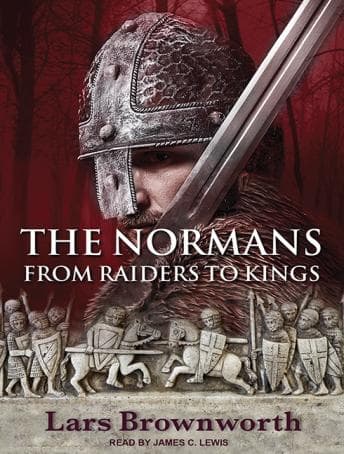

How many medieval conquest stories do you actually know beyond 1066? If you're like most people, William the Conqueror shows up, takes England, and that's where the Norman chapter closes in your brain. Brownworth's here to tell you that's barely the opening salvo.
I finished this one during a late-night drive back from a client site in Houston. Three hours of empty highway, Ranger asleep in the back seat, and these Viking descendants keeping me company as they carved up Southern Italy like a Thanksgiving turkey. Not a bad way to spend the windshield time.
The Strategic Picture Most History Books Miss
Let me cut to the chase—Brownworth does something valuable here that most popular medieval histories don't bother with. He connects the dots. The Normans weren't just one lucky duke who won a battle in England. They were a coordinated (well, semi-coordinated) expansion across the entire Mediterranean world. Sicily, Antioch, the Byzantine frontier—these weren't separate stories, they were the same restless warrior culture finding new territories to conquer.
The cast of characters is genuinely entertaining. William Iron-Arm, Tancred the Monkey King, Robert Guiscard—these aren't names I'd make up for a bad fantasy novel, they're actual historical figures who did genuinely insane things. Guiscard in particular comes across as the kind of commander I would've loved to serve under and simultaneously feared. The man captured a Pope. Just... took him prisoner. The audacity.
At seven hours, this is a tight operation. Brownworth doesn't waste your time with academic throat-clearing. He moves from the first Viking raids on Irish monasteries through to the last Norman prince getting booted out of Antioch. That's roughly three centuries of conquest compressed into a single audiobook, and honestly? The pacing works. You're getting the strategic overview, not drowning in every minor succession dispute.
When Your Narrator Can't Pick a Lane
Here's where the mission hits a snag. James C. Lewis struggles with consistency in a way that genuinely distracts from the content. Roger Borsa—the Duke of Apulia—gets pronounced about three different ways in quick succession. First it's the Anglicized "Roger Borsa," then suddenly "Ro-jay Borsa," then "Ro-jay Bor-say." Pick a lane, brother.
This isn't a minor quibble. When you're dealing with medieval Italian and French names, Byzantine Greek titles, and Arabic place names, consistency matters. If I'm trying to follow which Norman adventurer is fighting which other Norman adventurer (and they're constantly fighting each other), I need to recognize the names when they come back around. Lewis makes that harder than it should be.
The narration itself is competent enough. Clear voice, reasonable pacing. But for a history book where unfamiliar names are half the battle, the pronunciation issues are a real tactical weakness. I've heard far worse—this isn't a dealbreaker—but it's the difference between a smooth operation and one where you're constantly reorienting yourself.
Who Should Deploy This One (And Who Shouldn't)
If you've got a basic understanding of medieval Europe and want to expand beyond the English-centric view, this is worth your time. Brownworth clearly did his homework, and he writes with genuine enthusiasm for his subject. That same scholarly rigor shows up in Students' Roman Empire part 1, though that one's more academic and less accessible for casual listening.
If you're a pronunciation stickler (and I get it, I really do), grab the print version instead. The content is solid, but the audio delivery has rough patches that'll pull you out of the narrative.
For my fellow veterans—there's some interesting stuff here about how a small, mobile force can punch way above its weight class through superior tactics and sheer aggression. The Normans were essentially special operations before special operations existed. Small bands of professional warriors taking on much larger forces through speed, surprise, and violence of action. Sound familiar?
Mission Debrief
Brownworth delivers a solid tactical overview of one of history's most successful military cultures. The content is engaging, the scope is ambitious, and the seven-hour runtime respects your schedule. Lewis's narration gets the job done but stumbles on the technical details that matter in a history book.
Worth the credit if you're a medieval history enthusiast who can tolerate some pronunciation inconsistency. Worth the wait for a sale if that kind of thing drives you up the wall.
Ranger slept through the whole thing, but he's not much for European history. More of a tactical K-9 operations guy.

![Steve Jobs [unabridged audiobook] audiobook cover](/_next/image?url=https%3A%2F%2Fcovers.audiobooks.com%2Fimages%2Fcovers%2Ffull%2F9788499923406.jpg&w=1920&q=75)