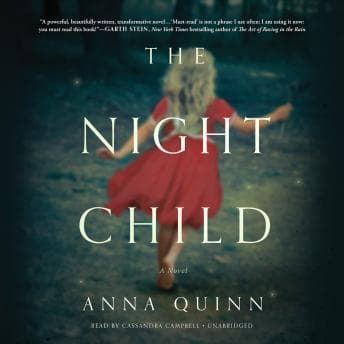

Look, I have a bone to pick with this book. Not because it's bad—it's not—but because I went in expecting a ghost story. A face appears above students' desks? Shapeless drapes of purple and blue? "Terror rushes through Nora's body"? That's horror packaging. That's my wheelhouse. And then Night Child pivots, and suddenly I'm not in a haunted classroom anymore. I'm in something much worse. I'm in a therapist's office watching a woman's psyche fracture in real time. And honestly? That hit harder than any ghost would have.
I'm annoyed that it got me. I respect that it got me.
The Kind of Horror That Doesn't Need Monsters
Here's the thing about growing up in a house where horror was forbidden—you develop a very specific radar for what adults are trying to hide from you. The locked doors. The conversations that stop when you walk in. Anna Quinn understands this instinct at a molecular level. Nora Brown is a high school English teacher (librarian solidarity here—we see you, fellow book-adjacent professionals) living what looks like a perfectly managed life in Seattle. Husband. Daughter. Lesson plans. And then the apparition shows up, and the whole careful architecture starts cracking.
What Quinn does well—really well—is the slow reveal of dissociative identity disorder without turning it into a freak show. The "terrible secret" the blurb hints at is exactly the kind of thing that made one listener say they were "turned off by the plot-turn" and uncomfortable for the rest of the book. I get that reaction. The subject matter is brutal—childhood sexual abuse, the mind's desperate architecture of survival, the way trauma buries itself so deep you build an entire life on top of it without knowing. This understands that horror isn't about gore—it's about dread. The dread here is recognizing that the monster was always inside the house. Always inside the family.
At under seven hours, it's a lean book. Quinn doesn't waste time with subplot padding or unnecessary characters. The neurologist visits, the psychiatric sessions, the Thanksgiving that goes sideways—it all moves with purpose. But it's not fast. It's deliberate. The pacing mirrors Nora's own reluctance to look at what's underneath. You feel the resistance in your chest.
Cassandra Campbell Knows What She's Doing
The narrator commits. That's rare. Campbell handles the dual personality work with a restraint that would've been so easy to botch—she doesn't go full theatrical with the dissociative episodes. Instead, the shifts are subtle. Nora's voice tightens. There's a quality change, almost a regression, when the other identity surfaces. You feel the fracture before you understand it.
She also nails the supporting cast without making anyone a caricature. The husband is dry, a little emotionally absent—Campbell plays him flat in a way that tells you everything about that marriage before Quinn spells it out. The psychiatrist is direct, almost confrontational, and Campbell gives her this measured authority that makes the therapy scenes feel uncomfortably real. I've sat in enough waiting rooms in my life to know that tone. She gets it right.
I listened to this on a rainy Tuesday night—lights off, obviously, because I don't learn—curled up on the couch while Shirley kneaded my stomach like she was trying to perform CPR. By hour three, I wasn't scared exactly. I was sick to my stomach. Different mechanism. Equally effective. Shirley was unimpressed. I was gutted.
Who Needs This (And Who Should Steer Clear)
If you work in horror like I do, and you're tired of trauma being used as cheap backstory seasoning—dead parents as motivation, abuse mentioned once and never explored—this is the antidote. Quinn treats DID and childhood trauma with the seriousness of someone who's done the research and possibly lived adjacent to it. The content warnings are real: abuse, sexual content, violence. This isn't a book that handles those topics gently. It handles them honestly, which is different and harder.
If you scare easily, skip. If you don't, you need this—but know that the fear here is human-shaped. No supernatural escape hatch.
Skip if: you want a traditional thriller structure with twists you can predict, or if the subject matter (specifically childhood sexual abuse and its psychological aftermath) is something you're not in a place to engage with right now. No judgment. Self-care isn't cowardice.
Seek out if: you love Shirley Jackson's understanding that the scariest rooms are the ones inside our own heads. Jackson walked so Anna Quinn could run—maybe not at the same literary altitude, but in the same direction, with real conviction.
One for the Late-Night Queue
My podcast listeners are going to love this, even though half of them will argue it's not horror. It is. It's just the kind that doesn't let you off the hook by blaming a demon. The demon is a family member. The haunted house is a child's body. The thriller space keeps trying to bottle this kind of human-shaped dread, and mostly failing—One & Only gestures toward it but never quite commits the way Quinn does here. And Cassandra Campbell makes you sit with that for nearly seven hours without flinching. I turned the lights on at hour five. Not because I was scared of the dark. Because I needed to see something ordinary for a minute.
Finally, horror that respects the genre—even when the genre doesn't recognize it back.