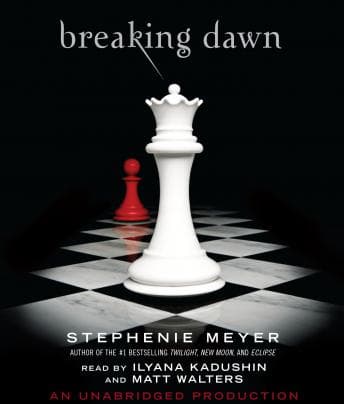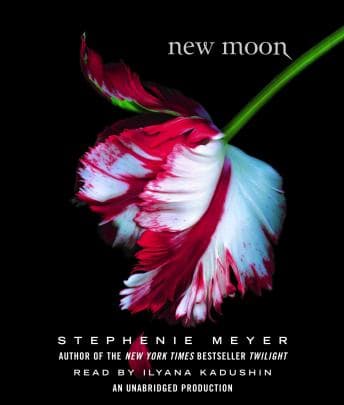

I need to get something off my chest before we go any further: I have complicated feelings about the Twilight saga. As a behavioral psychologist, I've spent years studying why certain narratives grip us despite—or maybe because of—their problematic elements. And New Moon? This is a fascinating case study in attachment theory gone absolutely feral.
So there I was, jogging through Cambridge at 6 AM (my therapist says exercise helps, she's right), listening to Bella Swan spiral into what the DSM-5 would probably classify as a major depressive episode. The protagonist exhibits classic anxious attachment patterns—the kind I literally teach my undergrad students about. Edward leaves, and Bella essentially becomes a case study in identity diffusion. Her entire sense of self was wrapped up in this relationship. Psychologically, this tracks. Uncomfortably so.
But here's the thing about Ilyana Kadushin's narration—she makes you feel every excruciating moment of that emotional freefall without making you want to throw your phone into the Charles River. Her voice has this silvery, almost fragile quality that works perfectly for Bella's internal monologue. When Bella describes those months of numbness? Kadushin delivers it with such precision that I actually stopped mid-jog to just... stand there. Feeling things. At 6 AM. In the cold.
(Don't tell my students I got emotional about a YA vampire romance. Please.)
The Pacing Problem (And Why It's Intentional)
This book is nearly 15 hours long, and honestly? It drags in places. Those middle chapters where Bella is just existing in her grief—they're realistic, sure, but they're also a lot. I found myself bumping up to 1.25x speed during some of the slower sections. Not because Kadushin's delivery was off, but because Meyer really commits to showing us the full weight of depression. Which, as someone who studies human behavior, I respect. As someone trying to get through her morning run, I was occasionally checking how much time was left.
Jacob Black: A Case Study in Healthier Attachment
Watching Bella's relationship with Jacob develop is where this gets interesting. Kadushin does something clever here—her Jacob voice is warm, grounded, distinctly different from how she voices Edward. It's not a dramatic vocal shift (some reviewers wanted more distinction for the male characters, and I get that), but there's an energy change. Jacob feels like sunshine breaking through clouds. The research actually shows that listeners pick up on these subtle tonal shifts even when they can't articulate what's different. Kadushin gets this.
The werewolf mythology stuff? Honestly pretty compelling. Meyer understands human nature when it comes to tribal loyalty, the way communities form around shared secrets. That same fascination with group dynamics and hidden worlds shows up in Haunted, though the secrets there are considerably darker. I found myself asking: why does Jacob's pack dynamic feel more psychologically authentic than the Cullen family's? Maybe because teenage boys actually do form these intense, hierarchical friend groups. My therapist would have thoughts about Jacob—specifically about how he represents a healthier attachment option that Bella can't fully embrace because she's trauma-bonded to Edward.
(Yes, I'm psychoanalyzing fictional vampires and werewolves. This is my job. Sort of.)
The Volturi Sequence: Where Kadushin Earns Her Paycheck
The Italy sequence at the end is where the narration really shines. The tension, the stakes, the Volturi—she nails the pacing here. Time flew during those final chapters. I was cooking dinner and burned my dal because I was too invested in whether Bella would reach Edward in time. Worth it? Debatable. The dal was expensive.
Some honesty: if you're sensitive to breathy narration styles, this might not be your thing. Kadushin's voice is distinctly feminine and soft, which works for Bella but might grate on some listeners. A few reviews mentioned it, and I can see where they're coming from. Also, if you're coming to this expecting the movie voices, you'll need an adjustment period. Kadushin isn't Kristen Stewart, and that's actually fine. The audio quality is clean—no weird background noise, no volume issues.
Who's This For (And Who Should Run)
Fans of the series, obviously. But also anyone interested in how narratives handle grief and identity. Commuters who want something emotionally engaging but not intellectually demanding. People who enjoy character-driven stories and don't mind slower pacing. Skip it if you need distinct character voices to stay engaged, if you're impatient with introspective sections, or if you're looking for a healthy relationship model—I mean, look, that's not what this is.
The Psychologist's Final Note
The thing about New Moon is that it's not trying to be psychologically healthy. It's trying to be emotionally true to a specific kind of teenage experience—that all-consuming first love, that devastating first loss. And on those terms? It works. Kadushin's narration makes it work even better.
I'm giving this 3.5 stars. It's not perfect, but it's compelling in ways I didn't expect. And sometimes that's enough.