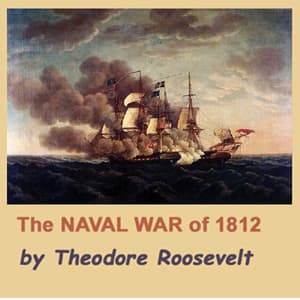

There's a moment early on where Roosevelt starts breaking down the exact tonnage and gun weight of British frigates versus American 44s, and I realized—this isn't a story. This is an After Action Report.
"The British want of success was due to the nature of the contest..."
That's the tone. Clinical. Precise. Unapologetic.
I listened to this on a haul from Austin to Dallas, stuck in I-35 traffic that moves slower than a becalmed schooner. And honestly? It's exactly what I expected from Teddy Roosevelt, but maybe not what the average listener is looking for. TR wrote this when he was 24. Twenty-four. At that age, I was a Second Lieutenant trying to figure out which end of the map was up. He was writing the definitive study on naval warfare that's still cited today. The man did his homework. That same obsessive attention to detail—building a case brick by brick—shows up in Alexander Hamilton, though Chernow's writing has a hell of a lot more narrative drive.
The Voice of the Briefing Officer
Let's talk about James E. Carson. I haven't heard him before. He's got a voice that reminds me of a senior NCO giving a safety briefing on a Friday afternoon. Clear. Precise. Steady.
But dryer than the Mojave.
Carson reads this like a textbook, which, to be fair, it is. But when you're staring down the barrel of nearly 20 hours of audio, a little variation in tone wouldn't hurt. He doesn't act the parts; he recites them. For a text this dense—we're talking heavy stats on crew sizes, casualties, and maneuvering—the monotone delivery can be a sleep hazard. I had to crank this up to 1.35x just to keep the momentum going. Ranger, my German Shepherd, was out cold in the passenger seat within ten minutes. That's usually a sign.
Logistics Win Wars (And Apparently Books)
Here's where the book shines, if you're a nerd for military logistics like I am. Most history books give you the "fog of war" drama. Roosevelt gives you the math. He was obsessed with proving that American victories weren't just luck—they were the result of superior ship-building and gunnery practice.
I appreciate that. I really do. When he describes the Constitution turning the Guerriere into Swiss cheese, he explains why the American 24-pounders were superior to the British 18-pounders. He cuts through the British propaganda of the time that claimed Americans only won because their ships were "ships of the line in disguise." TR calls BS on that with data. There's something about watching someone methodically dismantle official narratives with hard evidence—same satisfaction I got from Secret Empires, though Schweizer's targets are a lot more contemporary.
(Hearing him dismantle the British Admiralty's excuses? Satisfying. Not gonna lie.)
But—and this is a big but—if you're looking for character development or emotional dialogue? Wrong place. This is a technical manual on how to beat the Royal Navy. Dense. It enters the weeds and sets up camp there.
Mission Debrief
Is it worth your time? Depends on your mission profile.
If you want a swashbuckling adventure like Hornblower or O'Brian, skip this. You'll be bored to tears by hour three. But if you want to understand the nuts and bolts of the War of 1812 from a guy who eventually built the Great White Fleet, this is mandatory reading (or listening). Military history buffs and naval warfare nerds—you're the target audience. Casual listeners looking for a good story? This ain't it.
Just do yourself a favor: speed up the playback. Life's too short for slow logistics.






![Steve Jobs [unabridged audiobook] audiobook cover](/_next/image?url=https%3A%2F%2Fcovers.audiobooks.com%2Fimages%2Fcovers%2Ffull%2F9788499923406.jpg&w=1920&q=75)