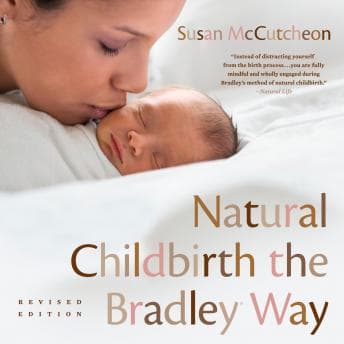

Okay, I need to get something off my chest: nearly thirteen hours of audiobook about unmedicated childbirth is a LOT. Especially when you are a single woman in her early thirties whose most recent labor experience was birthing a fifteen-page literature review on attachment theory at 3 AM. But here's the thing - my cousin Meera is pregnant with her first, she's been texting me Bradley Method questions nonstop, and I figured if I was going to be her unofficial emotional support researcher, I should actually know what I'm talking about. So I downloaded this while prepping a rather ambitious dal makhani last Saturday and let Susan McCutcheon's revised classic wash over me for the better part of a weekend.
And I have thoughts.
The Psychology of Fear Defusion (Where This Book Actually Shines)
What surprised me - genuinely surprised me - is how much of this book is essentially applied psychology wrapped in a childbirth manual. McCutcheon spends considerable time on what she calls "defusing fear," and the research actually shows this tracks. Fear-tension-pain cycle? That's Grantly Dick-Read by way of behavioral psychology, and McCutcheon builds on it with relaxation techniques, visualization, and breathing strategies that are basically cognitive-behavioral interventions dressed in doula clothing.
The sections on understanding each stage of labor are structured almost like exposure therapy - here's exactly what will happen, here's why it happens, here's how your body is designed to handle it. I found myself asking: why does this approach work when so many other "just relax" self-help mantras fall flat? Because McCutcheon doesn't just say "relax." She gives you the biomechanics. She explains cervical dilation like she's teaching a science class (which, given her background as a science educator, makes sense). The fear reduction isn't hand-wavy mysticism - it's information-based empowerment. Psychologically, this tracks beautifully.
The partner-as-coach framework is also fascinating from a relational psychology perspective. The protagonist here - and yes, I'm treating the birthing person as a protagonist, fight me - exhibits classic need for co-regulation during high-stress physiological events. McCutcheon understands that labor is not a solo performance. The coaching instructions are specific: what to say, when to apply counterpressure, how to read your partner's body language for signs of transition. This is a fascinating case study in how dyadic coping actually functions under extreme conditions.
Where the Confidence Tips Into Ideology
But. (You knew a "but" was coming.)
McCutcheon's stance on medical intervention sits somewhere between "informed skepticism" and "the hospital is the enemy," and the line blurs more than I'd like. The chapters on the "induction epidemic" and "cesarean surgery epidemic" contain real, evidence-based concerns - the US C-section rate IS higher than WHO recommendations, and yes, some inductions are convenience-driven rather than medically necessary. I'm not arguing with the data.
What I am arguing with is the framing. There's an undercurrent throughout that positions any deviation from the unmedicated plan as a kind of failure, or at minimum, something that happened TO you rather than something you might reasonably choose. My therapist would have thoughts about this kind of all-or-nothing thinking. The 90% drug-free statistic that opens the book? That's a self-selected sample of people who specifically sought out Bradley classes. That's not a controlled study. That's confirmation bias with a birth plan.
For a book that's been revised for the twenty-first century, some of the language around C-sections and epidurals still carries a judgment that I think could genuinely harm someone whose birth doesn't go according to plan. And that's not a small concern.
Eliza Foss and the Audio Experience
Eliza Foss narrates with the calm, measured authority you'd want from someone reading you instructions about how to handle back labor. She's won five AudioFile Earphones Awards, and the experience shows - her pacing is steady without being soporific, which is no small feat given that portions of this book are essentially exercise instructions and nutritional guidelines read aloud. The fact that Foss has personal experience with natural childbirth reportedly adds authenticity to her delivery, and I'll say this: there's a warmth in her tone during the labor descriptions that feels lived-in rather than performed.
The audiobook format does create one genuine problem, though. This is a revised edition that includes diagrams, labor position illustrations, and charts - all relegated to a bonus PDF. If you're listening while cooking or driving (as I was, alternating between both), you're missing visual information that the text clearly references. McCutcheon will describe a position and you're left constructing it mentally, which is fine for some things but not ideal when you're trying to understand exactly where your coach's hands should go during counterpressure.
At nearly thirteen hours, certain sections - particularly the detailed nutritional guidelines and the repetitive exercise instructions - could benefit from 1.25x speed. The labor and delivery chapters, though, deserve full speed and full attention.
Who This Is Actually For (And Who Should Think Twice)
If you're pregnant or supporting someone who is, and you're genuinely interested in understanding unmedicated birth as an option - not the only option, AN option - this is a solid, information-dense resource. The relaxation techniques and partner coaching frameworks are legitimately useful even if you end up choosing an epidural at hour fourteen of labor. The psychology of preparation has value regardless of outcome.
But if you're someone prone to anxiety about birth outcomes, or if you've already had a C-section and are processing complicated feelings about it, approach with caution. The ideological framing could trigger guilt rather than empowerment. And that's the opposite of what good psychology - or good birth preparation - should do.
My Prescription
I texted Meera a voice note after finishing: "Read it, absorb the techniques, but keep your critical thinking hat on during the anti-intervention chapters." That's basically my review in seventeen words. McCutcheon knows her subject with the authority of fifty years in the field, and Foss delivers it with professional warmth. But the best self-help acknowledges its own limitations, and this book doesn't always do that. Take what serves you. Leave what doesn't. That's good psychology for any situation, really. Demi Lovato's Sorry Not Sorry operates on a similar principle — take the lessons, interrogate the framing, and decide for yourself what's actually worth keeping.