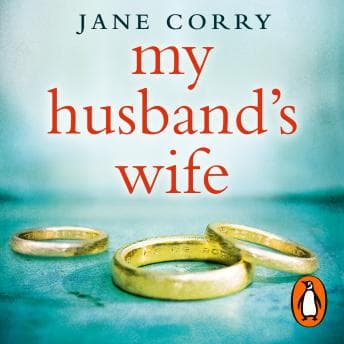

Jane Corry used to be writer-in-residence at a high security men's prison. That single biographical fact tells you everything about why the criminal psychology in this book works as well as it does - and why I kept listening through all thirteen-plus hours while making an absurdly complicated dal makhani last Sunday that I absolutely did not need to spend four hours on.
Here's what got me: Lily, a newly married lawyer, takes on her first criminal case and becomes drawn to a man accused of murder. The protagonist exhibits classic boundary erosion - the kind I've read about in a hundred case studies on professional transference. Corry gets this right. The slow dissolution of Lily's professional detachment doesn't happen in one dramatic moment. It's incremental. A lingering look during a prison visit. A rationalization here, an omission to her husband there. The research actually shows that people who cross ethical boundaries rarely experience it as a single choice - it's a series of tiny permissions they give themselves. Corry understands this pattern, and it makes Lily's descent feel earned rather than contrived.
When the Liar Becomes the Lawyer
What makes this character study interesting - and I'm treating it as one, because that's what I do - is the dual timeline structure. We get Lily in the present and then jump forward several years, and the gap between those two versions of her is where the real psychological tension lives. I found myself asking: why does Lily really pursue this case with such intensity? Is it about the client, or is it about escaping the marriage she's already suffocating in? The book lets you sit with that ambiguity for a good while before it starts showing its hand.
But the book also introduces Carla, a young Italian girl who becomes Lily and Ed's neighbor, and her storyline adds a whole other layer of manipulation and obsession. This is a fascinating case study in how childhood trauma creates adult pathology - Carla's fixation on the couple next door isn't random; it grows from specific deprivation and loss. The parallel narratives create this web where everyone is lying to everyone, and the lies compound in ways that feel psychologically plausible. Mostly.
I say mostly because around hour ten, some of the coincidences start stacking up in ways that strain credibility. My therapist would have thoughts about this character - specifically about how conveniently everyone's secrets intersect. Real human dysfunction is messier, less symmetrical. Corry is clearly plotting backward from her twists, and while the twists themselves are genuinely surprising, a couple of the character motivations in the final third feel reverse-engineered. I hit the same wall with Kindred in Death - that specific frustration when a story is smart enough to earn your trust and then asks you to swallow one motivation too many in the final stretch. Psychologically, this doesn't quite track for one particular revelation near the end that I won't spoil - let's just say people don't typically compartmentalize that effectively for that long without some observable cracks.
Two Narrators, One Persistent Problem
The dual narration by Abigail Thaw and Lily Bevan is a smart structural choice - it mirrors the split timelines and perspectives. And the women's voices work well individually. Thaw brings a kind of restrained anxiety to the adult Lily that fits the character's constant state of barely-held-together composure. Bevan handles the younger timeline with more energy.
But here's the issue that kept pulling me out: the male characters all sound essentially the same. Ed, the client Joe, other men who appear - they blur together vocally in a way that's genuinely confusing during dialogue-heavy scenes. In a book where you're supposed to be questioning everyone's motives, not being able to distinguish who's speaking is a real problem. There were moments during my jog Monday morning where I had to rewind because I'd attributed a line to the wrong man entirely, and that changes how you interpret the scene.
Also - and this is a pacing note - thirteen hours and twenty-four minutes is too long for this story. There are stretches in the middle where the dual timeline structure creates a kind of seesaw effect: just when momentum builds in one thread, we switch to the other. A tighter edit - cutting maybe ninety minutes - would've made this significantly more propulsive.
Who Gets the Most Out of This
If you're into domestic thrillers where marriage is the crime scene and everyone's a suspect, this delivers. Fans of Liane Moriarty's darker side (not the comedic stuff) and Clare Mackintosh will feel at home. If you need your character psychology airtight from start to finish, the third act might frustrate you. And if distinguishable male voices matter to your listening experience, be warned.
My Case Notes
Corry's prison background gives this book something most domestic thrillers lack - an understanding that criminal behavior isn't alien, it's human behavior with the guardrails removed. The best parts of My Husband's Wife sit in that uncomfortable space where you realize the lawyer and the accused aren't as different as the courtroom pretends. That insight carries the book even when the plot mechanics get a little too clever for their own good. I'd bump it to 1.25x speed to tighten the middle sections, and I'd tell you it's worth your time. Not a flawless listen, but a smart one where it counts.