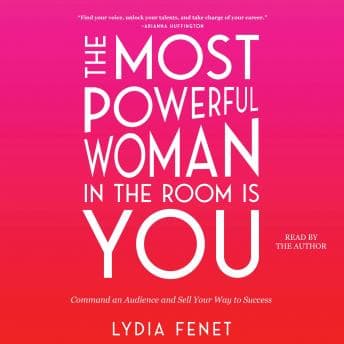

I was sitting in my home office at 10 PM, prepping a pitch deck for a founder who's about to walk into a Series B meeting she's not ready for, when I figured - let me listen to the book I've been meaning to get to. A Christie's auctioneer teaching women how to sell. My parents sold dry cleaning services for thirty years without a single TED talk or gavel. But I kept an open mind.
Bottom line: There's a solid 3-hour book hiding inside this 7-hour listen. Lydia Fenet has genuine, hard-won expertise in a world most of us will never touch - high-stakes charity auctions where she's raised hundreds of millions of dollars. That credibility matters. But the book can't decide if it wants to be a memoir, a sales manual, or an empowerment manifesto, so it tries to be all three and dilutes itself in the process.
The Gavel Strike That Actually Lands
Here's what works: Fenet's stories from the Christie's saleroom are genuinely fascinating. When she describes the hushed tension before bidding starts, the way she reads a room of billionaires and decides in real-time how to push the price higher - that's the kind of practical, lived-in knowledge you can't get from a textbook. Her concept of the "Strike Method" - the idea that you should open any sales interaction with a bold, attention-grabbing move rather than apologizing for taking up space - is simple but effective. I've seen this instinct in every great closer I've worked with. My mom had her own version: she'd look a customer dead in the eye, tell them the stain was coming out, and charge accordingly. No hedging.
Fenet narrating her own book is the right call. Her voice has this steady, authoritative quality that matches the content. She sounds like someone who's stood in front of a thousand-person gala and made them open their wallets. You buy it because she's done the thing she's telling you to do. Brené Brown brings that same earned authority to her narration of Rising Strong — another case where the author's voice doing the reading is the only version that makes sense, because the vulnerability on the page only lands when it's hers. That authenticity carries the audio format in ways a hired narrator couldn't replicate.
Where the Padding Shows
But - and this is where Jenny would say I'm being harsh, and Jenny is right - the book loses momentum every time it moves away from Fenet's own stories and into the case studies from "powerful women in business, fashion, journalism." These sections feel like a networking event where everyone takes turns giving their three-minute inspirational speech. Individually fine. Collectively? They start blurring together. By hour five, I was at 2.0x speed and still checking how much time was left.
The advice itself ranges from genuinely useful ("never apologize when you should be negotiating" - yes, a thousand times yes) to the kind of thing that sounds profound on an Instagram tile but doesn't survive contact with reality ("always tell the truth" - okay, but we're talking about sales here, and the world is messier than that). The networking chapter felt particularly padded. "Network or die" is a great chapter title. The content underneath it is stuff any halfway-decent business school grad already knows.
I've seen this pattern in dozens of business books: author has 90 minutes of genuinely original insight, publisher needs 7 hours. So you get filler dressed up as depth. Fenet's core material - the auction stories, the Strike Method, the specific mechanics of how she commands a room - that's worth your time. Skip to the chapters where she's talking about her own experience. Thank me later.
Who This Actually Serves
Here's who should listen: women in sales or client-facing roles who are still defaulting to apology mode. If you catch yourself saying "sorry to bother you" before a pitch, this book is a useful corrective. Early-career professionals who haven't yet figured out that selling isn't a dirty word - Fenet's enthusiasm for the craft is infectious, and she makes a genuine case that sales skills are life skills.
Who should skip: anyone who's already read two or more books in the "women in business" category. You'll recognize the beats. Experienced sales professionals will find the tactical advice too surface-level. And if you're looking for a systematic sales methodology - frameworks, scripts, objection handling - this isn't that. It's more motivational than mechanical.
The Efficiency Verdict
The key takeaway is worth the listen. The other 4 hours? Not so much. Fenet is at her best when she's standing at the podium with a gavel, not when she's assembling a parade of guest speakers to validate her thesis. I respect the hustle - building a career as a woman at Christie's in a world that wasn't exactly rolling out the red carpet is real. This is what my parents did instinctively. Now it has a TED talk. But knowing what it takes and communicating it efficiently in book form are two different skills, and the book needed a tighter edit.
At 6 hours 57 minutes, it's not a huge time commitment. Put it on during a commute week and you'll get what you need. Just don't expect the business book equivalent of a perfectly run auction - it's more like a charity gala that runs 45 minutes long.