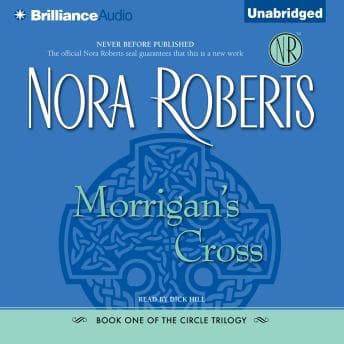

"The sorcerer stood on the cliffs, and the world he knew was already gone."
Something close to that lands in the first twenty minutes of this audiobook, and I remember stopping mid-walk along the lakefront, Denise two steps ahead of me, because I thought - wait, is Nora Roberts about to make me care about a 12th-century Irish sorcerer grieving his vampire twin brother? In November? On Lake Michigan?
She did.
When Romance Writers Raid the Fantasy Shelf
Let me be honest about my biases. I'm an English teacher who assigns Beowulf and gets blank stares. So when Nora Roberts opens with a sorcerer named Hoyt Mac Cionaoith standing on Irish cliffs after his twin brother Cian gets turned into a vampire by the ancient queen Lilith, my first instinct was to reach for my red pen. This is pulp. This is genre stew - paranormal romance, time travel, Chosen One prophecy, a band-of-six quest structure that would make Tolkien raise an eyebrow.
But here's what Roberts does that keeps it from collapsing under the weight of its own ambitions: she grounds every fantastical element in emotional specificity. Hoyt doesn't just lose a brother - he loses his mirror, his other half, and then gets told by the goddess Morrigan that he has to recruit five strangers across time and space to fight that brother's new queen. The grief is real even when the magic isn't. That kind of emotional authenticity in genre fiction is rare - I found similar gut-punch moments in Dear John, where Sparks strips away everything except what two people owe each other. And when Glenna Ward shows up - a modern witch who Googles spells and drinks coffee - the collision between Hoyt's medieval stubbornness and her 21st-century practicality generates genuine sparks. Not just romantic sparks, though those are there. Intellectual friction. The kind of arguing about methods and faith that actually makes you think about how different eras process the same problems.
My students would hate this. I love it.
Is it perfect? No. The prophecy structure means you can see the recruitment coming a mile away, and the final act feels like Roberts is saving the real fireworks for books two and three. It's a setup novel, and it knows it. The Samhain battle in Geall is promised but not delivered - you're buying into a trilogy commitment here, not a standalone experience. At nearly twelve hours, there are stretches in the middle where training montages and romantic tension compete for space, and neither wins cleanly.
Dick Hill's Volume Knob Problem
Dick Hill is an AudioFile Golden Voice winner. I need to say that upfront because what follows might sound harsh, and it shouldn't overshadow the fact that the man can narrate. His baseline reading voice is strong - warm, steady, with a natural authority that suits the mythic tone Roberts is going for. When he drops into those ragged, husky demonic whispers for Lilith and her vampire soldiers, it genuinely works. There's a menace there that a lesser narrator would overplay into camp.
But the female voices. Lord.
Hill gives several of the women - Glenna especially in her early scenes - this thin, slightly nasal quality that tips into whiny. It's not that a male narrator can't voice female characters well (Hill himself does it better than most men in the business), but there's an inconsistency that kept pulling me out. One scene Glenna sounds sharp and capable, the next she sounds like she's complaining about a parking ticket. I was grading papers at 11 PM during one of the middle chapters and genuinely couldn't tell if Glenna or another female character was speaking until the dialogue tag caught up.
And the volume fluctuations - this is a real practical issue. Hill drops to near-whisper for intimate scenes and then jumps back to full projection for action beats, and the gap is wide enough that I found myself reaching for my phone to adjust. On the lakefront with wind and traffic, those quiet passages just disappeared. Worth pausing the faculty meeting for? Yes, but bring your earbuds and keep your thumb on the volume.
The Prose Deserves Better Ears Than Mine
Here's what surprised me most: Roberts writes action with more clarity than half the literary fiction I assign. Her fight choreography is spatial and specific - you know where Hoyt is standing, what direction the attack comes from, what the magic costs him physically. This reminds me of what Hemingway said about writing action - the specificity IS the drama. Roberts understands that. She also understands pacing in dialogue, letting characters interrupt each other in ways that feel lived-in rather than scripted.
If you loved Marion Zimmer Bradley's Mists of Avalon for its blend of Celtic mythology and personal drama, this is its spiritual successor - lighter on the mythology, heavier on the romance, but operating from the same conviction that ancient magic and modern emotion aren't as far apart as we pretend.
Who Gets the Assignment
This is for romance readers who want their fantasy elements taken seriously, and fantasy readers who won't flinch at a love story taking center stage. If you need your vampires brooding and your sorcerers tortured, Roberts delivers. If you need a complete story arc with a satisfying ending, wait for the full trilogy to be on sale - this is chapter one of a longer argument.
Skip it if male narrators voicing women is a dealbreaker for you, or if volume inconsistency drives you crazy during workouts or commutes.
The Annotation in the Margin
Nora Roberts built a career on understanding what makes people reach for each other in crisis. Wrapping that instinct in Celtic mythology and vampire warfare doesn't change the core engine - it just gives it sharper teeth. Dick Hill's narration is good enough to carry the story and flawed enough to occasionally trip over it. I'd stream this one before committing credits to the full trilogy. But I'll be honest - I'm already curious about book two, and that's the whole point of a setup novel, isn't it?