
"Prepare yourself for parenthood—physically, emotionally, intellectually, and spiritually."
That line hit me somewhere around hour two, wedged between debugging a flaky integration test and staring out the Caltrain window at the fog rolling over the Bay. I'm not a parent. Not planning to be one anytime soon. But my sister just had her first, and I figured understanding the Montessori approach would make me a better aunt—plus maybe explain why she keeps texting me about "yes spaces" at 3 AM.
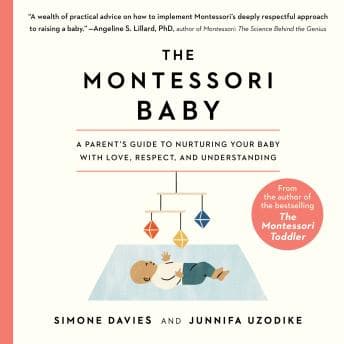
Bottom Line: Worth your commute if you're expecting or have a baby under one. Practical, research-backed, surprisingly calming. Robin Miles narrates like she's gently coaching you through a production incident at 2 AM—reassuring but focused.
The ROI Calculation
Here's the thing about parenting books: most could've been blog posts. This one actually earns its 10+ hours. Davies and Uzodike (who runs a Montessori school in Nigeria and serves on the AMI executive board, so actual credentials here) break down the first year into digestible chunks—movement, language, feeding, sleep—with specific, actionable advice rather than vague "trust your instincts" platitudes.
The book is basically a well-documented API for baby development. You get the theory (why Montessori works), the implementation details (how to set up your home), and the edge cases (what to do when things don't go according to plan). That same methodical breakdown of complex skills reminds me of Mastery, which dissects how people actually get good at things through deliberate practice. As someone who spends her days optimizing distributed systems, I appreciated the systematic approach. Babies are essentially tiny humans running on undocumented firmware, and this book is the closest thing to a technical specification I've found.
What surprised me: the emphasis on observation before intervention. They spend significant time teaching you to watch your baby, understand their cues, resist the urge to immediately "fix" things. It's basically the parenting equivalent of reading logs before pushing a hotfix. Revolutionary concept, apparently.
Robin Miles Knows What She's Doing
Robin Miles is a two-time Audie winner, and you can hear why. Her voice has this quality—soothing without being sleepy, authoritative without being preachy. One listener described her as sounding "like a good mother," which is almost too on-the-nose for a Montessori parenting guide, but accurate.
The narration matches the content's energy perfectly. When the book discusses creating calm environments for babies, Miles' delivery reinforces that calm. When it gets into practical logistics (how to set up a floor bed, when to introduce solid foods), she shifts into a clear, instructional mode. No dramatic flourishes, no unnecessary emotion—just clean, professional delivery.
I listened at 1.25x, which felt right. The content is dense enough that you want to actually absorb it, but Miles' natural pacing is measured enough that a slight speed bump doesn't lose anything.
Where It Gets Repetitive
Look, I'll be honest: some concepts get hammered home more than necessary. The "respect your baby as a whole person" message appears in various forms across multiple chapters. By hour seven, I got it. Babies are people. Message received.
The book also assumes a certain level of resources—time, space, money for specific materials. Not everyone can create a dedicated "movement area" with a floor mirror and a pull-up bar. The authors acknowledge this occasionally, but the default advice assumes you're working with more square footage than a San Francisco apartment provides. (My sister's Brooklyn nursery is literally a converted closet. She's making it work, but the "prepared environment" chapter required some creative interpretation.)
Who Should Queue This Up (And Who Should Skip)
If you're the kind of person who reads documentation before using a new tool—and you're about to have a baby—this is your book. It won't make you a perfect parent (nothing will), but it'll give you a framework for thinking about development that's backed by actual research rather than random internet advice.
Skip if you already have strong parenting opinions and just want validation, or you're looking for entertainment. This is a practical guide, not a narrative. Useful, not fun.
My sister texted me after I recommended it: "Finally something that makes sense." Her husband, an engineer, apparently found the Montessori methods "logical." High praise from someone who debugs compilers for a living.
Ship It or Shelve It?
I finished this across about five commutes, plus one long Saturday cleaning session. It's not the kind of book you need to rewind constantly—Miles' clear delivery and the organized structure make it easy to follow even when you're half-asleep on the morning train. But it's also not background listening. You'll want to actually pay attention if you're planning to implement any of it.
For the target audience—people actively preparing for or navigating the first year of parenthood—this is genuinely useful. The ROI is solid: practical advice, credentialed authors, professional narration. Not every parenting book needs to be 11 hours, but this one uses the time reasonably well.
Now if you'll excuse me, I need to send my sister another article about floor beds. She's still skeptical.