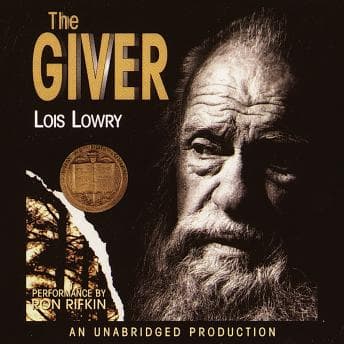

I assigned Milkweed to my juniors three years ago and watched them squirm through it. Now I've listened to Ron Rifkin read it aloud at 11 PM while Denise was already asleep, and I think I finally understand what Spinelli was actually doing.
Here's the thing about this book that puzzles some readers and that I've come to believe is the entire point: Misha doesn't understand what's happening to him. He's a nameless orphan in Nazi-occupied Warsaw who has invented his own origin story — he's a Gypsy, he's from the steppes, he flew here on a horse. He steals bread and calls it an adventure. He sees the armband with the Star of David and wants one because it looks official. He watches Jews being herded and thinks the trains look exciting.
That's not a flaw in the writing. That's the horror.
The Naïveté Is the Point, and Rifkin Gets It
Ron Rifkin's voice is — and I mean this precisely — the sound of memory trying to be gentle with itself. The framing device is an adult Misha narrating backward into his own childhood, and Rifkin holds that dual register the whole time: the boy's wonder in the words, the old man's grief underneath them. He never overcooks it. There's no moment where he signals to the listener feel sad now. He trusts the material, and the material is devastating.
What he does with Misha's enthusiasm — the way the boy narrates a Nazi march with the same excitement he'd describe a circus — is genuinely unsettling in audio in a way I don't think the page quite captures. Because Rifkin keeps the voice light. Curious. Delighted, even. And you're sitting there in the dark knowing exactly what those shiny jackboots mean, and the child narrator does not, and that gap is where Spinelli has put all the weight of the Holocaust.
Some listeners find Misha's consistent obliviousness frustrating. I understand that reaction. But I'd push back: this is why we still read the classics, and why books like this exist. Innocence as a lens for atrocity isn't evasion — it's the oldest literary strategy we have. Voltaire did it with Candide. Grass did it with Oskar in The Tin Drum. Spinelli is doing it for twelve-year-olds, and he's not condescending to them for a single page.
Five Hours and Seventeen Minutes of Controlled Restraint
The runtime matters here. This is a short book — lean almost to the point of spare — and the audiobook respects that. Rifkin doesn't pad. There's no theatrical scenery-chewing during the ghetto scenes, no voice-drops for dramatic effect during the deportations. The restraint is what makes the horror land. When the trains come, Rifkin reads it the way Misha would have experienced it: as something confusing, then frightening, then incomprehensible.
My students would hate this, I think, because nothing explodes and no one explains their feelings out loud. Auggie & Me has that same quality — kids processing enormous things without the adults in the room ever quite spelling it out — and I've had better luck getting reluctant readers to sit with discomfort through that one too. I love it for exactly those reasons. The prose deserves to be savored — Spinelli's sentences are short and declarative in a way that sounds simple until you realize every single one is load-bearing.
If you loved The Boy in the Striped Pajamas for its child's-eye view but wanted something with more literary backbone and less tidy irony, this is its spiritual successor. Or its predecessor, really — Spinelli got there first.
Who Should Listen (And Who Should Maybe Wait)
This is the right audiobook for: adults who want to revisit a book they were too young to absorb the first time, teachers looking to hear what they're assigning before they assign it, anyone who needs a Holocaust narrative that doesn't feel like punishment to get through.
This is not the right audiobook for: anyone who needs plot momentum to stay engaged, or anyone currently in a fragile emotional place. It's not graphic — Spinelli is writing for young readers — but the cumulative weight of Misha's cheerful unawareness is its own kind of grief.
Worth pausing the faculty meeting for. Worth listening to twice, actually — once for the story, once to hear what Rifkin is doing underneath it.