
"Everyone gets mad at hustlers, especially if you're on the victim side of the hustle."
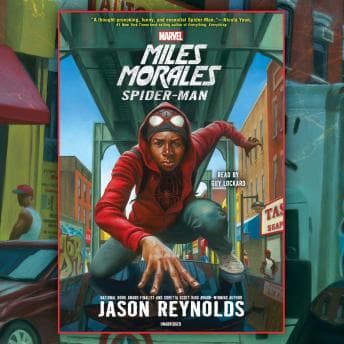
That line hit me somewhere around hour one, sitting in the back of the GT library at 11 PM, supposedly debugging a procedural terrain generator but actually just... not doing that. And look, I know this is a YA Spider-Man novel. I know it's not my usual 40-hour Sanderson brick or a LitRPG with stat blocks. But Jason Reynolds writes with this rhythmic, punchy cadence that made me forget I was a 26-year-old grad student and not the target audience.
His verse novel Long Way Down takes that cadence to its logical endpoint—it’s practically a 300-page spoken word piece, and it hits just as hard.When Your Spidey-Sense Is Actually a Metaphor for Being a Black Kid in America
Here's what surprised me about this book: it's barely a Spider-Man story. And I mean that as a compliment. Miles suits up maybe twice - once at the beginning, once at the end. The rest? It's a kid dealing with a history teacher who's literally lecturing about the "benefits of slavery" and the modern prison system while Miles's spidey-sense goes haywire. That's the tension. Not a supervillain monologue, not a building collapsing - a classroom where a teacher is saying messed-up things and Miles can't articulate why it feels so wrong.
Reynolds takes the superhero origin framework and uses it the way a good DM uses a campaign setting - the powers aren't the point, they're the lens. Miles questioning whether kids like him are "meant to be superheroes" because his dad and uncle had criminal records? That's character work. That's the kind of internal conflict that makes you pause the audiobook and stare at a wall for a minute. (I read this instead of writing my thesis. Dr. Patel would not approve, but Dr. Patel hasn't read Jason Reynolds.)
The world-building here isn't Sanderson-level in scope, obviously - it's Brooklyn, not Roshar - but Reynolds builds Miles's neighborhood with the same specificity. The Sunday dinners, the relationship with Ganke and their old-school video game sessions, the scholarship kid anxiety at Brooklyn Visions Academy. It feels lived-in. If you've ever been the weird kid who got into a school that felt like it wasn't built for you, this stuff lands.
That feeling of not quite fitting in at school is something Holding Up the Universe nails from a different angle—two characters, both outsiders, trying to navigate a system that wasn't designed for them either.Guy Lockard's Baritone Carries - Until It Doesn't
So here's where I gotta be honest. Lockard has this big, warm baritone that genuinely works for the narration. When Reynolds's prose gets rhythmic - and it gets very rhythmic, almost like spoken word poetry in places - Lockard rides that wave well. The energy is there. It feels like a Spider-Man story should feel: kinetic, buzzing.
But the cracks show up fast. Miles's mom is Puerto Rican, and Lockard's Spanish accent is... rough. I know Lockard can do better with cultural nuance—I heard him in Hurricanes: A Memoir, and his performance there felt genuinely rooted. It drifts into something that sounds more Jamaican than Hispanic, and it's inconsistent enough that every time Miles's mother speaks, you get pulled out of the scene. For a book that's so much about identity and heritage, having that specific cultural voice feel off is a real problem.
And the male characters. I kept losing track of who was talking because Ganke, Miles's dad, and the other guys all kind of... sound like the same dude? Lockard clearly thought he was differentiating them - there are attempts - but if I'm being real, I had to rewind a few conversations to figure out who said what. Compare that to someone like Steven Pacey, who can give you thirty distinct male voices without breaking a sweat, and the gap is noticeable. (Steven Pacey walked so other narrators could run. I will keep saying this.)
Lockard also occasionally goes full Saturday-morning-cartoon with the energy level, which - okay, maybe that works for the younger audience this is aimed at, but it felt like someone cranked the dial past where the story needed it. Reynolds's writing is already energetic. You don't need to add exclamation points that aren't on the page.
Who's Rolling Initiative on This One
If you're a parent looking for something to listen to with your kids on a road trip? Solid pick. If you're a comics fan who wants to see Miles Morales get the prose novel treatment from a writer who actually understands teenagers? Yeah, this is worth your time. It's under seven hours, Reynolds's writing is sharp, and the themes about identity and belonging hit even if you're way outside the target demo.
But if you're coming in expecting wall-to-wall web-slinging action, pump the brakes. This is 80% coming-of-age, 20% superhero. And if narrator consistency matters to you - especially accent work - you might want to grab the print version instead.
My D&D group would love the concept here - the idea that your powers are tied to your sense of self-worth is basically a character backstory I've seen three times at my table. Reynolds just does it better than any of us ever wrote it.
Save Your Credit, Hit the Library
At just under seven hours, this is a quick listen that punches above its weight thematically but gets held back by narration that can't quite keep up with the writing. Reynolds deserves a narrator who can nail the cultural specificity he's putting on the page. Lockard brings the energy but misses on the details that matter most. Grab it on Libby, listen while you're pretending to work on your thesis, and appreciate a writer who understands that the hardest villain a kid can face is a system that wasn't built for him.