
I usually spend my drive home yelling at audiobooks when an author thinks you can shock a flatline (you can't, by the way). But after a particularly rough shift last week—two codes and a waiting room full of flu cases—I needed a break from medical thrillers. I didn't want to think about hospitals. I wanted pure, unadulterated chaos that wasn't mine.
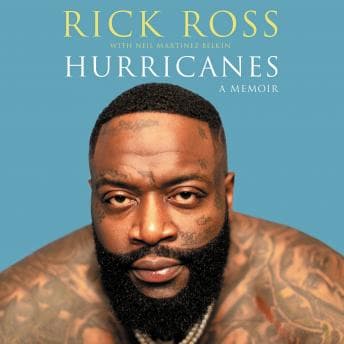
So I picked up Hurricanes. Rick Ross. The Boss.
Here's the thing: I usually have a hard rule about memoirs. If the author isn't reading it, I'm usually out. I want to hear the person who lived it, cracks in their voice and all. When I saw Guy Lockard was narrating instead of Ross, I almost returned it.
I'm glad I didn't. Mostly.
The Voice in the Passenger Seat
Let's be real—Rick Ross is a character. He's larger than life. To narrate his story, you can't just read the words; you have to perform the ego. Guy Lockard brings the energy. Seriously. The man sounds like he walked into the recording booth wearing a fur coat and sunglasses. He captures that specific Miami hustle vibe perfectly.
(Carlos, my husband, actually woke up when I pulled into the driveway because the narration was so high-energy I forgot to turn the volume down.)
But—and this is the nurse in me being picky—there are moments where the illusion breaks. Lockard mispronounces a few names and terms that made my eye twitch. It's like when a resident mispronounces "metoprolol." Doesn't kill the patient, but it makes you pause. Also, don't expect a full cast performance here. He doesn't really do "voices." When he reads reviews or quotes others, he puts on this weird nasally tone that I found pretty annoying.
From the Crack Era to the ICU
The story itself? It's wild. The descriptions of Miami during the crack epidemic are vivid—you can feel the humidity and the danger. It's gritty.
But the part that actually got me? The health scares.
Ross talks about his seizures and the toll his lifestyle took on him. As someone who sees the aftermath of "hustle culture" in the ER at 3 AM, this hit home. He talks about ignoring the signs, pushing through, sleeping a few hours a night. I found myself nodding along (and maybe feeling a little guilty about my own sleep schedule). 10% Happier tackled the same kind of wake-up call, just from a news anchor's perspective instead of a rapper's. It's not often a rap memoir reminds you to take your blood pressure meds, but here we are.
He also addresses the elephant in the room—his past as a correctional officer while claiming to be a drug kingpin. The way he explains it... well, let's just say the man knows how to spin a narrative. You don't have to believe him, but you have to respect the audacity.
Who's This For?
If you need something to keep you awake on a long drive, or you just want to hear how a kid from Carol City became a mogul, this works. It's motivational in a very specific, aggressive way. But if you're sensitive to language, steer clear—the N-word is used basically as punctuation.
Clocking Out
Look, this isn't Shakespeare. It didn't make me cry like a good biography usually does, and I didn't learn any life-changing medical facts. But it kept me entertained enough to forget about the trauma bay for 45 minutes.
Sometimes, that's exactly what the doctor ordered. (Or the nurse, in this case.)






![Steve Jobs [unabridged audiobook] audiobook cover](/_next/image?url=https%3A%2F%2Fcovers.audiobooks.com%2Fimages%2Fcovers%2Ffull%2F9788499923406.jpg&w=1920&q=75)