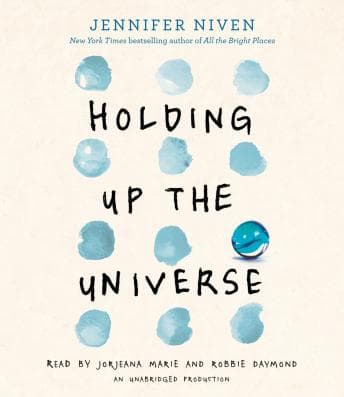

What happens when two teenagers who've been reduced to single labels finally see each other as full human beings?
I finished this one during a particularly brutal week of on-call rotations—3AM alerts, production fires, the whole nightmare. Couldn't sleep after a deploy went sideways, so I just... kept listening. And honestly? That exhausted, defenses-down state might've been the perfect way to absorb this book.
The Face Blindness Thing Actually Works
So Jack has prosopagnosia—he literally cannot recognize faces, including his own brothers'. As someone who debugs systems for a living, I was skeptical this would be handled well. YA novels love giving characters quirky conditions and then doing nothing interesting with them. But Niven actually commits. Jack's constant mental cataloging of people by their shoes, their walk, their jewelry—it's not just a plot device. Robbie Daymond sells it too. You hear his internal panic when someone approaches and he's frantically running through his identification checklist. That cognitive load is exhausting to listen to, in a good way.
The dual narration setup is basically load balancing for emotional processing. Jorjeana Marie handles Libby's chapters, Daymond takes Jack's. Clean handoffs, no confusion about whose head you're in. I'll admit—Marie's cadence took me a couple commutes to adjust to. Something about her pacing felt slightly off at first? But by hour three, I stopped noticing.
Libby Strout Is Not Your Inspirational Fat Girl Trope
Bottom line on Libby: she's a fat protagonist who doesn't exist to lose weight or be anyone's before photo. The book opens with her being "America's Fattest Teen"—she was literally cut out of her house after her mom died. That's the backstory she's crawling out from under.
Here's what got me: Libby's anger is allowed to be ugly. When Jack grabs her during this awful "Fat Girl Rodeo" hazing thing the guys at school are doing, she punches him. Hard. And the book doesn't make her apologize for it or soften it into some meet-cute moment. She's furious, and she stays furious for a while. Marie's delivery during that scene—you can hear the years of being treated like a spectacle compressed into one swing.
Where The Code Gets Messy
Look, this isn't a perfect system. The pacing has some issues—the middle section drags like a Monday morning standup that should've been an async update. And then suddenly we're sprinting toward the ending like someone realized they were running out of pages. I called the resolution around the halfway mark, which... yeah. Predictable isn't always bad, but it does lower the ROI.
The group counseling scenes where Jack and Libby actually become friends? Those are the good stuff. Real dialogue, real awkwardness. But the romance itself felt a little rushed. Like the relationship went from zero to committed in a few chapters without enough debugging of the actual connection between them.
Some listeners apparently hated the alternating POV structure. I get it—if you're not paying attention, the voice switches could be jarring. But this is NOT a background listening book. You need to actually track whose chapter you're in. Perfect for: train, treadmill. Skip for: doing dishes while half-listening.
Two Voices, Two Operating Systems
Robbie Daymond does this thing where Jack's external swagger voice is completely different from his internal monologue voice. Like two different people sharing a body. The guy who's cracking jokes in the hallway versus the guy who's terrified someone will figure out his secret. That contrast carries a lot of emotional weight.
Marie grows on you. Her Libby is fierce without being a caricature, vulnerable without being pathetic. The scenes where Libby is dealing with her dad's grief alongside her own—Marie finds this specific register of exhausted tenderness that hit me at 4AM when I was definitely not in a state to be emotionally ambushed.
Worth Your Commute?
This is basically The Breakfast Club but for invisible disabilities and body image. Two kids who shouldn't connect, forced together by circumstances, discovering they're more than their labels. Us, Again pulls off a similar trick with two people who've been boxed into their worst moments.
At 9 hours, it's a solid week of commutes. The dual narration is well-executed even if it takes adjustment. The face blindness representation is better than expected. The fat protagonist isn't a punchline or a project.
Is it life-changing? No. Did I ugly-cry during one specific scene involving Libby's mom's belongings? I plead the fifth. (It was 4AM. I was vulnerable.)
Queue it if: you want YA contemporary that treats its characters like actual humans rather than after-school special props, and you're willing to give the narration a few chapters to click. Skip if: you need background-friendly audio or tight pacing throughout. Just don't expect the middle act to be perfectly optimized.