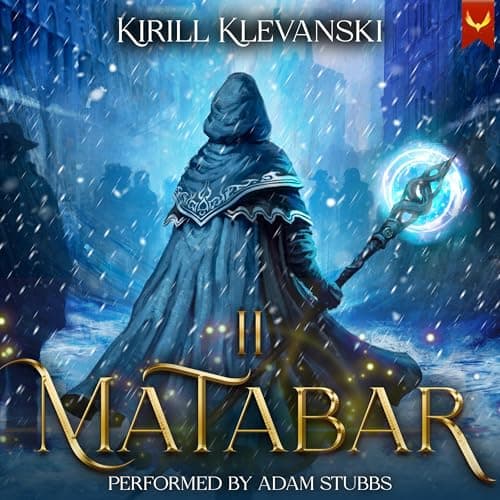

Thirty-two hours. Let me say that again - thirty-two hours and thirty-nine minutes. I started this thing on a Monday night shift when both boys were at their mom's place and the warehouse was running skeleton crew. By the time I finished, it was Thursday, my F-150 had logged another 200 miles of commute listening, and I'd burned through two pairs of earbuds because I kept yanking them out during breaks to rant at nobody about Ardan's decisions.
Here's my problem with Matabar 2, and it's actually a compliment disguised as a complaint: Klevanski writes a protagonist who thinks like somebody who actually came up from nothing. Ardan Egobar isn't some chosen-one trust fund kid playing at being tough. He's a mountain tribe hunter dropped into the Imperial Magical University and the Emperor's spy network, and every single decision he makes carries the weight of somebody who knows what it's like to have no safety net. That hit different at 2AM when I'm watching pallets stack up and thinking about Jamal's parent-teacher conference I gotta stay awake for in six hours.
A Hunter Who Never Forgets He's Prey
The progression fantasy genre - and yeah, I've listened to enough of these now to have opinions - usually treats power-ups like video game level screens. I clocked similar mileage on The Carrington Cove Complete Series earlier this year, and the difference in how these two authors handle character growth is night and day — Klevanski actually makes you feel the cost. Ding, new spell, move on. Klevanski does something smarter here. Ardan's growth as a mage in Volume II feels earned because every new ability costs him something real. Not just "oh no, magical exhaustion" but actual political capital, trust from people he needs, pieces of himself he can't get back. The Second Chancery stuff - being the last of the Matabar, running operations in Metropolis - it's spy work layered on top of magic school, and the tension between those two lives kept me checking my mirrors on the drive home like somebody was actually tailing me.
The conspiracies in the capital are where Klevanski flexes hardest. Old enemies don't just show up for a rematch - they come back smarter, with new angles. And the new threats aren't cartoonish. They're the kind of political danger where you realize three chapters later that a throwaway conversation was actually somebody setting a trap. I caught myself rewinding (at 1.6x, which says something) because I'd missed a detail that turned out to matter.
World-Building That Respects Your Time (Mostly)
Look, 32 hours is a commitment. That's longer than most road trips I've taken. And Klevanski packs this thing with world-building - the magic system, the political structure of the New Monarchy, how magic and progress coexist in Metropolis. Most of it works because it's woven into what's happening rather than dumped in lectures. The detailed magic system actually functions like a set of rules Ardan has to work within, not just cool effects. When he figures out a new application, you understand why it matters because you've been living inside those constraints with him.
But - and this is where I gotta be honest - there are stretches in the middle third where the pacing dips. The slow-build power progression that makes the payoffs feel earned also means you're sometimes grinding through setup that feels like it could've been tighter. At 1.6x it was manageable. At normal speed? I'd have been climbing the warehouse racking out of restlessness.
Adam Stubbs Behind the Mic
Solid work from Stubbs. He handles what has to be a massive cast without making everybody sound like the same dude in a different hat - which is harder than people think when you're carrying 32 hours solo. His read on Ardan hits the right notes: capable but not cocky, smart but still learning. The capital characters - the schemers, the university figures, the Chancery operatives - each get enough distinction that I could follow conversations without losing track of who was talking. For a book this long with this many moving pieces, that's the difference between staying locked in and zoning out somewhere around hour 15.
No audio issues I noticed. Clean production, consistent levels. When you're switching between forklift cab and truck cab and different Bluetooth setups, bad production reveals itself fast. This held up.
Who's Clocking In and Who's Walking Out
If you burned through Matabar 1 and wanted more of Ardan's story with higher stakes and deeper political games, this delivers. If you're into progression fantasy where the "progression" part means something beyond stat sheets - where growing stronger actually changes who the character is and what they're willing to do - this is your lane. But if you need constant action every chapter, or you're looking for something you can half-listen to while doing other stuff, the political layers and world-building details will punish you for not paying attention.
Shift's Over, Here's Where I Land
Klevanski clearly put in work here. The man built a world that runs on its own logic and populated it with characters who make moves that actually make sense given what they want. Ardan's story from mountain hunter to capital operative to university mage is the kind of rise-from-nothing arc that I'll always respect when it's done without shortcuts. Is it perfect? Nah - tighten that middle section and this would be something else entirely. But at 32 hours, the fact that I was still locked in by the end, still thinking about it during the quiet stretches of my shift? That counts for a lot. Real blue-collar shit right here - a kid from nowhere learning that power in the capital costs more than power in the mountains ever did.









