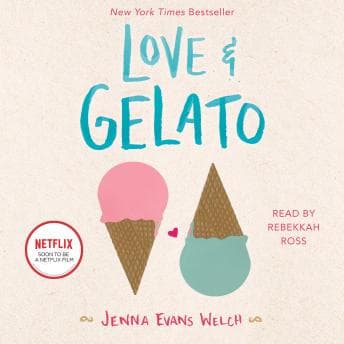

Look, I know what you're thinking. Marcus Williams, the guy who won't shut up about Faulkner on his podcast, reviewing a YA romance set in Tuscany? But here's the thing - I was grading sophomore essays on The Great Gatsby at 11:30 PM last Thursday, and I needed something that wouldn't make me think about symbolism for five minutes. Something light. Something that pairs well with the leftover tiramisu Denise brought home from dinner with her sister.
I expected cotton candy. What I got was cotton candy with a surprisingly chewy center.
The Journal Device Actually Works (And I'm Annoyed About It)
Jenna Evans Welch does something clever here that I have to respect as someone who teaches narrative structure to kids who'd rather be on TikTok. The dual timeline - Lina in present-day Tuscany, her dead mother's journal entries from years earlier - could've been a gimmick. It's not. The journal entries function as a treasure map, literally sending Lina to specific locations around Florence, and each revelation about her mother's past reshapes how Lina understands her own identity. It's a mother-daughter story wearing a romance costume, and I didn't see that coming. The parent-child emotional core reminded me of My Father as I Recall Him — different genre entirely, but that same feeling of a child piecing together who a parent really was before they became yours.
The mystery of Lina's father drives the plot forward with genuine momentum. Welch withholds just enough information to keep you turning - or in my case, keeping one earbud in while I scrawl "expand on this" in red pen across another essay about the green light. The reveal, when it comes, carries real emotional weight. Not Middlemarch weight, mind you. But weight.
And the Tuscany setting isn't just backdrop. Welch clearly knows Florence - the Boboli Gardens, the specific bakeries tucked into side streets, the cemetery where Lina's mother worked. These details anchor the story in a real place rather than some generic "Italy is so romantic!" fantasy. My students would call it aesthetic. I'd call it good scene work.
Rebekkah Ross and the Narrator Question
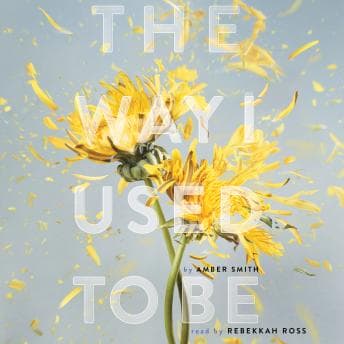
Here's where I have to be honest, and this is where I discovered something interesting as I sat with this one. Ross has a sweet, earnest quality that fits Lina's voice - she's a sixteen-year-old girl processing grief while falling for a boy named Ren, and Ross captures that specific mix of vulnerability and teenage stubbornness. The emotional beats land. When Lina reads her mother's journal entries and her voice shifts - a little quieter, a little more careful - you feel the weight of reading a dead parent's private thoughts.
But. And this is a real but. Ross doesn't differentiate her character voices with much range. Ren, Howard (Lina's father figure), the various Italian side characters - they blur together in a way that occasionally pulled me out of scenes with multiple speakers. I found myself rewinding a couple of times during dialogue-heavy sections to figure out who was talking. For a book that lives in its conversations, that's a problem.
Some listeners apparently bounced off her voice entirely. I didn't have that reaction - I thought she was pleasant enough, and her pacing was steady. But "pleasant enough" isn't the same as "the narrator understands that pause is punctuation." This is competent narration, not interpretive performance.
Who This Is Really For (And Who Should Keep Walking)
If you loved books like Anna and the French Kiss or any of Welch's other "Love &" series, this is exactly what you're looking for - clean YA romance with genuine heart and a European setting that makes you want to book a flight. It's also a surprisingly good pick for adults who need a palate cleanser between heavier reads. No shame in that. I just finished a 30-hour listen of Wolf Hall last month. My brain deserved gelato.
If you need complex prose or literary ambition, this isn't your stop. The writing is straightforward, sometimes predictable, and the romance follows beats you can see coming from about three chapters away. Ren is charming in that YA love interest way where he's always saying the right thing at the right time, which - having been a teenage boy once - I can confirm is fiction at its most fictional.
But the mother-daughter story underneath? That's the real book. That's what surprised me.
The Red Pen Says
At 8 hours and 17 minutes, this is a quick listen that does what it sets out to do with warmth and genuine affection for its setting. It's not going to change your life. It's not going to make my podcast. But it made grading papers at midnight feel a little less like purgatory, and it made me text Denise "let's go to Florence" at 1 AM. She responded with a sleeping emoji. Fair enough.
Worth pausing the faculty meeting for? Honestly, yes - but only if the meeting is about the copy machine budget again. (It's always about the copy machine budget.)