
I need to talk about Kiera. And I'm not going to be nice about it.
Look, I've spent two decades watching teenagers make catastrophically bad romantic decisions. I've graded papers where Romeo and Juliet are held up as relationship goals. I once had a student argue that Heathcliff was "just misunderstood." So I thought I was prepared for anything.
I was not prepared for Kiera.
This woman—and I listened to all twenty hours and fifty-one minutes of her internal monologue while grading sophomore essays at 11 PM—makes decisions so spectacularly ill-advised that I kept pausing to stare at the wall. Denise asked if I was okay. I was not okay. I was deeply invested in a love triangle where I wanted to shake everyone involved.
The Literary Tradition of the Terrible Decision
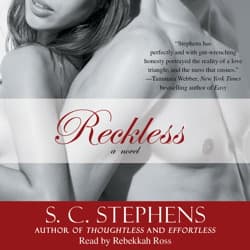
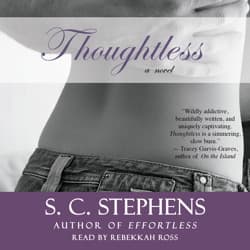
Here's the thing my students would never understand: sometimes a book doesn't need to be "good" in the traditional sense to be completely, devastatingly effective. S.C. Stephens has written what is essentially an emotional car crash stretched across twenty hours, and I couldn't look away. The premise is simple—Kiera has a devoted Australian boyfriend named Denny, meets a brooding rock star named Kellan Kyle, and proceeds to make the worst choices available to her at every possible juncture.
This reminds me of what Hemingway said about writing—that you have to "write hard and clear about what hurts." Stephens writes hard and clear about what makes you want to throw your phone across the room. The angst isn't subtle. It's not trying to be subtle. It's a twenty-hour commitment to watching someone destroy everything good in her life while you grip your steering wheel (or in my case, your red grading pen) and whisper "no, no, no."
My students would hate this. I... didn't hate it. I'm still processing that.
Rebekkah Ross Deserves Hazard Pay
The narrator is doing something genuinely impressive here—she's making you care about characters you might otherwise want to abandon. Ross gives Kiera a voice that's age-appropriate and true to the page, which means you're living inside this young woman's head for the full runtime. That's a lot of internal justification to sell, and Ross sells it.
Denny's Australian accent comes across well—warm and genuine, which makes everything worse because you actually like the guy. Kellan gets this confident, slightly dangerous edge that explains (if not excuses) the bad decisions happening around him. The differentiation is subtle but consistent, and over twenty hours, consistency is everything.
I've listened to audiobooks where the narrator phones it in by hour fifteen. Ross stays steady through what must have been an exhausting emotional marathon. When the big moments hit—and there are several that genuinely landed—her delivery elevates material that could have felt melodramatic into something that actually stings.
Twenty Hours Is a Commitment (And That's the Point)
Let's be honest about the length. This is not a quick listen. This is a relationship. You're going to spend more time with Kiera than you spend with some of your actual friends. The pacing is slow-burn in the truest sense—the tension builds over hours, not chapters, and Stephens is in no hurry to resolve anything.
For some listeners, this will be torture. For others—apparently including me—it's exactly the kind of addictive, angsty spiral that makes time disappear. I finished this across three weeks of late-night grading sessions, and I found myself disappointed when I ran out of papers to grade because it meant I had to stop listening. I had the same problem with Paris Rose—finding excuses to keep the story going just one more chapter.
(Principal Martinez, if you're reading this, I was definitely paying attention during the budget meeting. I was not listening to a rock star seduce someone's girlfriend. That would be inappropriate.)
Who Gets an A, Who Gets Detention
If you loved classic romance novels that make you feel like you're losing your mind—the Brontë sisters, early Nora Roberts, anything where the emotional stakes feel genuinely devastating—this is the modern equivalent. It's not sophisticated. It's not trying to be. It's trying to make you feel things, and it succeeds.
Skip this if: you need to like the protagonist, you have low tolerance for bad decisions, or you're looking for something light. This is not light. This is an emotional marathon. Outlander demands the same kind of emotional endurance—and rewards it just as thoroughly.
Listen if: you want to feel something, you appreciate a narrator who commits fully to the drama, and you have twenty hours to give to a love triangle that will genuinely stress you out.
Class Dismissed
I'm still not entirely sure this is a "good" book in the way I'd define it for my AP Literature students. But I finished it. I cared about what happened. I had actual emotional reactions to fictional people making terrible choices. And Rebekkah Ross made me believe every minute of it.
Sometimes that's enough. Sometimes that's more than enough.
Now if you'll excuse me, I need to go listen to something with less emotional devastation. Maybe Middlemarch. At least Dorothea's bad decisions have historical context.