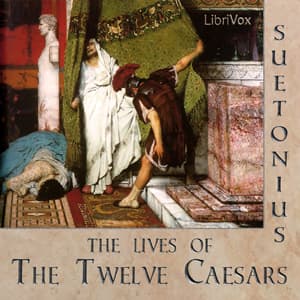

Okay so I need to talk about how Suetonius was basically the first celebrity gossip columnist. Like, this man had ACCESS - he was literally Hadrian's personal secretary, rifling through imperial archives - and what did he do with that access? He wrote down every scandalous, depraved, petty detail about twelve of the most powerful men who ever lived. And I am HERE for it.
I picked this up on a whim during a marathon branding project - sixteen hours of logo iterations for a mezcal company, sixteen hours of Roman emperors. The pairing was unhinged and perfect. I was expecting dry, academic history. What I got was Suetonius casually mentioning that Tiberius had trained young boys to swim between his legs in the pool at Capri (content warning: that section is genuinely disturbing), or that Claudius was so obsessed with dice games he had a special board fitted to his carriage. Or that Nero performed in public singing competitions and locked the theater doors so nobody could leave. The specificity! The SHADE! Abuela would have recognized this energy immediately - this is telenovela plotting, except it actually happened.
The Original Tea-Spiller Had Receipts
What makes Suetonius different from Tacitus or other Roman historians is that he doesn't really care about grand political narrative. He cares about CHARACTER. Each emperor gets a biography structured almost like a profile: their family background, their rise to power, their physical appearance (he describes Augustus's teeth as "small, few, and decayed" - sir, that is so unnecessary and I love you for it), their habits, their cruelties, their deaths. It's gossipy and intimate and sometimes genuinely horrifying. The section on Caligula's descent reads like watching someone lose their mind in real time. And then Julius Caesar's biography has this quality of Greek tragedy - you know the ending, you know the knives are coming, and Suetonius builds toward the Ides of March with all these omens and warnings that Caesar ignores, and even across two thousand years my chest got tight.
Did I cry? Not exactly. But the section on Augustus's death - where he asks his friends if he's played his part well in the comedy of life, then asks for a mirror and has his hair combed - that hit me somewhere quiet. The loneliness of power. The performance of it, right to the end.
The LibriVox Situation (Let's Be Honest)
So here's the thing about LibriVox volunteer recordings: you get what you pay for, which is nothing, and also sometimes something wonderful. The narrators rotate across the twelve biographies, and the quality is... variable. Some readers clearly love this material - they lean into the Latin names with confidence, they find the dark humor in Suetonius's understatement. Others read like they're sight-reading a legal document at 8 AM on a Monday. The transitions between volunteers can be jarring, especially when you've just gotten comfortable with one voice and suddenly a completely different tone takes over for the next emperor.
The audio itself is basic - no music, no sound design, just voice and occasionally the ambient hum of someone's home recording setup. I caught what sounded like a dog barking faintly during the Vitellius section? (Frida lifted her head. Diego did not care.) It's charming in a lo-fi way if you're in the right headspace, but if you need polished production, this will test your patience.
I listened at 1.0x as always, and honestly some sections could've used a bump to 1.15x or so - a couple of the volunteers read at a pace that made sixteen hours feel like twenty. But then other readers had this wonderful warmth that made me glad I was savoring it.
Who Wants to Hear About Ancient Roman Gossip for Sixteen Hours
You, if: you loved I, Claudius and want the source material. You're into history but you want the human weirdness, not just battles and dates. You find comfort in the fact that powerful men have always been petty, strange, and mortal. You're okay with a free audiobook that sounds like a free audiobook.
Skip if: you need a single consistent narrator (this will drive you up the wall). You want modern historiography with context and analysis - Suetonius is primary source, not interpretation. And genuinely, the content warnings on this are real: there's sexual violence, cruelty to enslaved people, and descriptions of torture that Suetonius drops with zero editorial comment. It can be jarring.
My Heart Stayed in Ancient Rome for a Week
This book felt like sitting in a dim bar with someone who knows ALL the secrets and has zero filter. That same intoxicating feeling of someone with dangerous insider access and no filter whatsoever is what made A Billion Years hit me just as hard - different century, same impulse to document exactly what powerful institutions don't want you to know. It's not a polished listen. The production is rough, the translation is old-fashioned, and some chapters drag (sorry, Galba, Otho, and Vitellius - the Year of Four Emperors guys are just less interesting and everyone knows it). But the humanity in it - the weird, awful, occasionally tender humanity of these twelve men - that's what kept me listening through every logo revision. Suetonius saw emperors up close and thought: people should know what these men were really like. Two thousand years later, on a Tuesday night in Austin with a cat on my keyboard, I'm grateful he did.








![Steve Jobs [unabridged audiobook] audiobook cover](/_next/image?url=https%3A%2F%2Fcovers.audiobooks.com%2Fimages%2Fcovers%2Ffull%2F9788499923406.jpg&w=1920&q=75)