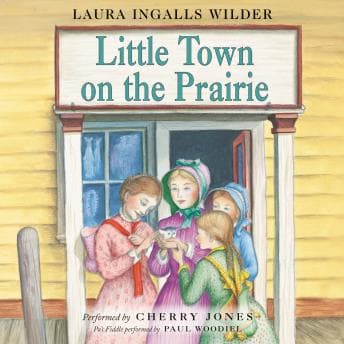

"Laura felt a warmth inside her. It was very good, this belonging to a town, a community."
That line hit me somewhere around hour three, wedged into the corner seat of a 6:47 AM Caltrain, surrounded by other tech zombies in their Patagonia vests. And I thought - huh. Here I am, commuting through Silicon Valley, listening to a fifteen-year-old girl in 1880s Dakota Territory describe... basically the same thing I'm chasing with my Thursday night D&D group and weekend farmers market runs.
Cherry Jones Does What Good Narrators Do
Quick Verdict: She disappears. In the best way.
Jones has this slightly husky voice that somehow is Laura - impetuous, curious, occasionally annoyed at her corset and societal expectations. But what got me was the differentiation between characters. Pa's humor comes through with this warm, teasing edge. Ma's refined restraint sounds exactly like every aunt who's ever said "we don't do that" while somehow making it sound loving instead of judgmental.
The production includes actual fiddle music - Paul Woodiel recreating Pa's playing - and honestly? It works. When Pa plays at the literaries and town socials, you're not just hearing about it, you're there. It's not overdone sound-design-podcast style, just... authentic. The kind of detail that makes you realize someone actually cared about this production.
Fifteen, Sewing Shirts, Saving for College
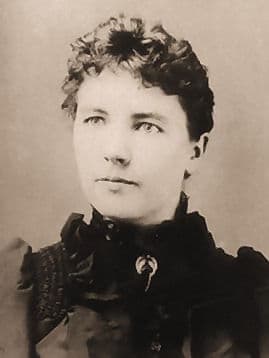
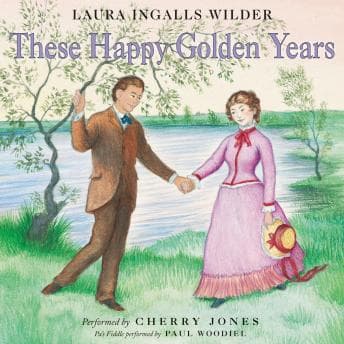
Laura's fifteen here. She's sewing shirts to help send her blind sister Mary to college. She's studying for her teaching certificate. She's navigating her first evening social where Almanzo Wilder - yes, THAT Almanzo - asks to walk her home from church.
If you've read any of the Little House books, you know the drill: detailed descriptions of daily life, seasonal rhythms, family dynamics. What makes this one different is Laura's growing awareness of herself as someone who will soon be out there - working, contributing, maybe even courting.
The pacing is slow by modern standards. No production outages at 2 AM, no distributed systems to debug. Just... life. Churning butter. Making buttonholes. Attending spelling bees. And somehow it's completely absorbing? Outlander pulls off the same trick with 18th-century Scotland—you get lost in the mundane details until they stop feeling mundane. My theory: Wilder writes with such specific, concrete detail that your brain just... accepts it. You're there.
The Part I Have to Mention
There's a minstrel show scene. Blackface. It's historically accurate to the period, which doesn't make it comfortable. Jones reads it straight - no editorial commentary, no softening. It's jarring in a way that probably should be jarring. If you're listening with kids (and this is marketed as family listening), you'll want to pause and have a conversation. The book doesn't do that work for you.
Long Commutes: Yes. Gym Sessions: Hard No
This is not a 1.75x business book. I actually dropped to 1.25x to let the language breathe - Wilder's prose has a rhythm that gets lost if you rush it. At 6 hours 25 minutes, it's a perfect week of commutes or a couple of road trips.
The audiobook works best when you can give it about 70% of your attention. I found myself zoning out during some of the more detailed domestic scenes (there's a lot of sewing), but then snapping back for the social dynamics - Laura's complicated feelings about Nellie Oleson, her growing awareness of Almanzo, her pride in earning money for Mary's education.
Not ideal for the gym. Too quiet, too contemplative. You'll miss things between sets. But for cooking dinner, folding laundry, or staring out a train window at the Palo Alto dawn? Perfect.
Who This Is Actually For
You'll love this if: You read these as a kid and want to revisit them. You're looking for family-friendly listening that isn't dumbed down. You appreciate historical fiction that treats daily life as worthy of attention. You want to understand what "American frontier" actually felt like, not the Hollywood version.
Skip if: You need plot-driven pacing. You're looking for audiobook-as-podcast energy. You can't handle slow burns.
The Commit Message
Cherry Jones's narration is the reason to go audio instead of just rereading the paperback from your childhood bookshelf. The fiddle music is a genuinely nice touch. The story itself is what it's always been - a detailed, loving portrait of a family and a community figuring things out together.
High ROI if you're in the right headspace. It's comfort listening, but not empty-calorie comfort. There's real craft here, in both Wilder's writing and Jones's performance.
I finished this in four commutes. No regrets. Now I'm probably going to work through the rest of the series, because apparently I'm the kind of person who debugs Kubernetes by day and listens to pioneer stories by night. We contain multitudes.