
What happens when a software engineer who optimizes distributed systems for a living encounters a book that's basically a 6-hour optimization manual for 19th-century farming?
I started this on a rare Saturday morning, coffee in hand, debugging nothing for once. Kevin was still asleep, and I figured I'd knock out something light before we hit the farmer's market. Ironic choice, in retrospect.
The Original Productivity Porn
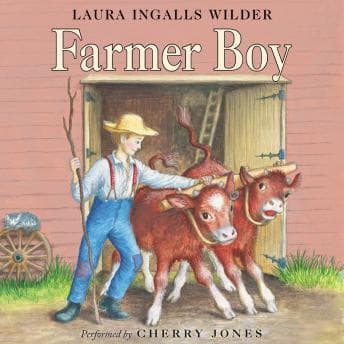
Here's the thing nobody tells you about Farmer Boy: it's not really a story. It's a procedural document. Laura Ingalls Wilder basically wrote a technical manual for running an 1860s New York farm, and somehow made it... compelling? Young Almanzo doesn't go on adventures. He plants corn. He harvests potatoes. He helps his father break colts. He eats approximately 47,000 meals described in excruciating, mouth-watering detail.
And I was riveted.
Maybe it's the engineer brain, but there's something deeply satisfying about watching a system work. Father knows exactly when to plant, how to read the weather, when the ice is thick enough to cut. Mother runs the house like a production environment—butter churning, candle making, wool carding, all running in parallel processes. Nine-year-old Almanzo is basically an intern learning to contribute to a well-oiled machine.
The food descriptions alone could be their own podcast. Stacked pancakes with maple syrup, apple pie for breakfast, pork and beans and brown bread, donuts fried in lard. I had to stop at a bakery after finishing this. Kevin thinks I've lost my mind.
Cherry Jones and That Cozy PBS Energy
Cherry Jones narrates with this eager, quick-paced energy that works surprisingly well. She's got warmth in her voice—soft feelings, as one reviewer put it—that makes the domestic scenes feel cozy rather than tedious. When Almanzo's mother is teaching him to make candles, you can hear Jones genuinely invested in getting the process right.
That said. The mispronunciations. She says "primer" (the reading book) like "primmer" instead of "pry-mer," and look, maybe that's a regional thing? But it pulled me out twice. Not a dealbreaker, but I did reach for my phone to check if I'd been wrong my whole life. (I wasn't. Probably.)
The fiddle music between sections is a nice touch—gives it that PBS documentary feel without being intrusive. Clean production overall.
Agile Methodology for Raising Children
What actually got me was the parenting philosophy embedded in here. Almanzo wants a horse. His father doesn't just say no—he makes Almanzo prove he can handle responsibility by training a pair of calves first. There's a whole arc about Almanzo learning to be patient, to think long-term, to earn trust through consistent work.
It's basically agile methodology for raising children. Small iterations. Prove competence at one level before advancing. Document your processes (Almanzo has to remember exactly how Father does things). The ROI on this parenting approach is a kid who, at nine, can be trusted with significant farm operations. That same systematic approach to building competence shows up in Faster, Higher, Stronger, though applied to athletic performance instead of farm work.
Contrast this with modern helicopter parenting and... okay, I'm getting preachy. But the book made me think about how we've lost something in the shift away from kids contributing meaningfully to household systems.
Who's This For?
This is background listening at its finest. Low stakes, episodic structure (each chapter is basically a self-contained "how we did X on the farm"), and zero plot twists that require your full attention. I finished it over three sessions—that Saturday morning, a lazy Sunday, and one evening when I was too tired for anything demanding.
Not great for commute, honestly. The pacing is too gentle for 6 AM zombie mode. You need to be awake enough to appreciate the details, but not so engaged that you're expecting narrative tension. Skip this if you need plot momentum or conflict to stay interested.
Kids would love this, obviously. But adults who grew up on the TV show and never read the books? There's something here for you too. It's comfort listening. A reminder that humans have been solving complex logistical problems forever, just with different tools.
The Commit Message
Farmer Boy is basically a 6-hour meditation on competence, patience, and really excellent pie. Cherry Jones delivers it with warmth and enthusiasm, minor pronunciation hiccups aside. Will it change your life? No. Will it make you want to learn how to make butter from scratch and also eat an entire stack of pancakes? Absolutely.
I'm putting this in the same category as those YouTube videos of people restoring old tools or building cabins by hand. Satisfying. Calming. A reminder that optimization problems existed long before distributed systems, and humans have always been pretty good at solving them.
Now if you'll excuse me, I have a farmer's market to get to. Kevin's making pancakes tomorrow.