
The Setup
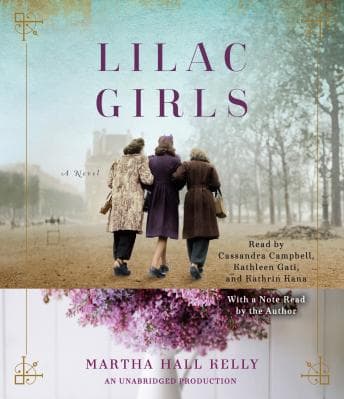
Okay, so here's the thing about 17-hour audiobooks when you're a mom of three: they're basically a two-week commitment. Maybe three if Sophie decides naps are for quitters (which she has been deciding a lot lately). I started Lilac Girls during spring break chaos and finished it somewhere around Easter, and honestly? The fragmented listening actually worked for this one. Each time I came back, the three narrators made it crystal clear whose story I was dropping into. Caroline's polished American voice, Kasia's Polish accent, Herta's clipped German tones - it was like having three different audiobooks braided together.
I'll be honest, I almost didn't start this one. World War II, concentration camps, 17 hours? That's a lot of emotional weight to carry through school pickups and grocery runs. But my book club picked it (yes, I still technically have a book club, we just meet like twice a year now), and I'm genuinely glad I pushed through. This isn't a light listen - not even close - but it's the kind of story that sticks with you in ways that feel important.
Three Voices, Three Women, One Devastating History
The multi-narrator setup is honestly what makes this audiobook work. Cassandra Campbell handles Caroline, the New York socialite working at the French consulate, and she's absolutely the standout here. Her delivery is warm and grounded, and she makes Caroline's privileged-but-evolving perspective feel authentic rather than annoying. Campbell brings that same warmth to Where the Crawdads Sing, though in a completely different setting. There's this moment early on where Caroline's world starts cracking open as the war reaches France, and Campbell's voice shifts so subtly - you can hear the denial giving way to horror. Nailed it.
Kathleen Gati takes on Kasia, the Polish teenager who gets pulled into the resistance and eventually ends up at Ravensbrück. Her accent work is solid, though I'll admit there were moments where I had to really focus to catch everything. Not a dealbreaker, but if you're listening while also preventing your toddler from eating crayons, you might miss some dialogue. Kathrin Kana voices Herta, the German doctor, and... look, this is where it gets complicated. Herta's storyline is deeply uncomfortable by design - she's complicit in horrific medical experiments - and Kana plays her with this unsettling coldness that made my skin crawl. Which I think is the point? But some listeners found her sections harder to get through, and I get it.
The production quality is clean throughout. No weird background noise, no jarring volume shifts between narrators. Martha Hall Kelly reads her own author's note at the end, which adds a lovely personal touch after you've been through the emotional wringer.
The Emotional Toll (Fair Warning)
I need to be real with you: this book made me cry at school pickup. Multiple times. There's content here about the Ravensbrück "Rabbits" - real women who were subjected to medical experiments - and it's harrowing. The audiobook doesn't shy away from the horror, but it also doesn't feel exploitative. Kelly clearly did her research (the story is inspired by real people, including the actual Caroline Ferriday), and that authenticity comes through.
The pacing is... deliberate. There were stretches in the middle where I felt the 17-hour runtime, especially during some of Caroline's New York society scenes before the war really kicks in. But then Kasia's sections would hit, and I'd be white-knuckling my steering wheel in the Target parking lot, completely unable to go inside and buy diapers like a normal person.
What surprised me was how the three storylines eventually converge. I won't spoil it, but watching Caroline's post-war advocacy work intersect with what happened at the camp - that's where the book earns its length. It's not just about surviving trauma; it's about fighting for recognition and justice decades later. And somehow, despite everything, there's hope woven through it.
Who Should Listen (And Who Should Skip)
This is perfect for historical fiction lovers who don't mind a longer commitment and can handle heavy subject matter. If you appreciated The Nightingale or All the Light We Cannot See, you're in the right territory. The multi-narrator format actually helps with the length - switching between voices keeps things from feeling monotonous.
Skip this one if you need something light right now (no judgment, we've all been there), you're sensitive to content involving medical abuse and concentration camps, or you really struggle with accented narration. A few listeners mentioned preferring the print version because the accents pulled them out of the story. I didn't have that issue, but your mileage may vary.
Also, heads up - there's some romantic content, including what the research notes diplomatically call "a steamy kissing scene." Nothing too explicit, but maybe not one to blast on the Bluetooth with kids in the car.
The Verdict
Lilac Girls survived my fragmented listening schedule and still delivered an emotional gut-punch every time I came back to it. The three narrators make the rotating perspectives work beautifully, even if Cassandra Campbell is the clear MVP. It's long, it's heavy, and it's absolutely worth it.
Made me cry at school pickup. Worth it though. Car time approved - just maybe keep tissues in your console.