
What happens when you shift POV from the cautious sister to the reckless one?
I was supposed to be debugging my procedural dungeon generator at 2 AM. Instead, I had Rebecca Soler in my ears and Tella Dragna making increasingly terrible decisions in a magical game that could kill her. My thesis advisor would be disappointed. I was not.
Tella Is the Chaotic Neutral We Deserve
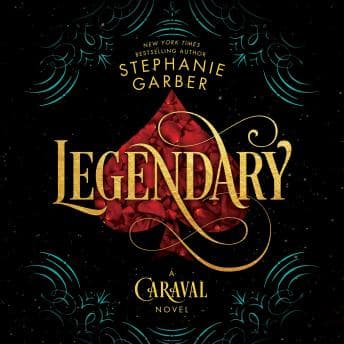
So here's the thing about Legendary - it's basically what happens when the party's rogue takes over as the main character. Scarlett from book one was your careful cleric, always weighing consequences. Tella? Tella makes a deal with a mysterious criminal before the story even starts and then just... keeps making deals. With everyone. Including the murderous heir to the throne. Including entities that may or may not be Fates from legend.
This is Sanderson-level world-building in YA packaging. Garber expands the Caraval universe significantly here - we get actual mythology, competing magical factions, and a magic system that finally starts making sense. The Fates are introduced as these terrifying legendary figures who may or may not be real, and the way their lore weaves into the game mechanics? Chef's kiss. I got a similar mythology-heavy vibe from Book of Enoch the Prophet, though that one's way more ancient prophecy than magical carnival. My D&D group would love this - it's basically a campaign where the DM keeps adding plot twists every session.
The progression is satisfying in that video game way where you think you understand the rules, then realize you've been playing a completely different game. Tella's quest for Legend's true name becomes this nested mystery where every answer spawns three new questions.
Soler Knows Her Assignment
Rebecca Soler returning from Caraval is the right call. She's got this romantic accent for Julian that immediately signals "dangerous love interest energy" and a more purposeful, clipped tone for Dante that screams "don't trust this guy." The character differentiation is solid - you never lose track of who's speaking even when Garber's throwing five people into a scene.
Here's what impressed me: Soler captures Tella's specific brand of recklessness. There's this undercurrent of desperation in her delivery - Tella isn't just impulsive, she's someone who made a terrible bargain and is running out of time. The narration shifts between exhilaration during the game sequences and genuine fear when the stakes escalate. It's not just "reading with feeling" - it's character work.
Now, fair warning: some listeners apparently find certain vocal choices... unpleasant? The research mentioned "noises" that bothered people. I didn't notice anything egregious, but if you're sensitive to specific vocalizations, maybe sample first. Personally, I was too busy being invested in whether Tella would survive her own terrible decisions to care.
The Romance Situation
Okay, I need to address this. The love interests in this book are... look, if you're reading for male character development, you might be frustrated. They're more plot devices than people sometimes. But honestly? I didn't mind. This is Tella's story, and the romantic elements serve her arc rather than existing independently.
There's a doomed love story thread that's very "forbidden romance with someone who might literally destroy everything you care about" - classic fantasy tropes executed with enough style that I wasn't rolling my eyes. The spice level is YA-appropriate but the emotional stakes are real.
Who Should Queue This Up
If you loved Caraval, this is a no-brainer - same vibes, bigger world, more dangerous game. If you like fantasy where the magic has actual rules but also mystery, where the protagonist is clever but makes genuinely bad choices, where the atmosphere is lush and slightly threatening - yes. Absolutely yes.
Skip if: you need your fantasy grounded and logical, you can't stand info-dumps about magical lore (but you're wrong if that's you), or you're looking for a standalone. This is very much a middle book - it resolves some things but opens up way more.
At 11 hours, it's a solid commitment but not overwhelming. I burned through it in three coding sessions where I definitely should have been working on my thesis instead.
Roll for Initiative
Stephanie Garber built something special with this series. It's not trying to be grimdark or literary - it's a fantasy carnival where the games might kill you and the prizes might be worse than losing. The magic system is chef's kiss, the atmosphere is immersive, and Soler's narration makes the 11-hour runtime fly by.
I'm immediately starting Finale. Dr. Patel can wait.