
Look, if I have to read one more story about an orphan who discovers he's secretly the savior of the universe while I'm grading 10th-grade essays on Lord of the Flies, I might actually scream. Okay, I won't scream—Denise hates it when I startle the dog—but I will sigh. Loudly.
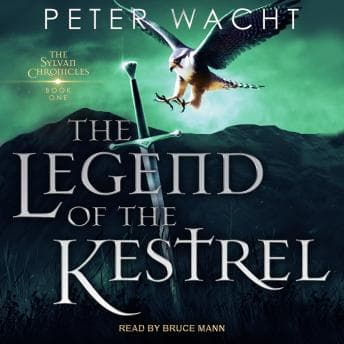
That's pretty much where I was when I started Legend of the Kestrel. It was Tuesday, 11 PM, and I was staring at a stack of papers that claimed The Great Gatsby was actually about the importance of swimming lessons. I needed an escape. I needed a classic fantasy trope that I didn't have to grade. Peter Wacht gave me Thomas Kestrel, an outcast-turned-sorcerer-warrior. Standard stuff? Absolutely. Did I mind? Not entirely.
Bruce Mann's Voice: Rich Coffee, Shaky Pour
Let's talk about Bruce Mann. The guy has a voice like expensive coffee—rich, smooth, deep. The kind of voice you want reading a menu to you. (Don't tell my wife I said that.) Just listening to the timbre of it was enough to keep me from throwing my red pen across the room.
But—and there is always a "but" in these faculty meetings—consistency is king. And Mann struggles a bit here.
There were moments where I honestly couldn't tell which character was speaking. The accents drifted. It felt a bit like when my students do "voices" during a class read-aloud and forget which voice belongs to which character halfway through the page. It pulls you out of the immersion. You stop thinking about the Shadow Lord and start thinking, "Wait, isn't that the innkeeper's voice?"
Plus, there are some editing hiccups. Awkward pauses. Mispronunciations. It's the audio equivalent of a typo. As an English teacher, I can't help but notice them. It drives me nuts. If you're a stickler for production polish, this might grate on you.
Grading the Prophecy
The story itself? It's comfort food. It's mashed potatoes. It's the kind of familiar narrative I also found in White Oleander—different setting, same sense of well-worn territory.
We've got the Shadow Lord (ancient evil, naturally), the Dark Horde, and a young guy named Thomas trying to master the "Talent." If you love Patrick Rothfuss or Brandon Sanderson, you'll see the DNA here. But it's... slower.
Honestly, the pacing drags. There's a lot of repetition. It reminded me of those essays where a student is desperately trying to hit the 500-word count so they say the same thing three different ways. "Thomas was sad. He felt a great sadness. Sorrow filled his heart." We get it. Move the plot along.
Some reviewers online complained about the world-building lacking detail, and I kind of agree. It feels a bit generic. But sometimes, after a long day of analyzing the symbolism of the green light, generic is okay. I don't always need a complex magic system that requires a spreadsheet to understand. Sometimes I just want a sword fight and a prophecy.
Who's Getting an A, Who's Getting a Pass
If you want a traditional, old-school fantasy to have in your ears while doing chores—or hypothetically ignoring a budget presentation—this works. Skip it if audio production quality matters to you, or if slow pacing makes you reach for the 2x speed button.
Mr. Williams Puts Down His Red Pen
Is this the next Odyssey? No. My mom probably wouldn't make it past chapter three without falling asleep. It's rough around the edges. The narration needs a steady hand, and the editor needed a stronger cup of tea. But Thomas Kestrel's journey has enough heart to keep you going, provided you have the patience for a slow burn. Just don't expect it to change your life. It's just there to make the grading pile look a little smaller.