
I was halfway through my morning jog along the Charles River when the car crash happened. Not mine—Sherlock's. And I literally stopped running to process what I'd just heard. A CIA analyst slams into her windshield and then just... disappears? The research part of my brain immediately started cataloging: trauma response, fight-or-flight activation, possible dissociative state. But the thriller-lover part? She was hooked.
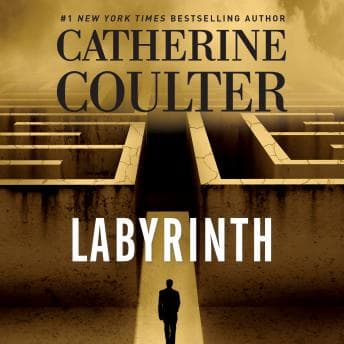
Catherine Coulter's Labyrinth is exactly the kind of book that makes me late for office hours. (My students have learned to expect this by now.)
Power Dynamics and Small-Town Loyalty Gone Wrong
Here's what grabbed me: we've got two parallel storylines, and both are essentially case studies in how power corrupts community dynamics. In Gaffer's Ridge, Virginia, you have a family with alleged psychic abilities who've basically become untouchable. The local sheriff arrests the FBI agent trying to rescue a kidnapped woman because the suspect is his nephew. Classic in-group loyalty bias taken to criminal extremes.
And look, I've read enough true crime to know this isn't fiction. This is Tuesday in any small town where one family owns everything. Coulter understands that the scariest monsters aren't supernatural—they're the ones everyone protects because confronting them would upend the social order.
The CIA analyst plotline is equally fascinating from a behavioral perspective. A man runs away from an accident scene despite being injured. Why? What's he running toward, or more importantly, what's he running from? The answer, when it comes, is more tangled than I expected.
Why Two Narrators Actually Works Here
I'll be honest—dual narration can go wrong so fast. You get tonal whiplash, pacing issues, the whole thing feels stitched together. But Tim Campbell and Saskia Maarleveld? They nailed it.
Maarleveld handles Sherlock's storyline with this crisp precision that matches the character's FBI training, but she's also skilled with the emotional beats. When Sherlock's processing the trauma of the accident, you hear it in the delivery—not overdone, just... present. Campbell brings a slightly different energy to the Gaffer's Ridge investigation, and the contrast actually helps keep the two plots distinct in your head.
The character voices are solid across the board. I particularly appreciated how they handled the small-town characters without making them caricatures. (My therapist would have thoughts about that sheriff, though. Serious thoughts about authority figures who prioritize family over justice.)
Where It Gets Complicated—In a Good Way
Fair warning: this book has a lot of characters. Like, a lot. I had to rewind a few times during my cooking sessions when I lost track of who was connected to whom. If you're someone who gets frustrated by intricate plotting, this might not be your thing.
But psychologically? This is a fascinating case study in how lies compound. Every character is protecting something—their family, their secrets, their version of events. Coulter understands that the labyrinth isn't just the plot structure. It's the way humans construct elaborate justifications for terrible behavior. That psychological complexity—where everyone's protecting something—is what I loved about Nowhere Safe too.
The pacing is genuinely white-knuckled in places. There's a section in the middle where Griffin and Carson are essentially trapped, and I burned dinner because I couldn't pause. Worth it. (The pasta was salvageable. Mostly.)
Who's Going to Love This (And Who Should Skip)
If you're already a fan of the FBI Thriller series, this is a solid entry. Savich and Sherlock are well-established characters, and while you could technically start here, you'd miss some of the relationship dynamics that make their partnership work. New to Coulter? Just know you're walking into book 23 of a series. The book does enough heavy lifting that you won't be completely lost, but longtime readers will get more from it.
Skip this if: you need everything wrapped up in a neat bow, or complex character webs frustrate rather than intrigue you. Coulter's style is messy the way life is messy.
What makes this thriller compelling is that nobody is purely good or purely evil. Even the victims have complicated motivations. Even the heroes make questionable calls. That's the kind of psychological realism I can get behind.
The production quality is clean, the nearly 11-hour runtime flew by, and I finished it feeling like I'd actually been somewhere. Not every thriller accomplishes that. Blowback gave me that same sense of being fully transported into the investigation—the kind of immersion that makes you forget you're listening to fiction.
Case Closed (For Now)
I respect a thriller that trusts its readers to sit with ambiguity. Labyrinth does exactly that—and made me late for office hours twice. My students will survive.