
What happens when you listen to 17th-century French comedy at 2 AM because your brain won't shut off and Diego keeps knocking things off your nightstand?
Apparently, you end up charmed by a 37-minute roast of provincial snobbery that your abuela would have absolutely loved. She had zero patience for people who put on airs—remember when Tía Lupita came back from her one trip to Mexico City acting like she invented mole? Yeah. This play is basically Molière dragging the Tía Lupitas of 1670s France, and honestly? Timeless.
A Comtesse Who Would've Been Insufferable at Your Cousin's Quinceañera
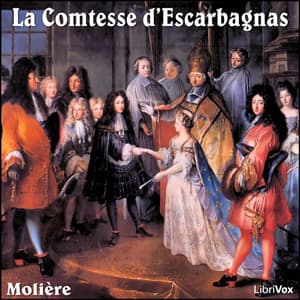
The premise is deliciously simple: a provincial countess who spent some time in Paris now thinks she's the absolute pinnacle of sophistication. She name-drops Parisian manners constantly while her actual behavior is... not that. Molière wrote this as a comédie-ballet for Louis XIV's brother's wedding, which means it was meant to be light entertainment between dance numbers. And you can feel that—it's bite-sized, punchy, more sketch comedy than deep character study.
At just over half an hour, this isn't asking for commitment. It's a coffee break. A palate cleanser. The kind of thing you throw on when you need something that won't emotionally wreck you (unlike my usual choices—I'm still recovering from my last ugly-cry session, thank you very much). Though if you want something that WILL wreck you emotionally, Sergeant York and His People had me sobbing into Diego's fur at 3 AM.
Six Voices, One Tiny Play—Does It Work?
Here's where LibriVox gets interesting. You've got six different volunteers—Ezwa, Aldor, Jean Lambert, Jc, Christian, and Karen Savage—trading off characters in this little one-act. The multi-reader approach is ambitious for something so short. With a play this compact, you barely settle into one voice before another takes over.
The thing about volunteer productions is they're labors of love, not polished studio recordings. There's no consistent audio quality, no director ensuring everyone's pacing matches. Some readers lean into the comedy with theatrical flair; others deliver lines more flatly. It's a bit like watching a community theater production where everyone's giving different percentages of energy. Charming in its own way? Yes. But if you need polished production, this isn't it.
I couldn't find specific complaints about pronunciation issues, which for 17th-century French is honestly impressive. But the lack of unified direction means the comedic timing—which is EVERYTHING in Molière—sometimes lands and sometimes just... exists.
Free Is Free, But What Are You Actually Getting?
Let's be real about what this is: a free public domain recording of a minor Molière work. It's not Tartuffe. It's not The Misanthrope. It's a party piece, a theatrical appetizer that was never meant to stand entirely alone (those ballet interludes are long gone, obviously).
For French learners or Molière completists, this is genuinely useful. The runtime means you can relisten multiple times without major time investment. For casual listeners just wanting entertainment? The comedy is broad enough to land even if your French is rusty, but the volunteer production quality might pull you out of the moment.
No music, no sound effects—just voices reading a play. Which is fine! But the original was a comédie-ballet, meaning music and dance were baked into the experience. You're getting the skeleton without the flesh, basically.
Who's Going to Love This (And Who Should Skip)
Listen if: You're a French learner wanting bite-sized practice, a Molière completist, or someone who appreciates community theater vibes and has 37 minutes to kill. Skip if: You need polished production values or want Molière's heavy hitters—this is the appetizer, not the main course.
My Heart Didn't Break, But I Smiled
Look, I didn't cry. (I know, shocking.) This isn't that kind of listen. But there's something sweet about hearing volunteers from around the world come together to keep 350-year-old French comedy alive. That's beautiful in its own quiet way.
The Comtesse herself is such a specific type of annoying—the person who went to one fancy place once and now won't let you forget it. We all know her. Molière knew her. My abuela definitely knew her and would have been making that face she made when someone was being ridículo.
For a free, 37-minute listen that requires zero emotional preparation? It's a pleasant little diversion. Just don't expect the production values of a professional studio recording. This is community theater for your ears—earnest, imperfect, and kind of endearing for it.