What happens when your favorite urban fantasy series is basically comfort food you keep coming back to even when you know exactly what you're getting?
Look, I've been reading Anita Blake since high school, back when I thought "vampire executioner who's also a necromancer" was the coolest character concept ever invented. (Spoiler: I still kind of do.) And here I am, twenty-one books deep, listening to Kiss the Dead while pretending to work on my thesis. Dr. Patel would be so proud.
The World-Building That Keeps Me Coming Back
Hamilton does something really interesting here that I don't think gets enough credit. The premise - vampires who refuse to serve a master, who'd rather die free than live in the traditional power structure - is genuinely compelling. MaddAddam explores similar themes of resistance against oppressive systems, though Atwood's dystopia trades vampires for genetic engineering. It's basically a vampire anarchist movement, and my D&D brain immediately started thinking about how this would work as a campaign setting. You've got these newly turned vampires, regular people - grandmas, teenagers, soccer moms - choosing death over servitude. That's dark. That's interesting.
The magic system in this universe has always been one of my favorites because it has actual rules. Seven H.P. Lovecraft Stories has that same commitment to internal consistency, even if the cosmic horror vibes are totally different. Anita's powers have consequences. The vampire hierarchy isn't just window dressing - it matters to the plot. When she's dealing with these masterless vampires, you understand why it's terrifying for both sides. This is Sanderson-level consistency, honestly, even if the execution is sometimes messier.
But - and here's where longtime fans will nod knowingly - the book spends a LOT of time on Anita's relationship drama. Like, a lot. The poly situation with Jean-Claude and all the other men in her life takes up significant real estate. If you're here for the action and the vampire politics, you might find yourself zoning out during the extended bedroom scenes. I'm not saying they're bad, just... plentiful. (My mom walked in during one of those scenes playing through my speakers. Super normal. Not awkward at all.)
Kimberly Alexis Gets the Assignment
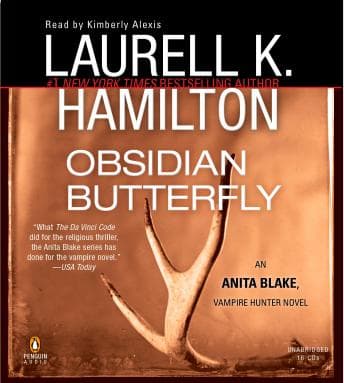
So here's the thing about the narration - Kimberly Alexis does solid work here. She captures Anita's particular brand of tough-but-vulnerable, that constant internal monologue that's half snark and half genuine anxiety. The pacing works for the most part, though some of the slower relationship-heavy sections drag a bit even with good narration.
Her character differentiation is decent. Jean-Claude sounds appropriately French and seductive, the various men in Anita's life are distinguishable enough. Where she really shines is during the action sequences - the tension when Anita's facing down vampires who genuinely want to die rather than be captured comes through clearly. You can hear the confusion and frustration in Anita's voice when she's dealing with enemies who don't play by the usual rules.
I've heard some folks complain about inconsistent pacing, and yeah, that's fair. Some scenes feel rushed while others linger longer than necessary. But honestly? For eleven hours of urban fantasy, it's a comfortable listen. I got through most of it during late-night coding sessions when my thesis code was refusing to compile.
Who's This Actually For?
If you're new to Anita Blake, please don't start here. This is book twenty-one. You need context. You need to understand the relationship dynamics. You need to know why Anita being a monster that vampires fear is such a big deal. Start at the beginning - Guilty Pleasures - and work your way up.
If you're a longtime fan who's been following since the early books, you know what you're getting. The ratio of action to romance has shifted over the years, and Kiss the Dead is pretty typical of the later series. The central conflict is genuinely interesting, the world-building remains solid, but be prepared for extended detours into Anita's complicated love life.
My D&D group would love the concept of the masterless vampires. The execution? Mixed bag. But I'll absolutely listen to the next one, because Hamilton's built a world I keep wanting to return to, even when individual books don't quite hit the mark.
I read this instead of writing my thesis. Worth it? Mostly. Now if you'll excuse me, I have a chapter on procedural generation that's been "in progress" for six months.